
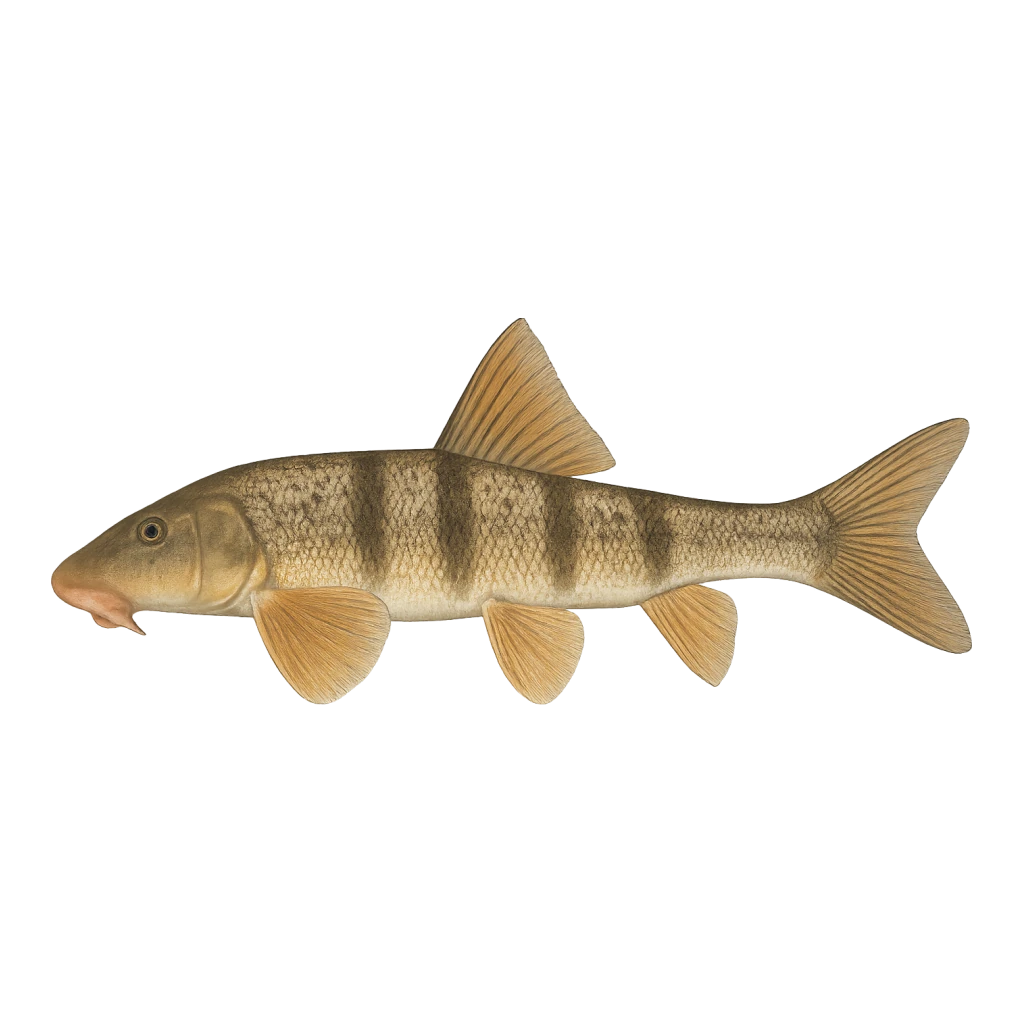
How to recognise it
The Northern Hog Sucker (Hypentelium nigricans) is a distinctive freshwater fish. It has a long, cylindrical body with a flattened head. The coloration is typically a mix of brown, gray, and olive tones, often with darker mottling. The fish has a prominent, sucker-like mouth that is well adapted for feeding on the bottom. Its dorsal fin is long and extends far back, while the anal fin is also elongated. The species it is most often confused with is the White Sucker (Catostomus commersonii). The key detail that separates them is the presence of a dark, horizontal stripe along the side of the Northern Hog Sucker, which is absent in the White Sucker.
Where it lives
The Northern Hog Sucker is primarily found in the eastern and central United States. Its range extends from the Great Lakes region down to the Gulf Coast, including parts of the Mississippi River basin. This species prefers freshwater habitats such as rivers, streams, and creeks. It typically inhabits areas with moderate to fast currents and prefers depths of 1 to 10 feet. The Northern Hog Sucker often holds near rocky substrates, gravel beds, and submerged vegetation. In warmer months, it may move to shallower areas, while in colder months, it tends to seek deeper, slower-moving waters.
When it bites
The Northern Hog Sucker is most active from late spring to early fall, particularly from May to September. The ideal water temperature for fishing this species ranges from 60 to 75 degrees F. Early morning and late evening are the best times to target them, as they are more likely to feed during these periods. Weather changes can impact their feeding behavior; a passing front may trigger increased activity, while strong winds can make them less likely to bite. A full moon can also enhance feeding, as it provides more light during the night.
How to catch it
To catch Northern Hog Suckers, anglers can use a variety of rigs. A simple bottom rig with a sliding sinker works well. Use a 1/0 to 2/0 hook, depending on the bait size. Effective baits include nightcrawlers, small minnows, and pieces of crayfish. Lures such as small jigs in natural colors (brown, green, or orange) can also be effective. Cast near rocky areas or submerged vegetation, and allow the bait to settle on the bottom. Slowly retrieve the bait with a gentle lift and drop motion to mimic natural movement.
Size, age and the table
The typical size of a Northern Hog Sucker encountered by anglers ranges from 10 to 20 inches in length. A trophy-sized fish is generally considered to be over 24 inches. Growth rates can vary, but they typically reach sexual maturity by 3 to 4 years of age. The lifespan of a Northern Hog Sucker can be up to 10 years. While they are not commonly sought after for eating, they are edible and have a mild flavor. If you plan to release them, handle them gently and minimize air exposure to increase their chances of survival.


