
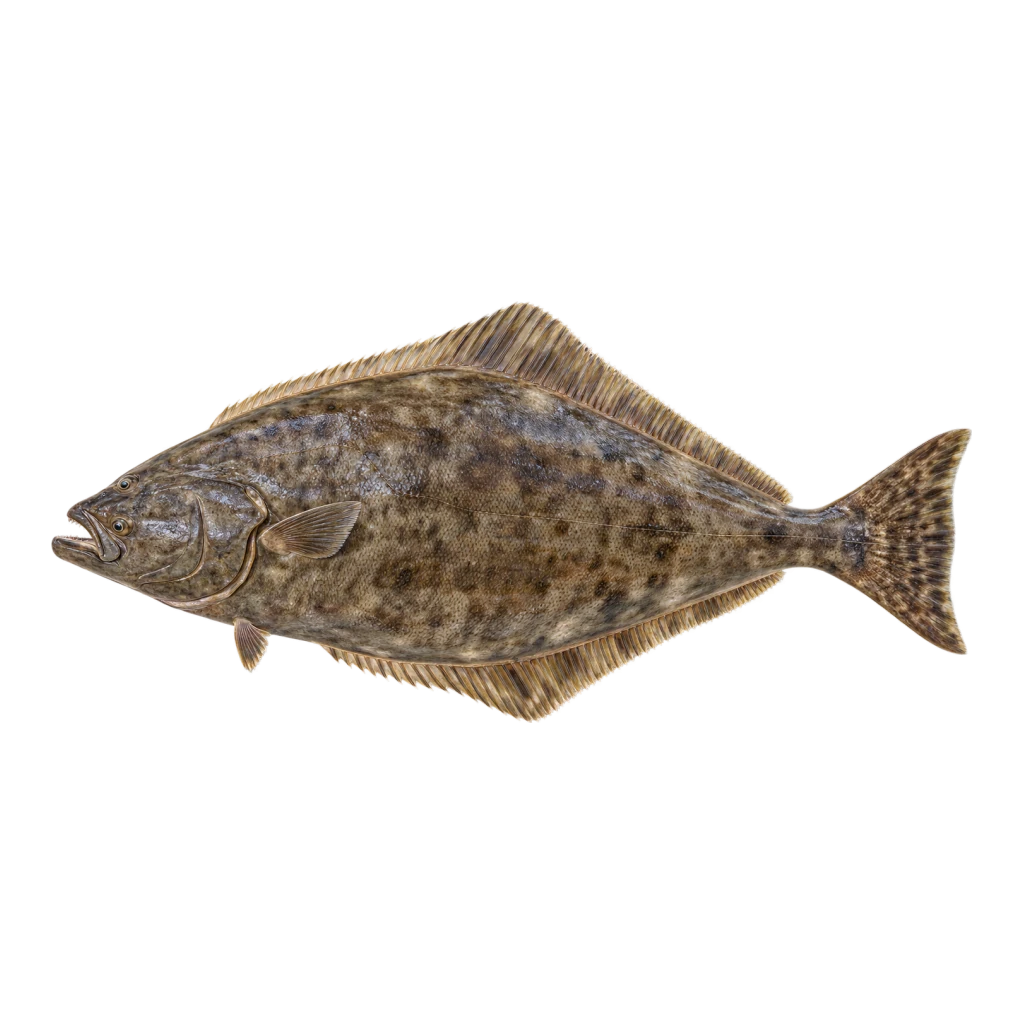
How to recognise it
The Pacific Halibut (Hippoglossus stenolepis) is a flatfish with a distinctive shape. It has a broad, oval body that can reach lengths of up to 8 feet and weights of over 500 pounds. The upper side is typically dark brown or greenish, while the underside is white. Its eyes are located on the right side of its body. The dorsal fin runs along the length of the body, tapering toward the tail. The mouth is large with sharp teeth.
This species is often confused with the Atlantic Halibut (Hippoglossus hippoglossus). The key detail that separates them is the number of dorsal fin rays; the Pacific Halibut usually has 20 to 27 rays, while the Atlantic Halibut has 16 to 20.
Where it lives
The Pacific Halibut is primarily found along the west coast of North America, from California to the Bering Sea in Alaska. It inhabits saltwater environments, typically in depths ranging from 30 to 1,500 feet. They prefer sandy or muddy bottoms where they can camouflage themselves. During the spring and summer months, they move into shallower waters for spawning. In the fall and winter, they migrate to deeper waters as temperatures drop.


