
How to recognise it
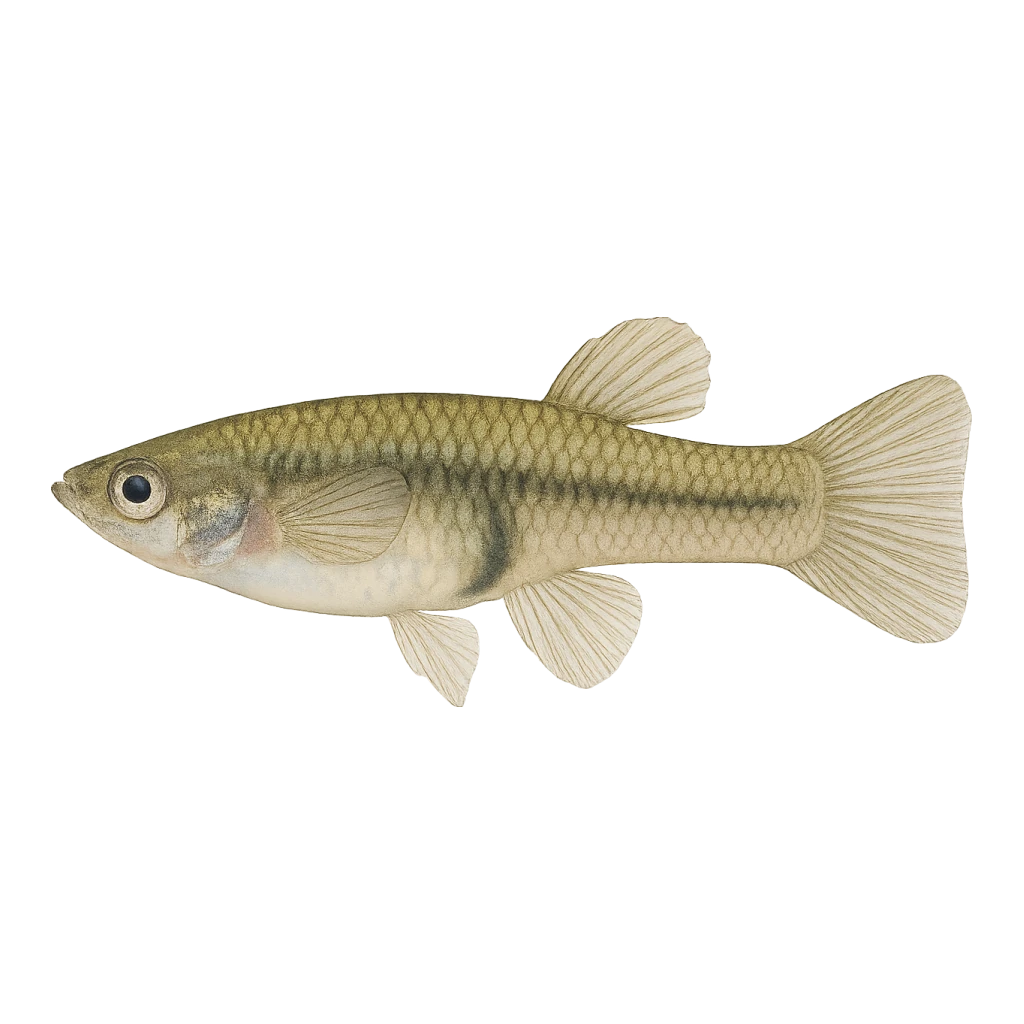
The Western Mosquitofish (Gambusia affinis) is a small freshwater fish. It typically measures 1.5 to 3 inches in length. Males are smaller and more slender than females. Males have a dark, elongated dorsal fin, while females have a rounded body and a larger, more pronounced belly. The coloration is generally olive to gray with a silvery sheen. The species is often confused with the Eastern Mosquitofish (Gambusia holbrooki). The key detail that separates them is the presence of a dark spot at the base of the dorsal fin in G. holbrooki, which is absent in G. affinis.
Where it lives
The Western Mosquitofish is found in various regions across the United States. Its range includes the southeastern states, extending into parts of the Midwest and Southwest. This species thrives in warm, shallow waters such as ponds, marshes, and slow-moving streams. It prefers depths of 1 to 3 feet. During warmer months, it can be found near the surface, while in cooler months, it may seek deeper areas or cover such as vegetation and submerged debris.
When it bites
The Western Mosquitofish is most active from late spring to early fall. The ideal water temperature for fishing is between 70 and 85 degrees F. Early morning and late afternoon are the best times to catch them. A passing front can increase activity, while strong winds may scatter them. A full moon can also enhance feeding behavior, making them more likely to bite.
How to catch it
To catch Western Mosquitofish, use small hooks, size 10 to 14. A light line, around 2 to 6-pound test, is recommended. Effective rigs include a simple bobber rig or a small fly rod setup. Baits such as small pieces of worms, bread, or tiny insects work well. For lures, try small spinners or micro jigs in bright colors like chartreuse or orange. Cast near vegetation or shallow areas and retrieve slowly to mimic natural movement.
Size, age and the table
Anglers typically encounter Western Mosquitofish measuring 1.5 to 3 inches. A trophy fish would be considered anything over 3 inches. Growth rates are rapid, with fish reaching maturity in about 3 to 4 months. The lifespan is generally 1 to 2 years. While they are not commonly sought for eating, they can be consumed if prepared properly. Handle them gently and release them quickly to minimize stress.


