
How to recognise it
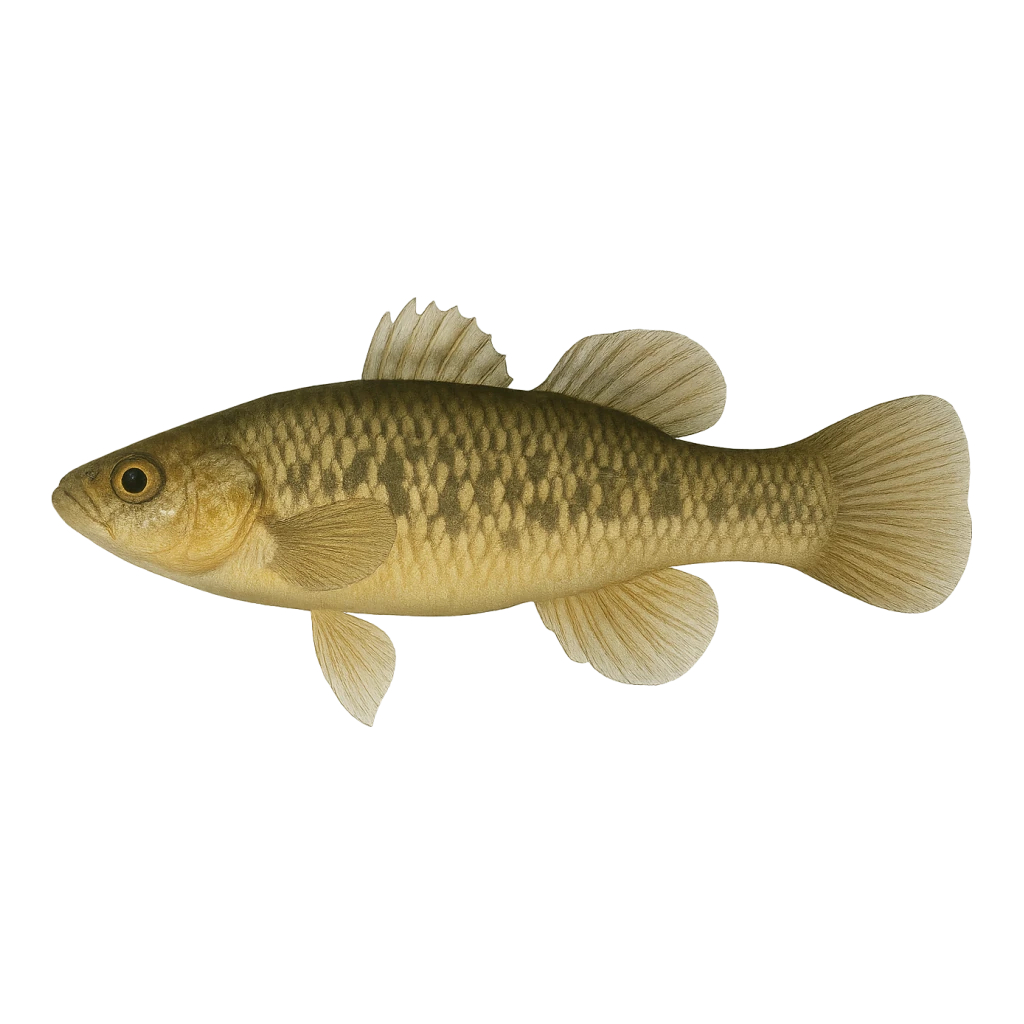
The Mummichog (Fundulus heteroclitus) is a small fish, typically measuring 2 to 4 inches in length. It has a streamlined body with a slightly flattened head. The coloration varies from olive green to brown on the back, with lighter sides and a white belly. Males often display bright yellow or orange hues during the breeding season. The fins are generally transparent with a slight yellow tint. The mouth is small and positioned at the front of the head, adapted for feeding on small invertebrates.
This species is most often confused with the Atlantic killifish (Fundulus diaphanus). The key detail that separates them is the presence of a dark spot at the base of the dorsal fin in the Mummichog, which is absent in the Atlantic killifish.
Where it lives
The Mummichog is primarily found along the Atlantic coast of the United States, from Maine to Florida. It inhabits brackish waters, including estuaries, salt marshes, and tidal creeks. The depth range is typically from 0 to 3 feet, but they can be found in deeper waters during certain conditions.
This species prefers areas with abundant vegetation, such as eelgrass and salt marsh plants, which provide cover and breeding grounds. In spring and summer, Mummichogs are often found in shallower waters as they spawn, while in fall and winter, they may move to slightly deeper areas to avoid colder temperatures.
When it bites
Mummichogs are most active from April to October. The ideal water temperature for fishing is between 60 and 80 degrees F. They tend to bite more aggressively during the early morning and late afternoon. Weather changes, such as a passing front or increased wind, can trigger feeding activity. A full moon may also enhance their feeding behavior, making them more likely to strike at baits and lures.
How to catch it
To catch Mummichogs, use small hooks, typically size 8 to 12, and light line in the range of 4 to 6 pounds. Effective rigs include a simple bobber rig or a small jig head with a soft plastic bait. Ideal baits are small pieces of shrimp, bloodworms, or small minnows. Lures such as small spinners or soft plastic grubs in colors like chartreuse or white can also be effective.
Cast near vegetation or structure where Mummichogs are likely to hide. Retrieve the bait slowly, allowing it to mimic the movement of natural prey. Be patient and watch for subtle bites, as they can be cautious feeders.
Size, age and the table
Anglers typically encounter Mummichogs in the 2 to 4-inch range. A trophy Mummichog is considered to be over 5 inches. They grow quickly, reaching maturity in about 1 year and can live up to 3 years in the wild. The eating quality of Mummichogs is generally low due to their small size, but they are often used as bait for larger fish.
When handling Mummichogs, wet your hands to avoid damaging their slime coat. If releasing, do so gently to ensure their survival. Always check local regulations regarding the capture and use of Mummichogs, as rules may vary by state.


