
How to recognise it
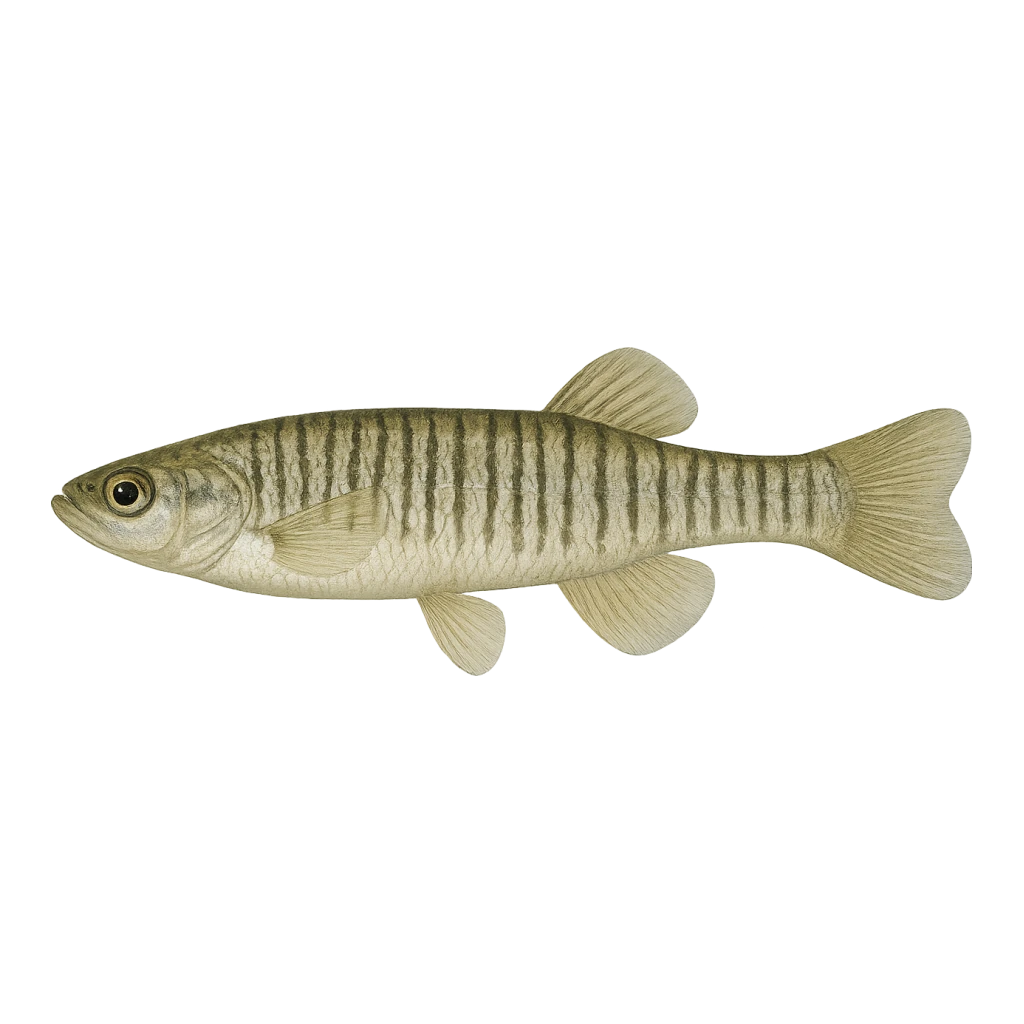
The Banded Killifish (Fundulus diaphanus) is a small, elongated fish. It typically measures 2 to 4 inches in length. The body is slender and features a series of dark, vertical bands against a lighter background. The coloration can range from olive green to yellowish. The fins are usually transparent with a slight yellow tint. The mouth is small and positioned at the front of the head.
This species is often confused with the Eastern Mudminnow (Umbra pygmaea). The key detail that separates them is the presence of the distinct vertical bands on the Banded Killifish, which the Mudminnow lacks.
Where it lives
The Banded Killifish is found in various regions across the United States. Its range extends from the Great Lakes region down to the Gulf Coast. They inhabit freshwater environments such as lakes, ponds, and slow-moving streams. They prefer shallow waters, typically found at depths of 1 to 6 feet.
This species often seeks cover among aquatic vegetation, submerged logs, and rocks. In the spring and summer, they are more abundant in shallow, weedy areas. As temperatures drop in the fall, they may move to slightly deeper waters but still remain near cover.
When it bites
Banded Killifish are most active from late spring through early fall. They bite best when water temperatures range from 65 to 75 degrees F. Early morning and late evening are the prime times for fishing, as they are more likely to feed during these hours.
Weather changes can affect their activity. A passing front may increase their feeding, while strong winds can make them less active. A full moon often leads to increased activity, as they tend to feed more aggressively during this time.
How to catch it
To catch Banded Killifish, use light tackle with a line weight of 2 to 6 pounds. Small hooks, size 10 to 14, work best. Effective rigs include a simple bobber setup or a small jig head with a soft plastic bait.
For bait, try using small worms, minnows, or artificial lures in bright colors like chartreuse or orange. Cast near vegetation or structures where they are likely to hide. Retrieve slowly, allowing the bait to mimic natural movement. A twitching motion can provoke strikes.
Size, age and the table
Anglers typically encounter Banded Killifish measuring 2 to 4 inches. A trophy specimen is considered to be over 5 inches. They grow quickly, reaching maturity in about one year and can live up to 3 years in the wild.
While not commonly targeted for eating, they are edible and have a mild flavor. If you choose to keep them, handle them gently to minimize stress. For catch and release, use wet hands and avoid squeezing to ensure their survival after release.


