
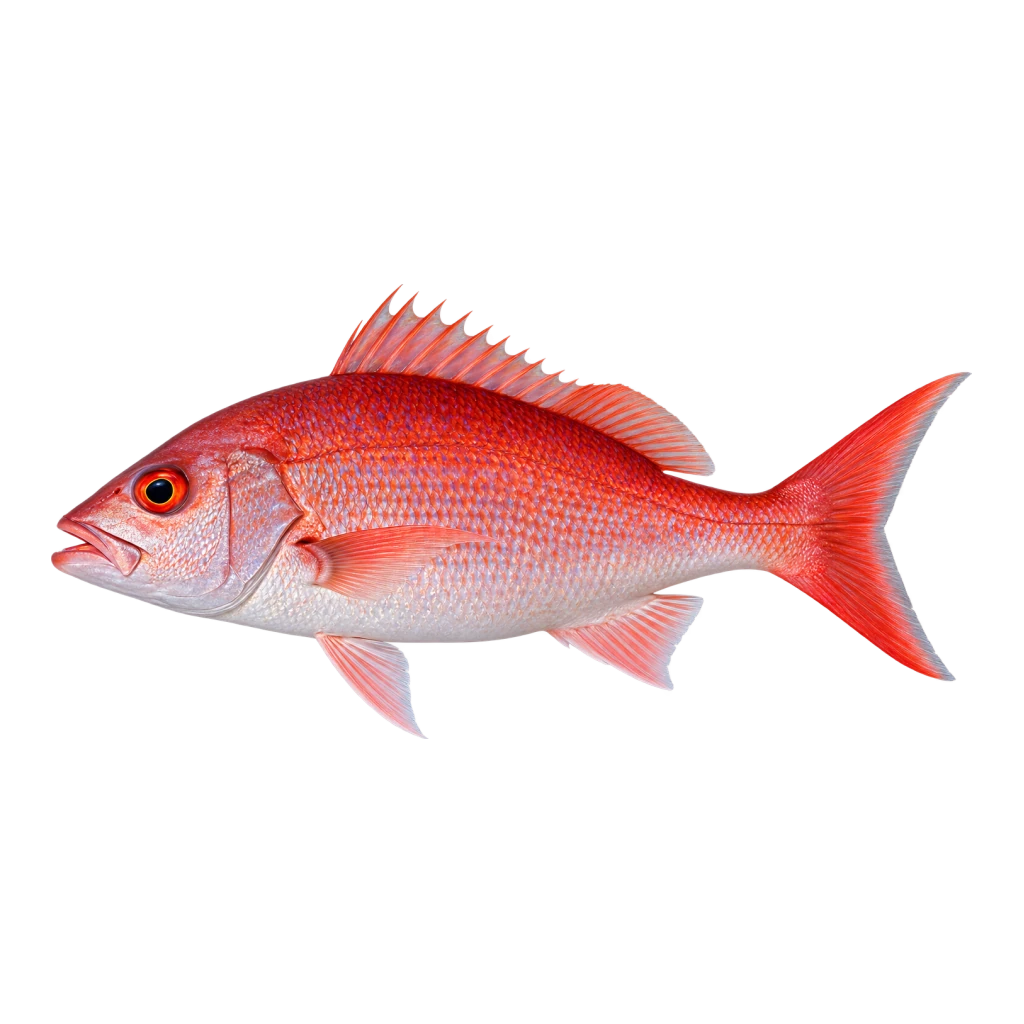
How to recognise it
The Queen Snapper (Etelis oculatus) is a striking fish. It has a deep, laterally compressed body. The coloration is typically a bright pink to reddish hue, with a white belly. The fins are long and pointed, especially the dorsal fin, which has 10 spines and 14 soft rays. The mouth is large, with sharp teeth, and the eyes are prominent. This species is often confused with the Red Snapper (Lutjanus campechanus). The key detail that separates them is the Queen Snapper's elongated body shape compared to the more robust body of the Red Snapper.
Where it lives
The Queen Snapper is found in the western Atlantic Ocean. In the United States, its range includes the waters off Florida, the Gulf of Mexico, and the Caribbean. This species prefers deep waters, typically inhabiting depths of 200 to 1,200 feet. They are often found near rocky structures, reefs, and drop-offs. Seasonal changes affect their habitat; during warmer months, they may move shallower, while in colder months, they tend to retreat to deeper waters.
When it bites
Queen Snapper are most active from late spring to early fall. They prefer water temperatures between 70 and 85 degrees F. The best time to fish for them is during the early morning or late evening. Weather conditions can influence their feeding behavior. A passing front may trigger increased activity, while strong winds can make them less likely to bite. A full moon often enhances their feeding, making them more aggressive.
How to catch it
To catch Queen Snapper, use a bottom fishing rig with a 6/0 to 8/0 circle hook. A 50 to 80-pound test braided line is recommended for strength. Live baits such as small squid or mackerel work well. If using lures, opt for jigs in bright colors like pink or chartreuse, weighing 4 to 8 ounces. Cast near rocky structures or drop-offs and allow the bait to settle on the bottom. Slowly jig the bait to mimic the movement of prey. Keep the line tight to detect bites quickly.
Size, age and the table
Anglers typically encounter Queen Snapper ranging from 10 to 20 inches in length. A trophy specimen is considered to be over 25 inches. They grow relatively quickly, reaching sexual maturity at around 3 years of age. The lifespan can exceed 10 years. The flesh of the Queen Snapper is white, firm, and has a mild flavor, making it highly sought after for eating. When handling, use wet hands or gloves to prevent skin damage. If releasing, do so gently to ensure survival.


