
How to recognise it
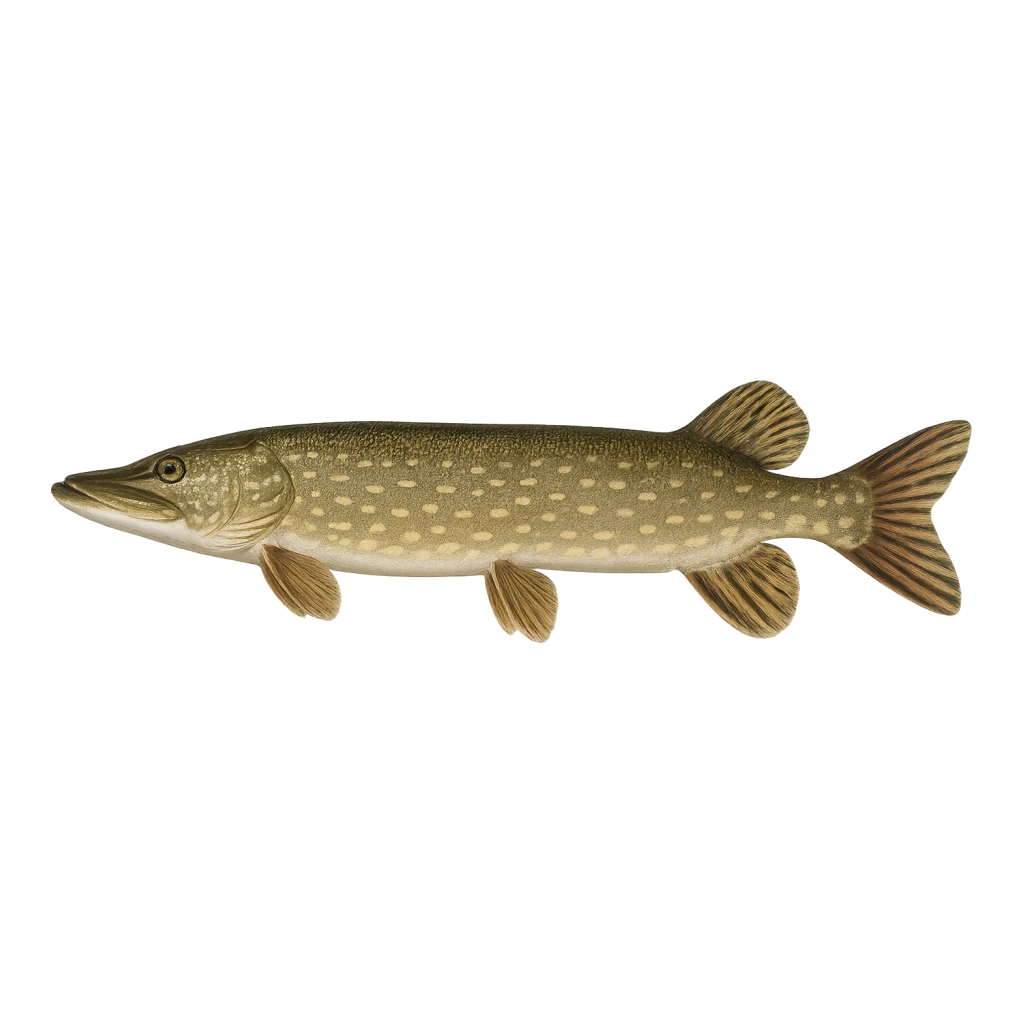
The Northern Pike (Esox lucius) is a long, slender fish with a pointed snout. Its body is typically greenish to gray with lighter, irregular spots or blotches. The fins are usually a yellowish or light green, and the tail is forked. The mouth is filled with sharp teeth, making it an effective predator.
This species is often confused with the Muskie (Esox masquinongy). The key detail that separates them is the pattern of the spots: Northern Pike have light spots on a dark background, while Muskies have dark vertical stripes on a lighter background.
Where it lives
Northern Pike are found throughout North America, primarily in the northern regions. They inhabit freshwater lakes, rivers, and wetlands. In the U.S., they are common in states like Minnesota, Wisconsin, and Michigan.
Pike prefer shallow waters, typically ranging from 3 to 15 feet deep, especially where there is ample vegetation. They often seek cover in weeds, fallen trees, and rocky areas. In spring, they move into shallower waters for spawning. In summer, they may retreat to deeper areas or remain near cover to escape the heat.
When it bites
Northern Pike are most active from late spring through early fall, generally from May to September. They prefer water temperatures between 60°F and 75°F. Early morning and late evening are prime times for fishing, as pike are more likely to feed during these hours.
Weather changes can affect their feeding behavior. A passing front can trigger increased activity, while high winds may make them less aggressive. A full moon often leads to more active feeding, as the increased light encourages them to hunt.
How to catch it
Effective rigs for catching Northern Pike include spinnerbaits, jerkbaits, and live bait rigs. Use lures that are 4 to 10 inches long, with colors like chartreuse, silver, or blue being particularly effective.
For line, use a strong braided line rated between 30 to 50 pounds. A wire leader is recommended to prevent bite-offs. Hooks should be size 2/0 to 5/0, depending on the bait used.
Cast near weed edges, submerged structures, or drop-offs. Retrieve lures with a steady pace, incorporating pauses to mimic injured prey. When using live bait, such as minnows or suckers, allow them to swim freely near cover.
Size, age and the table
Anglers typically encounter Northern Pike ranging from 24 to 36 inches. A trophy Northern Pike is generally considered to be over 40 inches. Growth rates vary by region, but they can reach maturity in 3 to 5 years.
The lifespan of a Northern Pike can exceed 10 years in the wild. They are known for their firm, white flesh, which is considered good eating when prepared properly. Handle pike carefully to avoid injury from their sharp teeth, and use proper techniques for catch and release to ensure their survival after being caught.


