
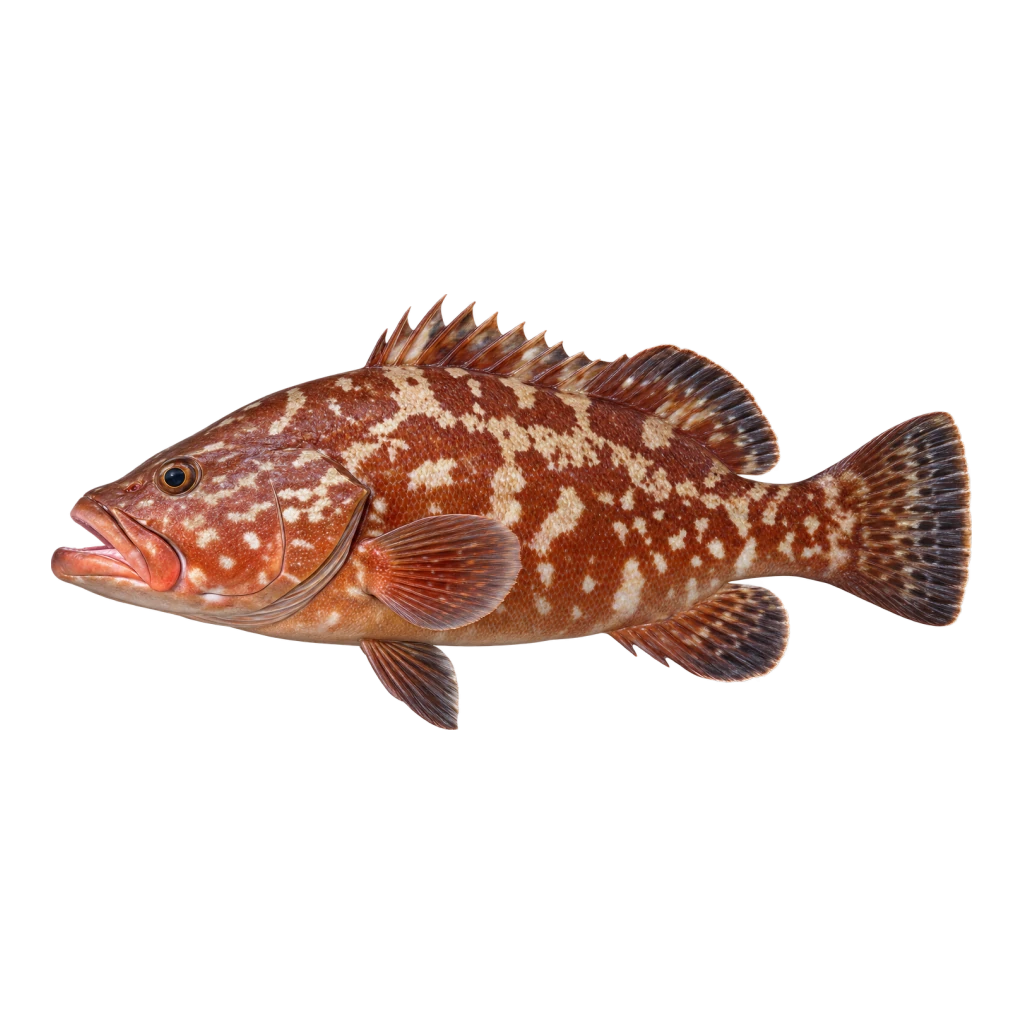
How to recognise it
The Red Grouper (Epinephelus morio) is a robust fish with a stout body. Its coloration ranges from reddish-brown to a lighter shade with darker spots. The fins are rounded, and the tail is slightly forked. The mouth is large, with prominent canine teeth. A key feature is the presence of a distinctive, small notch in the upper jaw. The Red Grouper is often confused with the Black Grouper (Mycteroperca bonaci). The main detail that separates them is the Red Grouper's more elongated body shape compared to the stockier Black Grouper.
Where it lives
Red Grouper are primarily found in the southeastern United States. Their range extends from North Carolina to the Gulf of Mexico, including Florida and Texas. They inhabit warm, saltwater environments, typically in depths ranging from 30 to 200 feet. They prefer rocky bottoms, reefs, and ledges, where they can find cover. During the summer months, they may move shallower, while in winter, they often retreat to deeper waters for warmth.
When it bites
Red Grouper are most active from April to October. They prefer water temperatures between 70°F and 85°F. Early morning and late afternoon are the best times to catch them. A passing cold front can trigger feeding, while strong winds may make them less active. A full moon can enhance their feeding patterns, leading to increased catches during this period.
How to catch it
To catch Red Grouper, use a conventional bottom fishing rig with a 5/0 to 8/0 hook. A 50 to 80-pound test line is recommended for strength. Live baits like pinfish, grunts, or squid work well. For lures, consider using jigs in bright colors like pink or chartreuse, weighing 1 to 3 ounces. Cast near rocky structures or reefs and let the bait sink to the bottom. Slowly jig the bait to mimic natural movement, and be prepared for a strong strike.
Size, age and the table
Anglers typically encounter Red Grouper ranging from 10 to 20 pounds. A trophy Red Grouper is generally considered to be over 30 pounds. They grow rapidly, reaching sexual maturity around 3 to 4 years of age and can live up to 20 years. The meat is firm and white, making it a popular choice for eating. Handle them carefully to avoid stress during release, and use circle hooks to minimize injury.


