
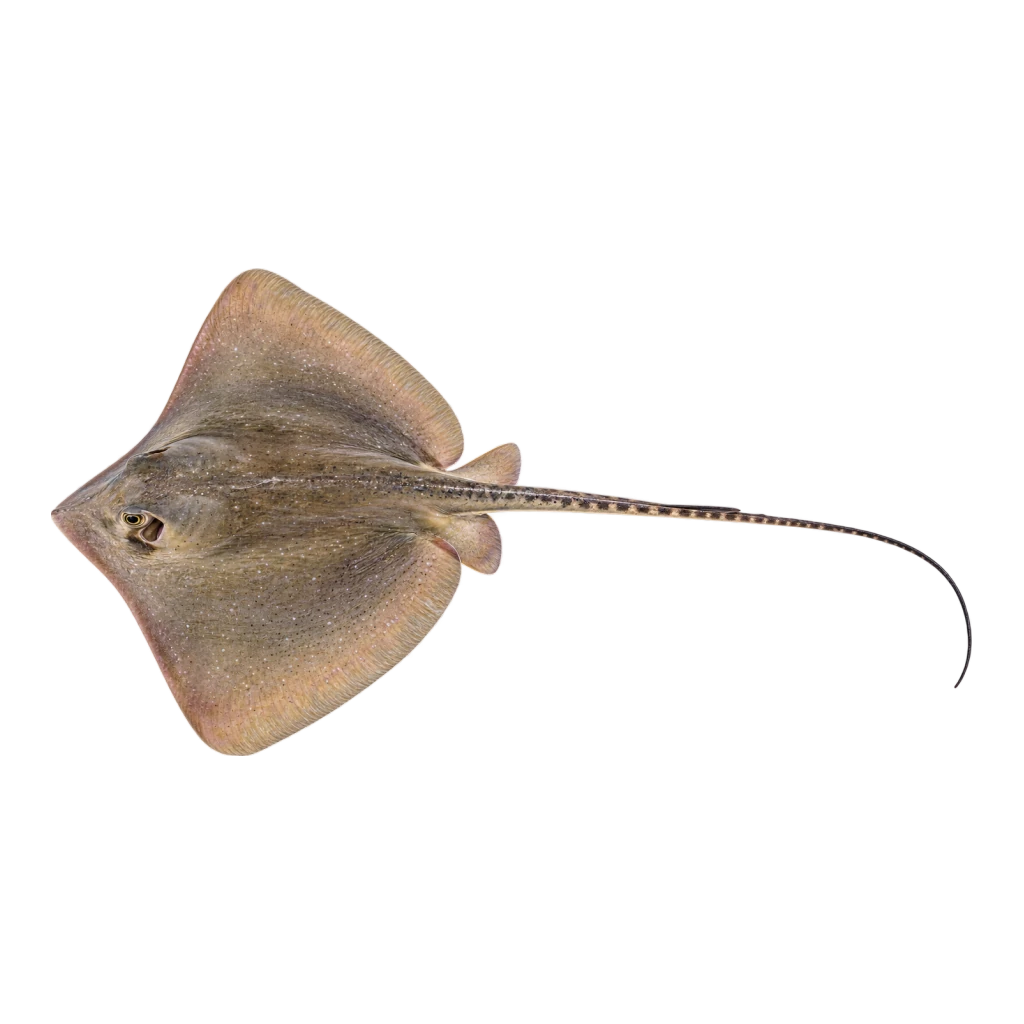
How to recognise it
The Atlantic Stingray (Dasyatis sabina) is a flat-bodied fish with a distinctive shape. It has a broad, rounded snout and a long, whip-like tail. The upper surface is typically brown or gray, which helps it blend into the sandy or muddy bottoms where it resides. The underside is white. The Atlantic Stingray can be confused with the Southern Stingray (Dasyatis americana). The key detail that separates them is the presence of a pronounced, long, and pointed tail spine on the Southern Stingray, which is less prominent in the Atlantic Stingray.
Where it lives
The Atlantic Stingray is found along the eastern coast of the United States, from New Jersey to Florida, and extends into the Gulf of Mexico. It prefers shallow coastal waters, estuaries, and bays, typically inhabiting depths of 1 to 30 feet. During warmer months, it moves into shallower waters, often found near sandy or muddy substrates. In colder months, it may migrate to slightly deeper waters to escape the cold.
When it bites
The Atlantic Stingray is most active from late spring through early fall, particularly from May to October. It prefers water temperatures between 70°F and 85°F. The best time to catch them is during the early morning or late evening when they are more active. Weather changes, such as a passing front or a full moon, can increase their feeding activity, while strong winds may make them less likely to bite.
How to catch it
To target Atlantic Stingrays, use a bottom fishing rig with a 3/0 to 5/0 circle hook. A standard fish finder rig works well. Use baits like shrimp, cut bait, or squid, typically in sizes of 4 to 6 inches. Bright colors like pink or yellow can attract them. Cast near sandy bottoms or around structures like jetties and piers. Allow the bait to sit on the bottom, and be patient. When you feel a bite, wait for the stingray to take the bait before setting the hook.
Size, age and the table
Atlantic Stingrays typically range from 24 to 36 inches in width and can weigh between 10 to 50 pounds. A trophy specimen is usually considered to be over 40 inches wide. They grow rapidly in their early years, reaching maturity at around 3 to 4 years of age, and can live up to 15 years in the wild. The flesh of the Atlantic Stingray is edible and considered good quality, often compared to scallops. When handling, use care to avoid the venomous spine on the tail. For release, gently remove the hook and return the stingray to the water quickly to minimize stress.


