
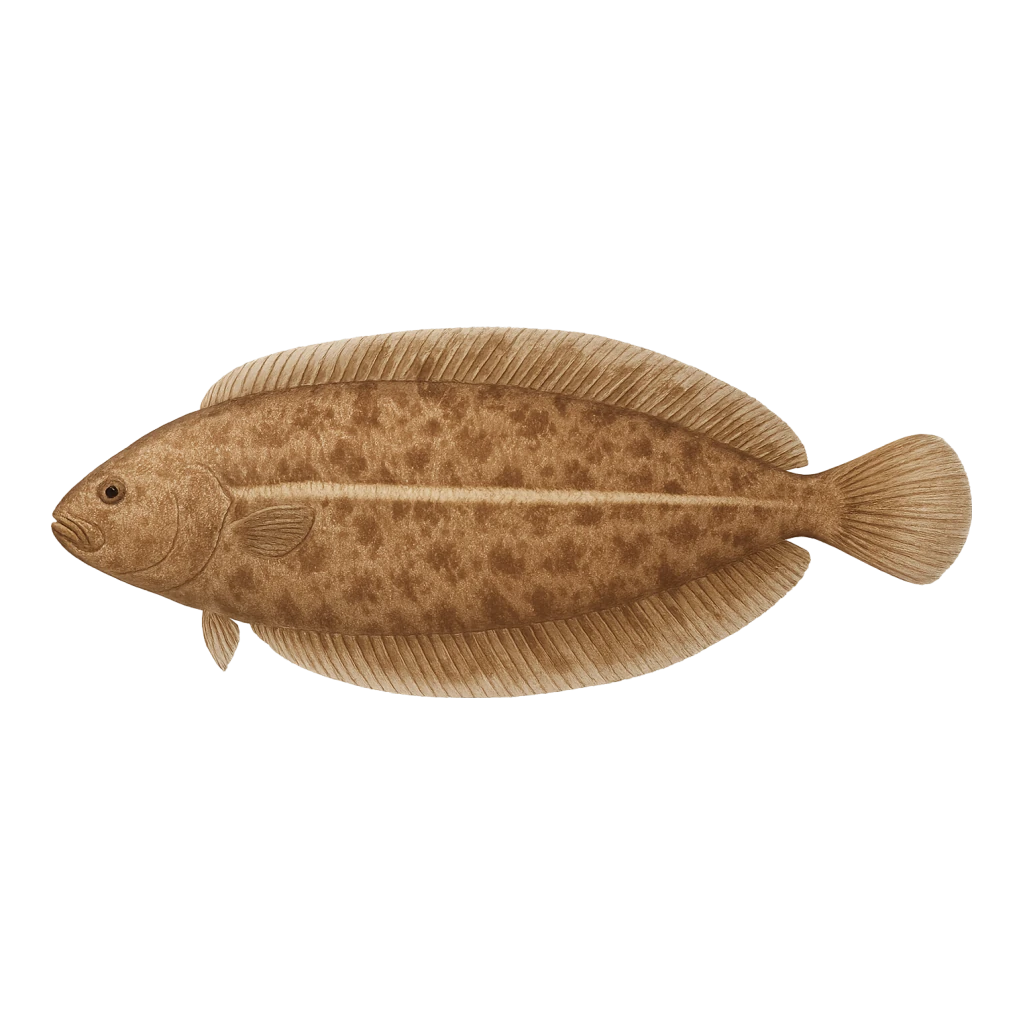
How to recognise it
The Tonguefish, or Cynoglossus bilineatus, is a flat, oval-shaped fish with a distinctive appearance. It has a brownish or grayish body with two prominent dark stripes running along its length. The eyes are located on the upper side of its body, and the mouth is small and slightly protruding. The fins are soft and rounded, with the dorsal fin running along the length of the body. This species is often confused with the Southern Flounder (Paralichthys lethostigma), but the Tonguefish can be identified by its two lateral lines, while the Southern Flounder has a single lateral line.
Where it lives
The Tonguefish is primarily found along the Atlantic coast of the United States, from New Jersey to Florida. It inhabits estuarine and coastal waters, often preferring sandy or muddy bottoms. The depth range for this species typically falls between 10 to 100 feet. During the warmer months, Tonguefish tend to move into shallower waters, while in colder months, they may retreat to deeper areas for thermal refuge.
When it bites
Tonguefish are most active from late spring through early fall. They prefer water temperatures between 70°F and 85°F. The best time to catch them is during the early morning and late evening hours. Weather changes, such as a passing front or strong winds, can increase their feeding activity. A full moon may also enhance their bite, as it affects their natural behavior and feeding patterns.
How to catch it
To catch Tonguefish, anglers should use a simple rig with a light line, typically 10-15 lb test. A small hook, size 1 to 2, is recommended. Baits such as shrimp, small minnows, or cut bait work well. For lures, soft plastic grubs in natural colors like brown or green can be effective. Cast near sandy or muddy bottoms, and retrieve slowly, allowing the bait to stay close to the bottom. A slow, steady retrieve or a gentle jigging motion can entice bites.
Size, age and the table
The typical size of a Tonguefish caught by anglers ranges from 10 to 15 inches. A trophy Tonguefish is considered to be over 20 inches. They grow relatively quickly, reaching maturity in about 2-3 years, and can live up to 5 years in the wild. The flesh of the Tonguefish is white and flaky, making it a good choice for eating. When handling, it is important to keep them in water as much as possible to ensure their survival upon release. If kept for consumption, proper handling and storage are essential to maintain quality.


