
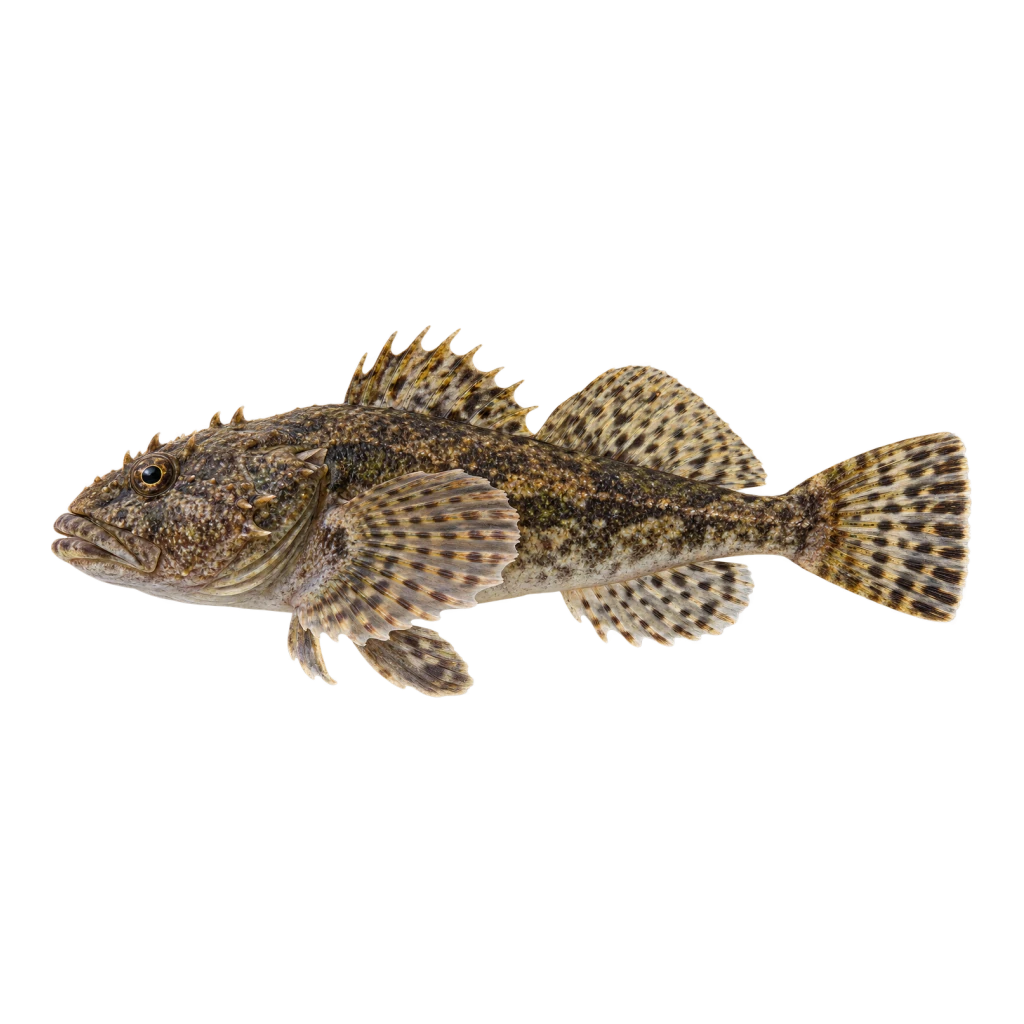
How to recognise it
The Prickly Sculpin (Cottus asper) is a small fish with a stout body and a broad head. It typically measures between 3 to 8 inches in length. The coloration varies from brown to olive with darker mottling, providing excellent camouflage against the substrate. Its most distinctive feature is the presence of small, sharp spines along its back and head, which give it a prickly appearance. The pectoral fins are large and fan-like, while the mouth is wide with a slightly protruding lower jaw. The Prickly Sculpin is often confused with the Pacific Sculpin (Cottus aleuticus), but the key detail that separates them is the number of dorsal fin spines; the Prickly Sculpin has more spines than the Pacific Sculpin.
Where it lives
The Prickly Sculpin is primarily found along the Pacific Coast of the United States, ranging from California to Alaska. It inhabits a variety of water types, including estuaries, tidal pools, and rocky shorelines. This species prefers depths of 0 to 30 feet, often found in areas with rocky or sandy substrates. During warmer months, they may move into shallower waters, while in colder months, they tend to retreat to deeper areas for protection. The presence of cover, such as rocks, kelp, and other structures, is crucial for their habitat, providing shelter from predators and a place to ambush prey.
When it bites
The Prickly Sculpin is most active from late spring through early fall, particularly from May to September. They prefer water temperatures between 50 to 65 degrees F. Early morning and late evening are the best times to catch them, as they are more likely to feed during these periods. Weather changes can affect their activity; a passing front may trigger feeding, while strong winds can make them less active. A full moon can also influence their feeding patterns, potentially making them more aggressive as they hunt for food.
How to catch it
To catch Prickly Sculpin, use a light tackle setup with a spinning rod and reel. A 6 to 8-pound test line is recommended, with hooks sized between 8 and 12. Effective rigs include a simple drop shot or a small jig head. Baits such as worms, small shrimp, or cut bait work well, while lures like small jigs or soft plastics in natural colors (brown, green, or tan) can be effective. Cast near rocky structures or under docks, and work the bait slowly along the bottom to entice bites. A slow retrieve or occasional jigging motion can increase your chances of a catch.
Size, age and the table
Anglers typically encounter Prickly Sculpins ranging from 3 to 8 inches, with larger individuals considered trophies at over 10 inches. The growth rate is relatively slow, with individuals reaching maturity at around 2 to 3 years of age. The lifespan of a Prickly Sculpin can extend up to 5 years. While they are not commonly targeted for eating, they are edible and have a mild flavor. If you choose to keep them, handle them gently to avoid damaging their spines and ensure a quick release if you plan to return them to the water.


