
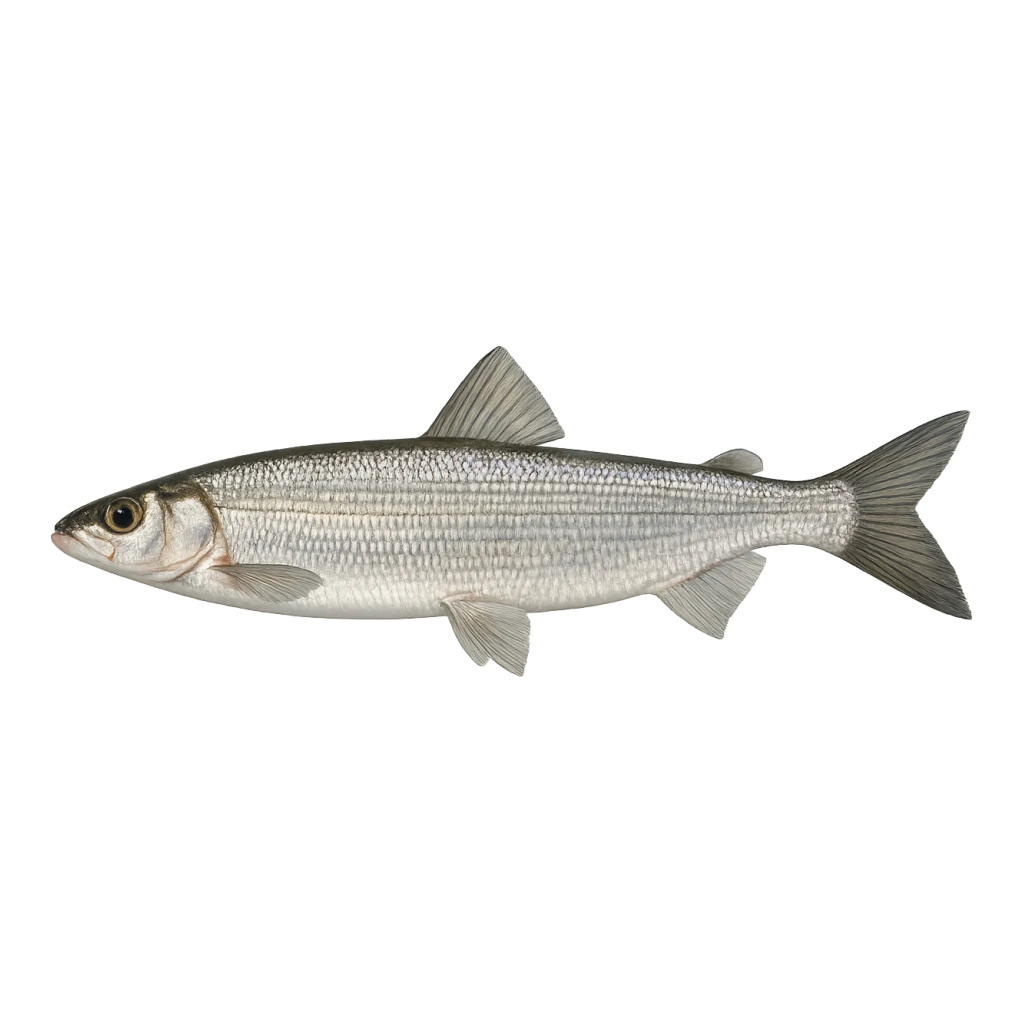
How to recognise it
The Cisco, or Coregonus artedi, is a slender, elongated fish with a streamlined body. It typically has a blue-green back, silver sides, and a white belly. The fins are generally transparent with a slight yellow or orange tint. Ciscoes have a forked tail and a relatively small mouth with a single row of small teeth. They are often confused with the Lake Herring, but the key detail that separates them is the presence of a more pronounced adipose fin on the Cisco.
Where it lives
Ciscoes are primarily found in the northern regions of the United States, particularly in the Great Lakes and some inland lakes in the Midwest. They inhabit cold, clear freshwater environments. Ciscoes prefer depths ranging from 30 to 100 feet, often staying near the thermocline during warmer months. In summer, they tend to move to deeper waters, while in winter, they may be found in shallower areas as they seek warmer temperatures.
When it bites
Ciscoes are most active from late spring to early fall, particularly in May through September. They prefer water temperatures between 50 and 68 degrees F. Early mornings and late evenings are the best times to catch them. Weather changes, such as a passing front or increased wind, can trigger feeding activity. A full moon may also enhance their feeding patterns, making them more likely to bite during the night.
How to catch it
To catch Ciscoes, anglers often use a slip bobber rig or a jigging spoon. A common setup includes a 1/8 to 1/4 ounce jigging spoon in silver or blue colors. Use a 6 to 10-pound test line with a size 6 to 8 hook. Cast near schools of baitfish or drop your lure near the thermocline. Retrieve slowly, allowing the lure to flutter. In the early morning or late evening, try using live bait like minnows or small shiners for better results.
Size, age and the table
The typical size for a Cisco caught by anglers ranges from 12 to 18 inches, with weights around 1 to 3 pounds. A trophy Cisco is generally considered to be over 20 inches. Ciscoes grow rapidly, reaching maturity in about 3 to 5 years. Their lifespan can extend up to 10 years. Ciscoes are known for their delicate, flaky flesh, making them a popular choice for eating. Handle them carefully to avoid damaging their skin, and use proper techniques for catch and release to ensure their survival.


