
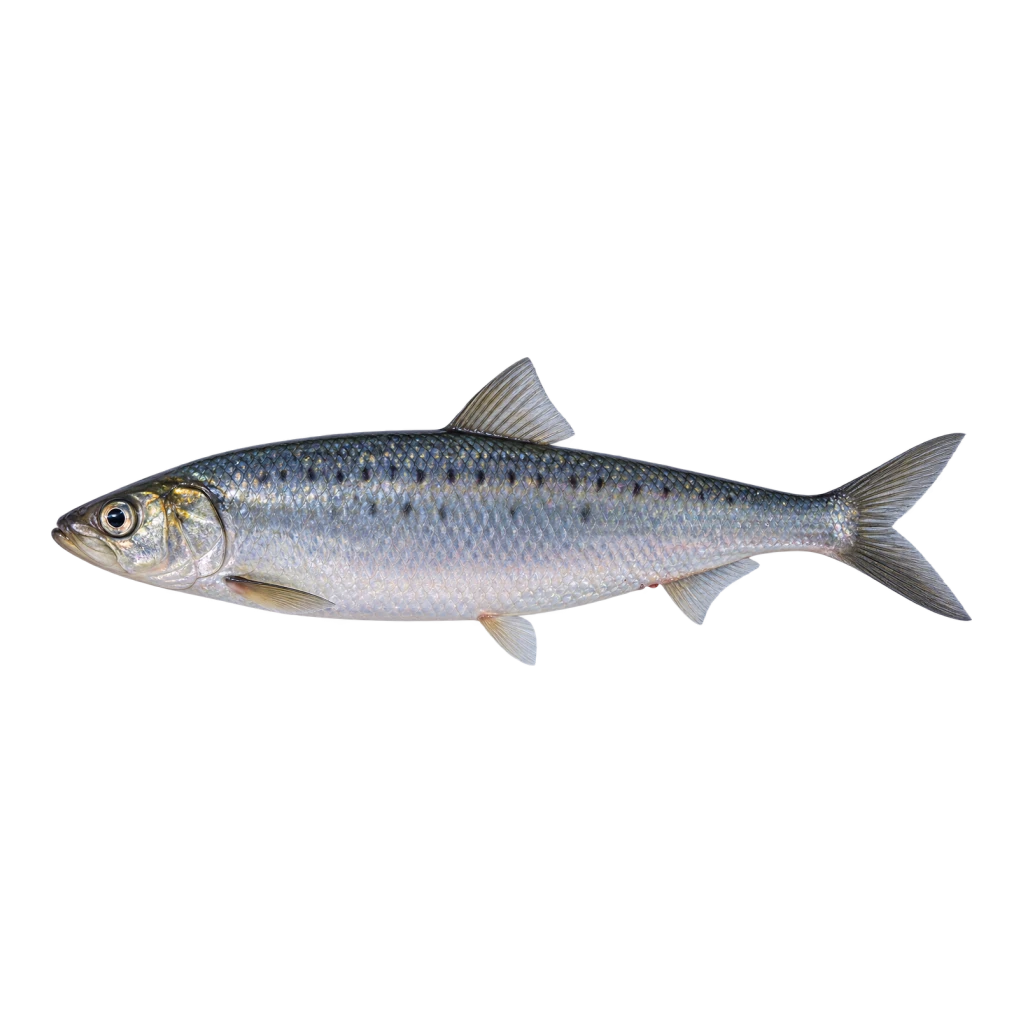
How to recognise it
The Atlantic Herring (Clupea harengus) is a slender fish with a streamlined body. It typically has a bluish-green back, silver sides, and a light belly. The fish features a single dorsal fin located near the middle of its body. Its mouth is slightly protruding, with small teeth. One species it is often confused with is the Pacific Herring (Clupea pallasi). The key detail that separates them is the Atlantic Herring's more pronounced fork in the tail.
Where it lives
The Atlantic Herring is found along the eastern coast of North America. Its range extends from the Gulf of Maine to the mid-Atlantic region. This species inhabits saltwater environments, primarily in coastal areas. They prefer depths ranging from 30 to 600 feet. During the spring and summer, they tend to move closer to the surface and into shallower waters. In winter, they often migrate to deeper waters for spawning.
When it bites
Atlantic Herring are most active from late spring through early fall. They typically bite when water temperatures range from 50 to 68 degrees F. Early morning and late evening are the best times to catch them. Weather changes, such as a passing front or strong winds, can trigger feeding activity. A full moon may also enhance their feeding behavior, making them more likely to bite.
How to catch it
To catch Atlantic Herring, use a variety of rigs. A simple high-low rig with two hooks is effective. Use small hooks, size 8 to 10, and light line, around 6 to 10-pound test. Baits such as small pieces of cut bait, sand eels, or shrimp work well. Lures in silver or blue colors, around 1 to 2 inches long, can also be effective. Cast near schools of herring or areas where they are known to feed, such as around rocky structures or estuaries. Retrieve your lure slowly to mimic the movement of baitfish.
Size, age and the table
Anglers typically encounter Atlantic Herring ranging from 12 to 18 inches in length. A trophy specimen is generally considered to be over 20 inches. They grow quickly, reaching maturity in about 3 to 4 years and can live up to 10 years. The flesh is oily and flavorful, making it a popular choice for consumption. Handle them carefully to avoid bruising, and if releasing, do so gently to increase their chances of survival.


