
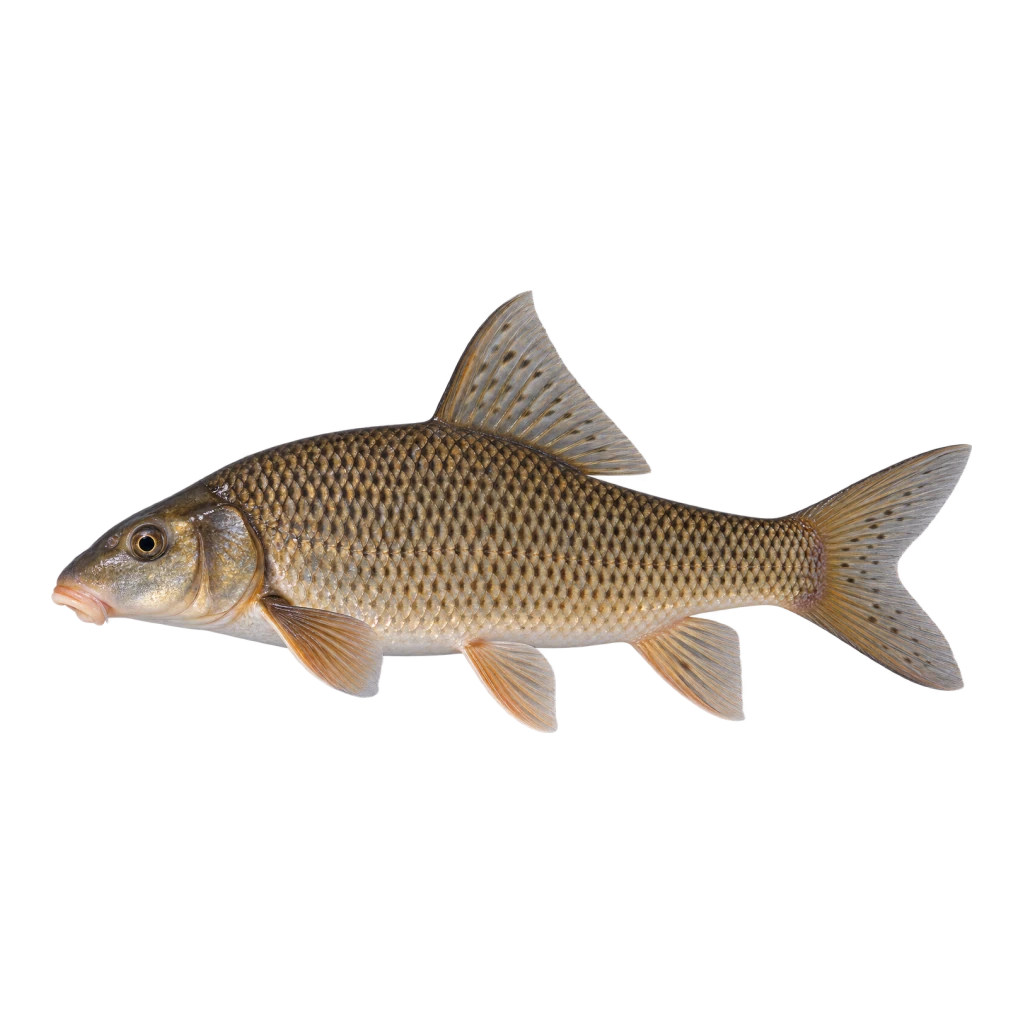
How to recognise it
The River Carpsucker (Carpiodes carpio) is a freshwater fish with a distinct appearance. It has a robust, elongated body that can reach lengths of 20 to 30 inches. The coloration is typically a grayish-green or brownish hue on the back, fading to a lighter belly. The fins are often yellow or orange, particularly the dorsal and anal fins.
One of the most notable features is its mouth, which is small and sub-terminal, adapted for bottom feeding. The River Carpsucker is often confused with the Quillback Carpsucker (Carpiodes cyprinus). The key detail that separates them is the presence of a pronounced ridge along the back of the River Carpsucker, which is absent in the Quillback.
Where it lives
The River Carpsucker is found throughout the central and eastern United States. Its range includes the Great Lakes, the Mississippi River basin, and various tributaries. This species prefers slow-moving rivers and large streams, often inhabiting areas with a depth range of 3 to 15 feet.
In terms of habitat, River Carpsuckers are commonly found near rocky or sandy bottoms, where they can find food. During the warmer months, they may move into shallower areas with more vegetation, while in colder months, they tend to retreat to deeper waters.
When it bites
The River Carpsucker is most active from late spring to early fall, typically from May to September. The ideal water temperature for fishing this species ranges from 65 to 80 degrees F. They tend to bite best during the early morning and late evening hours.
Environmental factors can influence their feeding behavior. A passing front may trigger increased activity, while strong winds can make them less likely to bite. A full moon can also enhance their feeding, as it increases light levels during the night.
How to catch it
To catch River Carpsuckers, anglers can use a variety of rigs. A simple slip sinker rig is effective, using a 1 to 2-ounce weight with a 2 to 4-foot leader. Hooks should be size 4 to 6. Baits such as corn, dough balls, or nightcrawlers work well. For lures, small jigs in natural colors like brown or green can be effective.
Cast near rocky structures or vegetation, allowing the bait to settle on the bottom. Retrieve slowly, giving the fish time to take the bait. Be patient, as bites may be subtle.
Size, age and the table
Anglers typically encounter River Carpsuckers ranging from 10 to 20 inches in length. A trophy specimen is generally considered to be over 25 inches. Growth rates can vary, but they typically reach sexual maturity by 3 to 4 years of age and can live up to 10 years.
While River Carpsuckers are edible, they are not commonly sought after for their taste. When handling, use wet hands to minimize slime loss and ensure a safe release. If you choose to keep one, ensure it is cleaned properly to maintain quality.


