
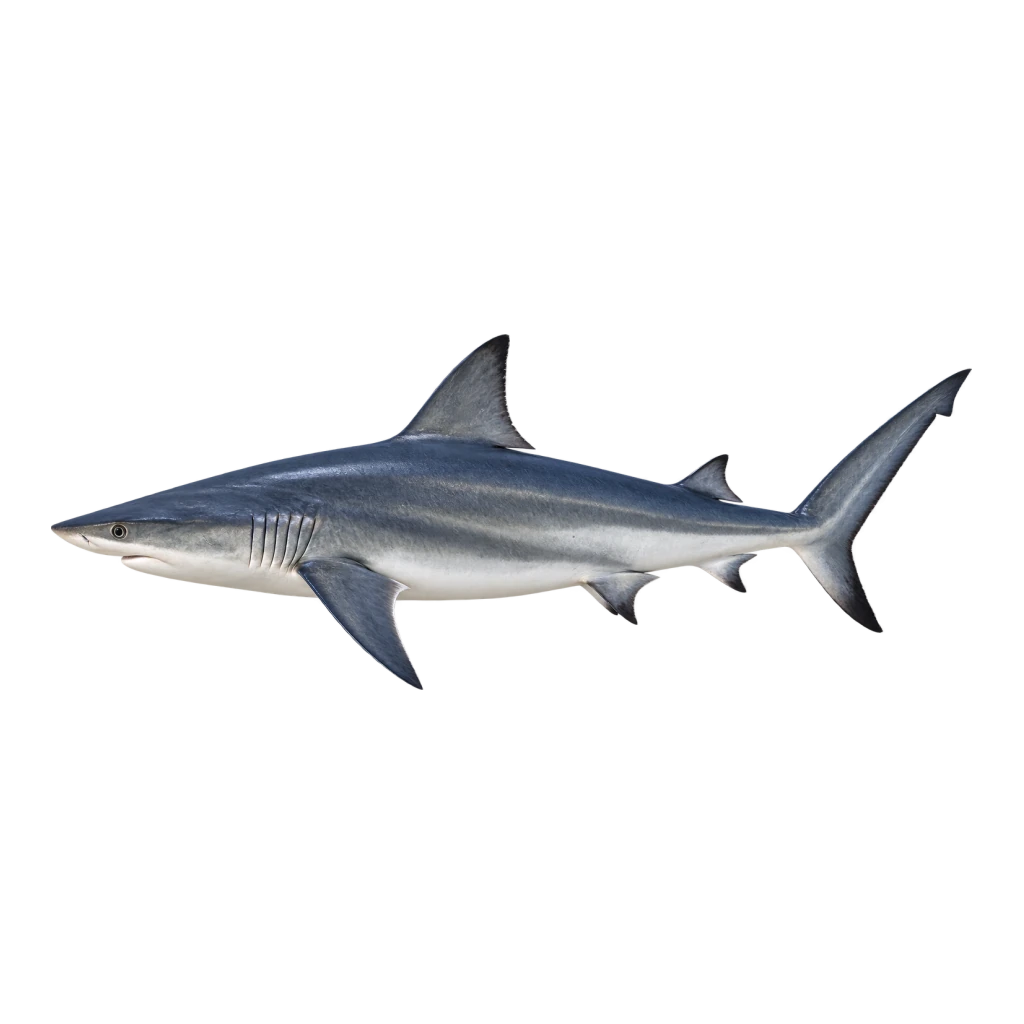
How to recognise it
The Finetooth Shark (Carcharhinus isodon) is a sleek, streamlined shark. It has a long, pointed snout and a slender body. The coloration is typically a light gray to bluish on the top and white underneath. Its dorsal fin is tall and triangular, located about two-thirds of the way back on the body. The pectoral fins are long and narrow. The mouth is distinctive, featuring small, sharp teeth that are well-suited for catching fish. It is often confused with the Blacktip Shark (Carcharhinus limbatus). The key detail that separates them is the lack of a black tip on the Finetooth Shark's dorsal fin.
Where it lives
The Finetooth Shark is primarily found along the southeastern coast of the United States. Its range extends from North Carolina to Florida, including the Gulf of Mexico. It prefers shallow coastal waters, often inhabiting estuaries and bays. The depth range is typically between 10 to 100 feet. In warmer months, Finetooth Sharks are found closer to shore, while in cooler months, they may move to deeper waters. They tend to seek out areas with sandy or muddy bottoms, often near structures like reefs or wrecks.
When it bites
Finetooth Sharks are most active from late spring to early fall, particularly from May to October. They prefer water temperatures between 70 to 85 degrees F. The best time of day to catch them is during dawn and dusk when they are most likely to feed. Weather changes can influence their behavior; a passing front may increase activity, while strong winds can make them less predictable. A full moon can enhance feeding activity, leading to more bites.
How to catch it
To catch Finetooth Sharks, use a variety of rigs. A common choice is a fish finder rig with a 3 to 6 oz pyramid sinker. Baits like mullet, menhaden, or cut squid work well, typically in sizes of 4 to 8 inches. Lures such as large spoons or jigs in bright colors can also be effective. Use a strong line, preferably 30 to 50 lb test, with a 4/0 to 7/0 circle hook. Cast near structures or along sandy beaches, and retrieve slowly to mimic injured prey. Be patient, as they may take time to bite.
Size, age and the table
Anglers typically encounter Finetooth Sharks ranging from 3 to 6 feet in length. A trophy Finetooth Shark is considered to be over 6 feet. They grow at a rate of about 1 foot per year and can live up to 10 years. The meat of the Finetooth Shark is considered edible, with a mild flavor. Proper handling is essential to ensure a successful release. Use wet hands or a wet cloth to minimize damage to their skin. If you plan to keep one, ensure it is dispatched humanely and quickly.


