
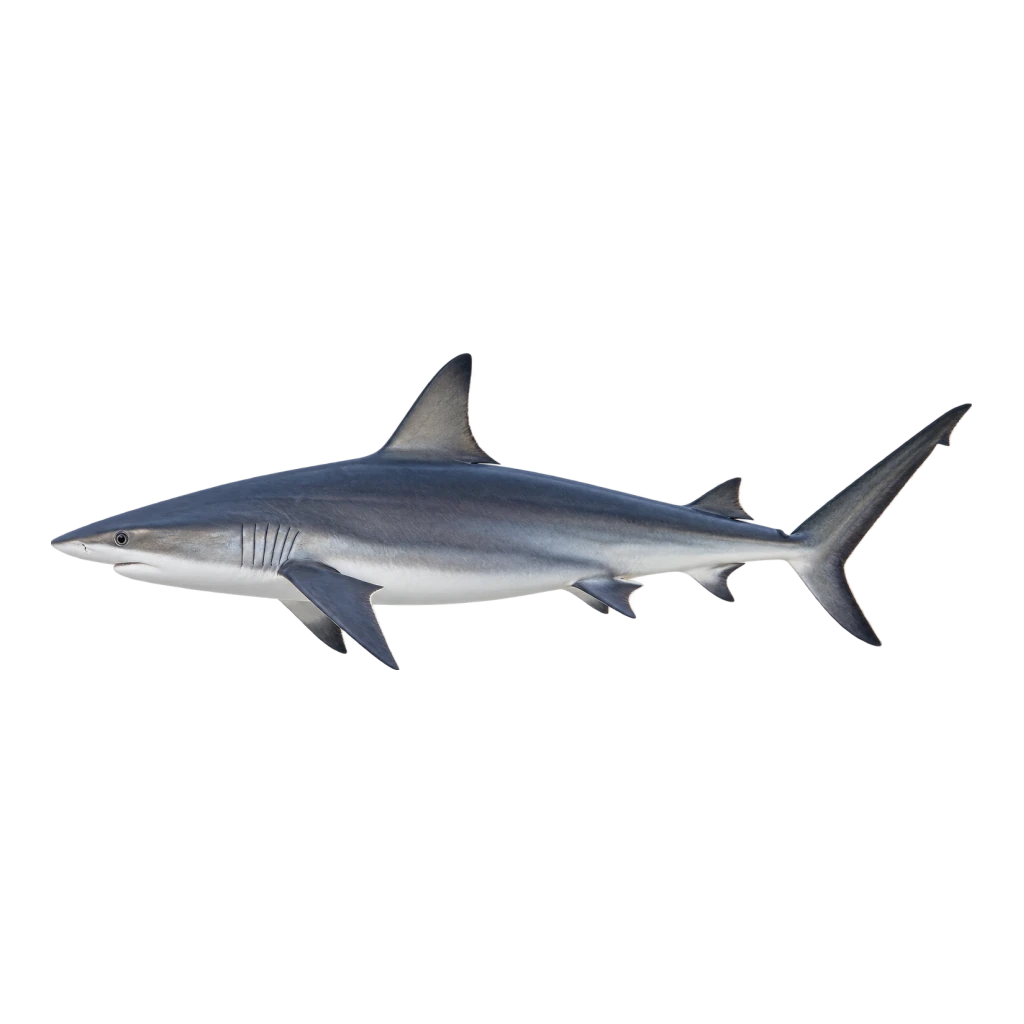
How to recognise it
The Spinner Shark, or Carcharhinus brevipinna, is a sleek and agile shark. It has a streamlined body with a pointed snout. The dorsal fin is tall and triangular, with a distinctive black tip. The coloration is typically a grayish-brown on the back, fading to a lighter belly. The most notable feature is its long, slender pectoral fins, which can be almost as long as its body. It is often confused with the Blacktip Shark (Carcharhinus limbatus), but the Spinner Shark has a more elongated body and a more pronounced dorsal fin. Additionally, the Spinner Shark has a more pronounced spin when it breaches the surface, which is not seen in the Blacktip Shark.
Where it lives
The Spinner Shark is commonly found in the western Atlantic Ocean, particularly along the southeastern coast of the United States. Its range extends from North Carolina to Florida and into the Gulf of Mexico. This species prefers coastal waters, often inhabiting areas near beaches and estuaries. Spinner Sharks are typically found in depths of 30 to 200 feet. They tend to stay close to the surface, especially in warmer months, while in cooler months, they may move to deeper waters. During the summer, they can be found near schools of baitfish, while in winter, they may seek deeper, warmer waters.
When it bites
Spinner Sharks are most active from late spring through early fall. They prefer water temperatures between 70 and 85 degrees F. Early morning and late afternoon are prime times for fishing, as these sharks are more likely to feed during these hours. Weather changes can influence their behavior; a passing front can increase feeding activity, while strong winds may push them into shallower waters. A full moon can also trigger increased activity, as it affects baitfish movement, drawing Spinner Sharks closer to the shore.
How to catch it
To catch a Spinner Shark, use a heavy spinning or conventional rod rated for 30-50 lb test line. A wire leader is recommended to prevent bite-offs. Common rigs include a simple fishfinder rig or a bottom rig with a circle hook. Baits such as live mullet, menhaden, or cut bait in the 6 to 12-inch range work well. Lures like topwater poppers or jigs in bright colors (chartreuse or pink) can also be effective. Cast near schools of baitfish or along the surf line. Retrieve lures with a fast, erratic motion to mimic injured prey.
Size, age and the table
Spinner Sharks typically range from 4 to 8 feet in length, with most anglers encountering individuals around 5 to 6 feet. A trophy Spinner Shark is generally considered to be over 8 feet. They grow rapidly, reaching maturity at about 4 to 5 years of age. The lifespan of a Spinner Shark can exceed 10 years. While they are not commonly eaten, their flesh is considered edible but may have a strong flavor. Proper handling is essential; use wet hands or gloves when releasing them to minimize stress and injury. Always check local regulations regarding catch and release practices.


