
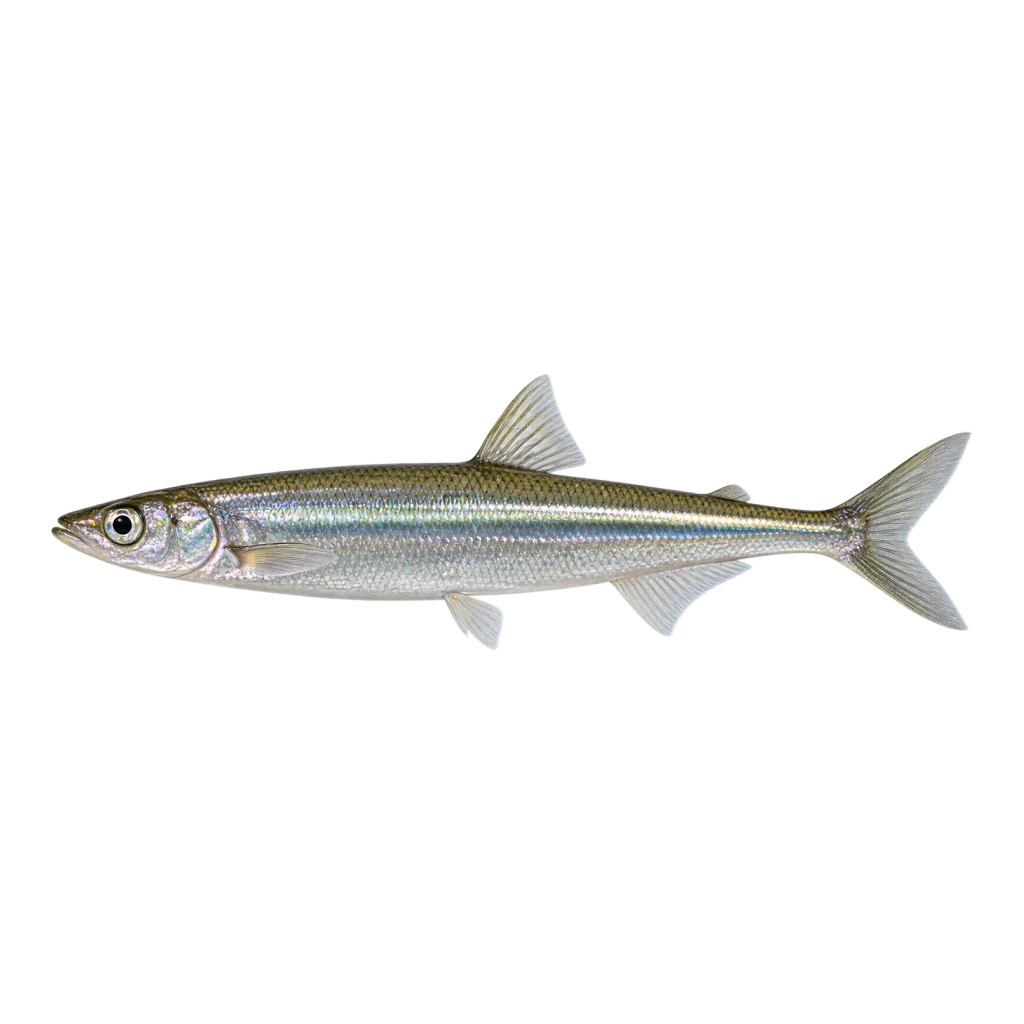
How to recognise it
The Jacksmelt (Atherinopsis californiensis) is a slender fish with a streamlined body. It typically measures 8 to 12 inches in length. The coloration is silver with a greenish-blue back and a prominent lateral line. The fins are transparent, and the mouth is small and slightly upturned. Jacksmelt are often confused with the Pacific sardine (Sardinops sagax). The key detail that separates them is the presence of a distinct, dark spot behind the gill cover of the Jacksmelt, which the sardine lacks.
Where it lives
Jacksmelt are primarily found along the Pacific Coast of the United States, from Washington to Southern California. They inhabit coastal waters, estuaries, and bays. Jacksmelt prefer shallow areas, typically at depths of 3 to 30 feet. They are often found near structures such as rocks, piers, and jetties. In warmer months, they may move into shallower waters, while in colder months, they tend to inhabit deeper areas.
When it bites
Jacksmelt are most active from late spring through early fall, particularly from May to September. They prefer water temperatures between 60 and 75 degrees F. Early morning and late afternoon are the best times to catch them. A passing front can increase their feeding activity, while strong winds may scatter schools. A full moon can also enhance their feeding behavior, making them more likely to bite.
How to catch it
To catch Jacksmelt, anglers often use light tackle. A common rig is a simple dropper loop with small hooks, size 6 to 10. Baits such as small pieces of shrimp, sand crabs, or bloodworms work well. Lures like small spoons or jigs in silver or blue colors can also be effective. Cast near structures or schools of baitfish, and retrieve the lure with a steady, slow motion. Keep an eye on the surface for jumping fish, which can indicate feeding activity.
Size, age and the table
Most anglers encounter Jacksmelt in the 8 to 12-inch range. A trophy Jacksmelt is typically considered to be over 15 inches. They grow rapidly, reaching maturity in about 2 to 3 years, and can live up to 5 years. Jacksmelt are known for their good eating quality, with a mild flavor and firm texture. When handling them, use wet hands to avoid damaging their slime coat. For catch and release, minimize air exposure and return them to the water quickly.


