
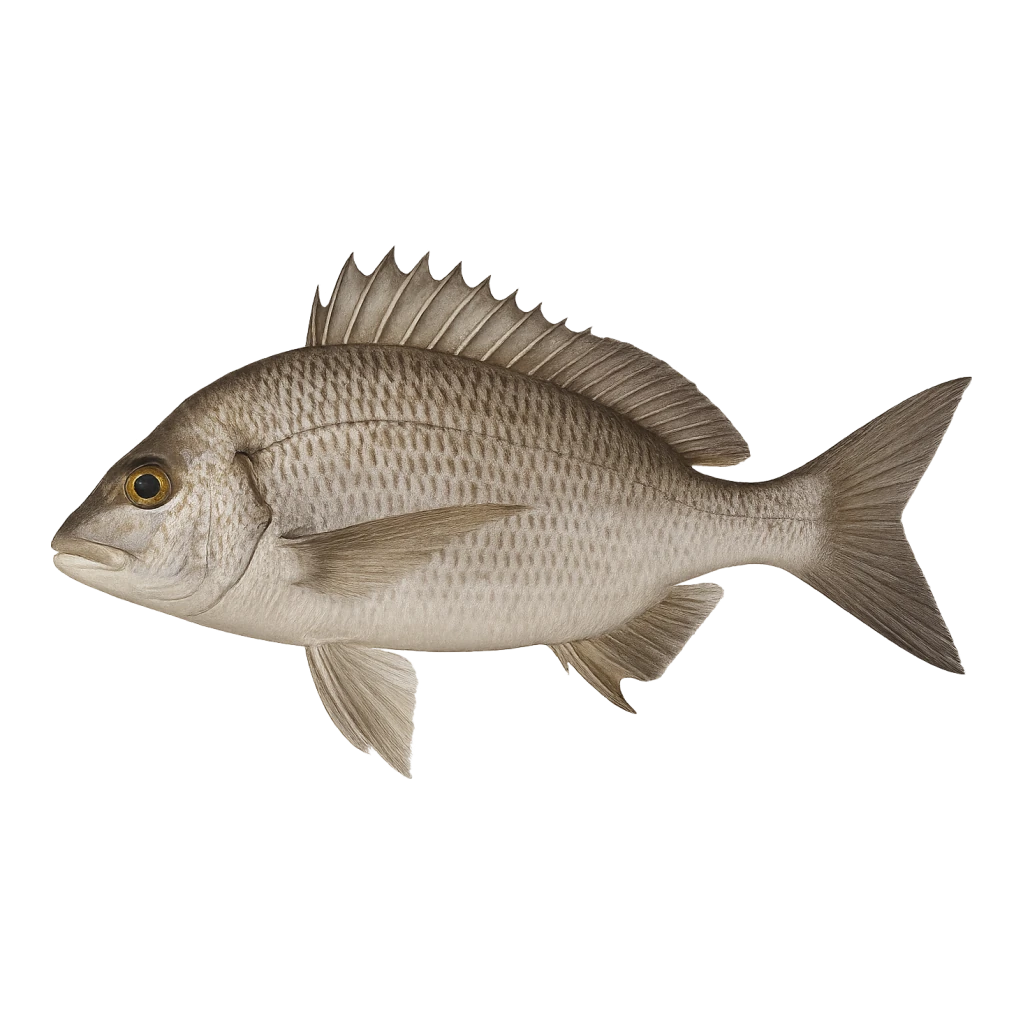
How to recognise it
The Black Sea Bream (Acanthopagrus berda) has a deep, oval body with a slightly compressed shape. Its coloration is typically silver to gray with a hint of yellow on the sides. The dorsal fin is long and spiny, with the first few spines being particularly pronounced. The mouth is small and slightly protruding, adapted for feeding on benthic organisms.
This species is often confused with the European Sea Bream (Pagellus erythrinus). The key detail that separates them is the number of dorsal spines; Black Sea Bream has 11-12 spines, while the European Sea Bream has 9-10.
Where it lives
The Black Sea Bream is primarily found along the Atlantic coast of the United States, particularly in the Gulf of Mexico and the southeastern coastal waters. It inhabits brackish waters, including estuaries and coastal lagoons. The depth range typically varies from 3 to 30 feet, depending on the season and availability of food.
During warmer months, they tend to move into shallower waters, while in colder months, they may retreat to deeper areas. They often seek cover around structures like rocks, reefs, and mangroves, which provide protection and feeding opportunities.
When it bites
The Black Sea Bream is most active from late spring through early fall, typically biting from May to October. The ideal water temperature for fishing is between 70°F and 85°F. They are generally more active during early morning and late afternoon, coinciding with lower light conditions.
Weather conditions can influence their feeding behavior. A passing front may trigger increased activity, while strong winds can make them less likely to bite. A full moon often enhances feeding opportunities, as it increases the visibility of prey in the water.
How to catch it
Effective rigs for catching Black Sea Bream include the Carolina rig and the drop shot rig. Use a 1/0 to 2/0 circle hook with a 15-20 lb test line. Baits such as shrimp, sand fleas, and small crabs are effective, with sizes ranging from 1 to 3 inches. Lures like soft plastics in natural colors (white, green, or brown) can also be productive.
Cast near structures where they are likely to be hiding. Work the bait slowly along the bottom, allowing it to settle and mimic natural movement. Be patient, as bites can be subtle.
Size, age and the table
Anglers typically encounter Black Sea Bream ranging from 10 to 20 inches in length. A trophy specimen is generally considered to be over 20 inches. They grow at a moderate rate, reaching sexual maturity around 2-3 years of age and can live up to 10 years.
Black Sea Bream is known for its excellent eating quality, with firm, white flesh. Handle them carefully to minimize stress during release. If keeping for the table, ensure they are properly cleaned and stored to maintain freshness.


