
How to recognise it
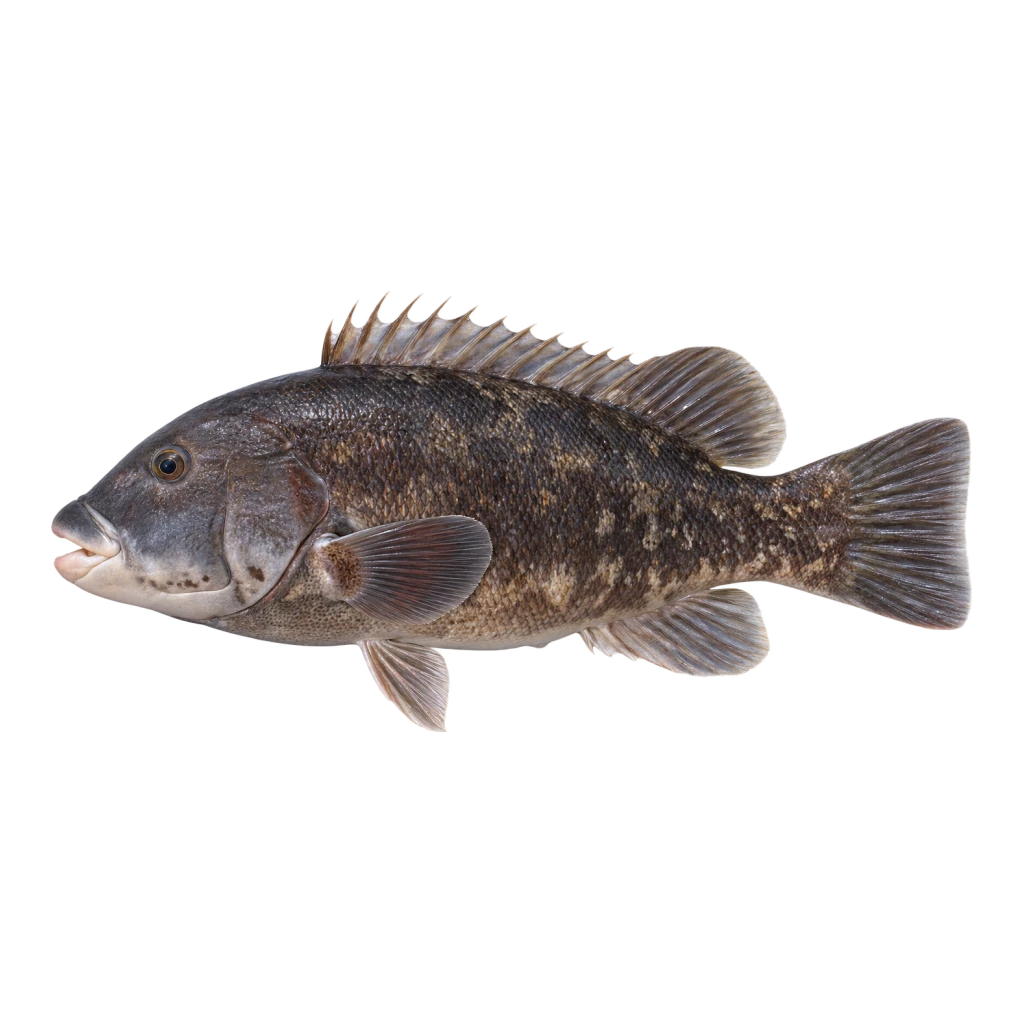
The tautog, or Tautoga onitis, is a robust fish with a deep, oval body. It has a large mouth and thick lips, which are ideal for crushing shellfish. The coloration varies from dark green to brown, often with lighter mottling. The fins are dark and rounded. The tautog has a distinctive set of teeth, which are molar-like, perfect for grinding. It is often confused with the blackfish, but the key detail that separates them is the tautog's more pronounced, rounded body shape compared to the more elongated blackfish.
Where it lives
Tautog are primarily found along the Atlantic coast of the United States. Their range extends from Maine to South Carolina. They inhabit coastal waters, preferring rocky substrates, reefs, and wrecks. Tautog are typically found at depths ranging from 10 to 100 feet. In the spring and summer, they tend to move into shallower waters, while in the fall and winter, they retreat to deeper areas for warmth and shelter.
When it bites
Tautog are most active from April to November. They prefer water temperatures between 55°F and 75°F. Early morning and late afternoon are the best times to catch them. A passing front can trigger feeding activity, while strong winds may make them less active. During a full moon, tautog may feed more aggressively, making it an excellent time for anglers to target them.
How to catch it
Effective rigs for tautog include the bottom rig and the dropper loop rig. Use 20 to 40-pound test line with a 4/0 to 8/0 hook, depending on the bait size. Common baits include green crabs, fiddler crabs, and clams. Use a 1 to 3-ounce sinker to hold bottom, adjusting for current. Cast near rocky structures or wrecks and allow the bait to sit on the bottom. Slowly lift and drop the rod tip to mimic natural movement. Be patient; tautog often nibble before taking the bait.
Size, age and the table
Anglers typically encounter tautog ranging from 14 to 20 inches in length, with weights around 3 to 10 pounds. A trophy tautog is generally considered to be over 20 inches. They grow slowly, reaching sexual maturity at about 3 to 5 years of age, and can live up to 30 years. Tautog are known for their excellent eating quality, with firm, white flesh. Handle them carefully to minimize stress, and use proper techniques for release to ensure their survival if not kept for consumption.


