How to recognise it
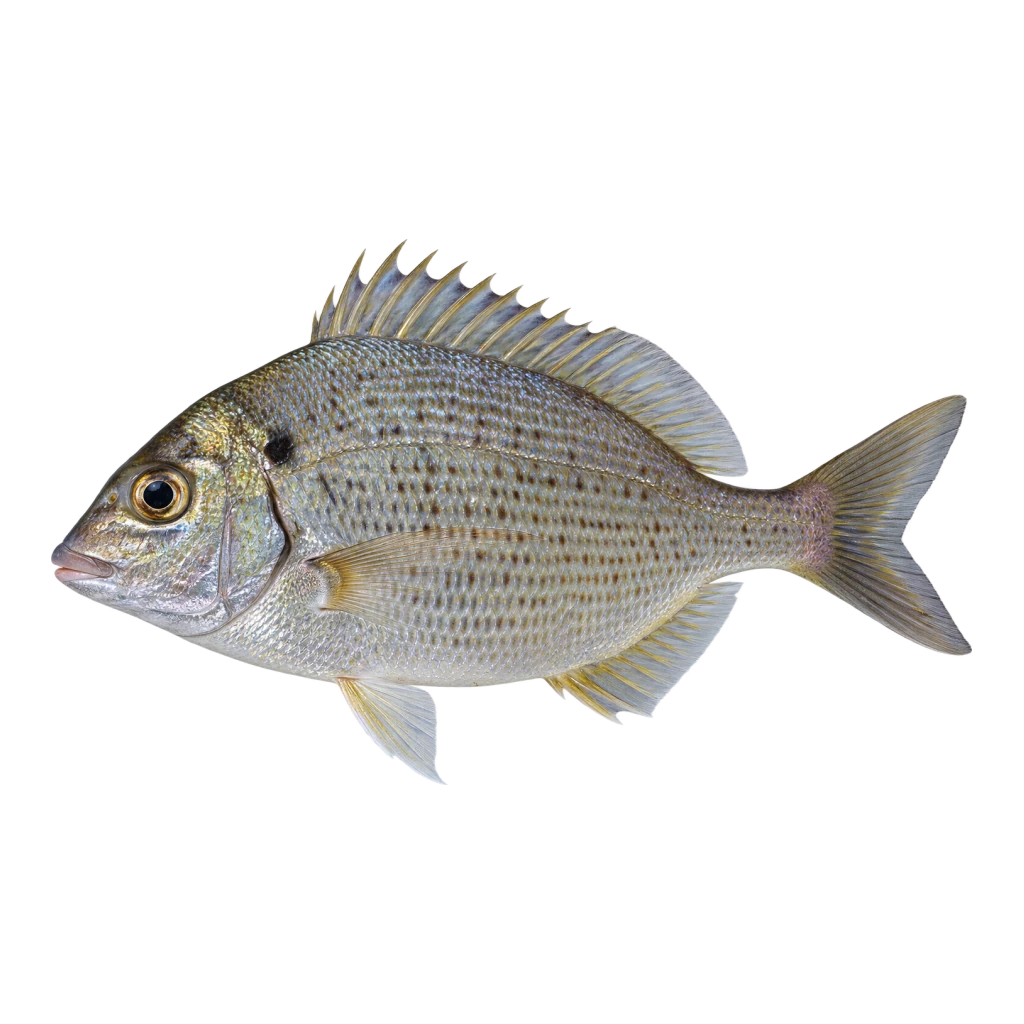
The scup, or Stenotomus chrysops, is a distinct saltwater fish. It has a compressed body and a slightly pointed snout. The coloration is typically silver with a greenish or bluish tint on the back. Scup have dark vertical stripes along their sides, which can help in identification. The dorsal fin is long and spiny, with a more rounded shape towards the back. The mouth is small, with a prominent lower jaw.
Scup are often confused with the black sea bass. The key detail that separates them is the scup's vertical stripes, while black sea bass have a more uniform dark coloration without prominent stripes.
Where it lives
Scup are primarily found along the Atlantic coast of the United States. Their range extends from Maine to North Carolina. They inhabit coastal waters, preferring sandy or rocky bottoms. Scup are usually found at depths ranging from 10 to 100 feet, although they can be found deeper in some areas.
During the warmer months, scup move closer to shore and can be found in shallower waters. In colder months, they tend to migrate to deeper waters for warmth. This seasonal movement is crucial for anglers to understand for effective fishing.
When it bites
Scup are most active from late spring through early fall. They typically bite when water temperatures range from 60 to 75 degrees F. Early morning and late afternoon are the best times to catch them, as they are more likely to feed during these periods.
Weather conditions can impact their feeding behavior. A passing front can trigger increased activity, while strong winds may make them less likely to bite. A full moon can also affect their feeding patterns, often leading to increased activity during the night.
How to catch it
To catch scup, anglers can use a variety of rigs. The most common is a simple bottom rig with a sinker and a hook. A two-hook rig can also be effective. Use hooks in the range of 1/0 to 3/0, depending on the bait size.
Effective baits include sandworms, clam strips, and small pieces of squid. Scup are also attracted to jigs, particularly those in bright colors like pink or chartreuse. When fishing, cast near rocky structures, reefs, or wrecks where scup are likely to congregate. Retrieve your bait slowly to mimic natural movement.
Size, age and the table
Anglers typically encounter scup that are 10 to 18 inches long, with weights ranging from 1 to 3 pounds. A trophy scup is generally considered to be over 18 inches. Scup grow relatively quickly, reaching maturity in about 2 to 3 years. Their lifespan can extend up to 5 years.
Scup are known for their excellent eating quality, with a mild flavor and firm texture. When handling scup, it is important to minimize stress to the fish for successful release. If you plan to keep them, ensure they are properly iced to maintain freshness.