
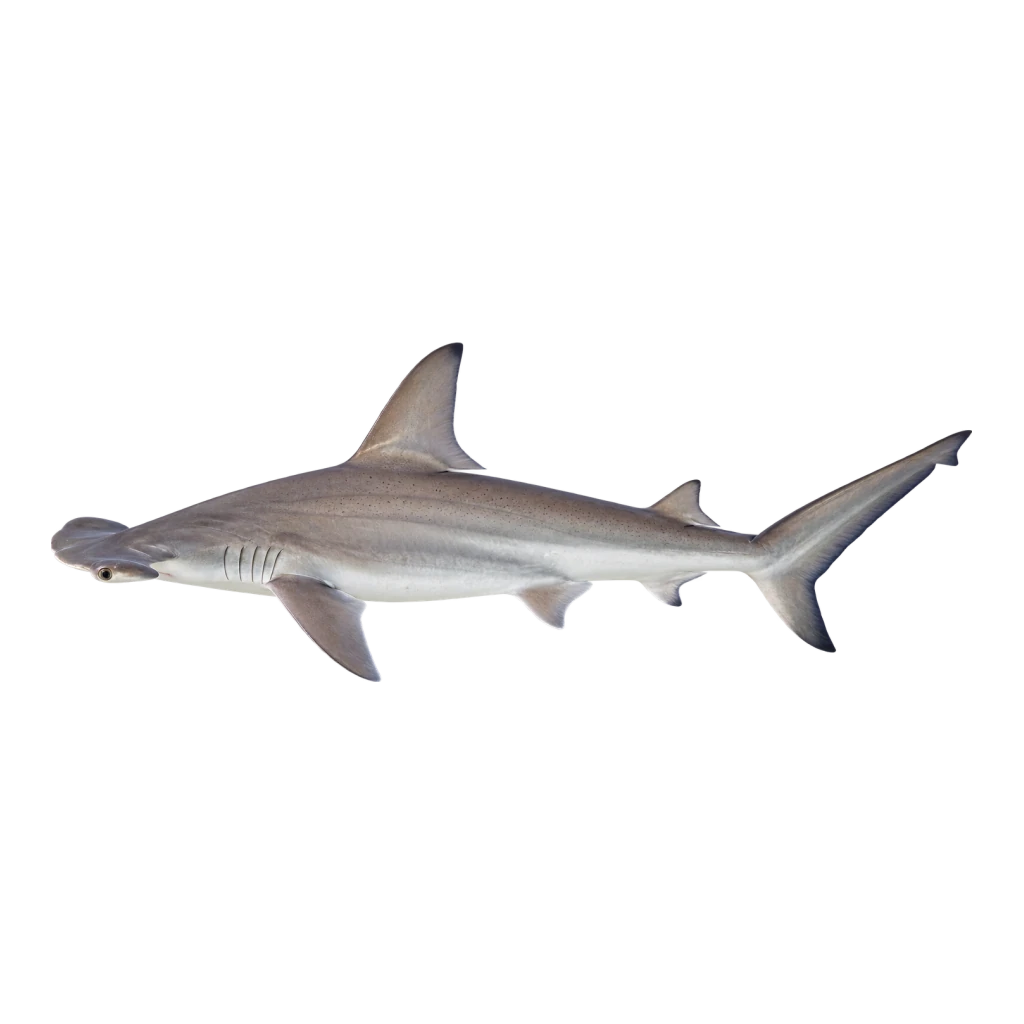
How to recognise it
The bonnethead shark (Sphyrna tiburo) is a small species of hammerhead shark. It has a distinctive, flattened head that resembles a shovel. The body is slender and can reach lengths of up to 5 feet. The coloration is typically gray to brown on the dorsal side, with a lighter, almost white underside. The fins are relatively small compared to other hammerhead species.
One key feature is its mouth, which is located on the underside of the head and contains small, sharp teeth. The bonnethead is often confused with the scalloped hammerhead (Sphyrna lewini). The main detail that separates them is the shape of the head; the bonnethead has a more rounded, less pronounced hammer shape.
Where it lives
Bonnetheads are primarily found in the western Atlantic Ocean. Their range extends from North Carolina down to Florida and throughout the Gulf of Mexico. They inhabit shallow coastal waters, including bays, estuaries, and sandy beaches. The depth range is typically between 3 to 60 feet.
During warmer months, bonnetheads move into shallower waters, while in cooler months, they may migrate to slightly deeper areas. They often seek out areas with seagrass beds or sandy bottoms, which provide cover and hunting grounds.
When it bites
Bonnetheads are most active from late spring through early fall, with peak activity occurring from May to October. They prefer water temperatures between 70°F and 85°F. Early morning and late afternoon are the best times to catch them, as they tend to feed more actively during these hours.
Weather conditions can influence their behavior. A passing front may cause them to become less active, while a full moon can increase feeding activity. Windy conditions can also affect their movement, pushing them closer to shore.
How to catch it
To catch bonnetheads, anglers often use a variety of rigs. A simple fish finder rig with a 2/0 to 4/0 hook is effective. Live bait such as shrimp, small crabs, or cut bait works well. Lures in bright colors, such as chartreuse or pink, can also attract their attention.
When casting, aim for areas near seagrass beds or sandy bottoms. Retrieve the bait slowly, allowing it to mimic the natural movement of prey. Bonnetheads are known to be curious, so a slow, steady presentation can be effective.
Size, age and the table
Anglers typically encounter bonnetheads that measure between 2 to 4 feet in length. A trophy bonnethead is generally considered to be over 4 feet. They grow rapidly, reaching sexual maturity at around 3 feet, and can live up to 12 years in the wild.
Bonnetheads are considered to have good eating quality, with a mild flavor and firm texture. If you plan to keep one, handle it carefully to preserve its meat. When releasing, use wet hands to avoid damaging their skin and return them to the water gently to ensure their survival.


