
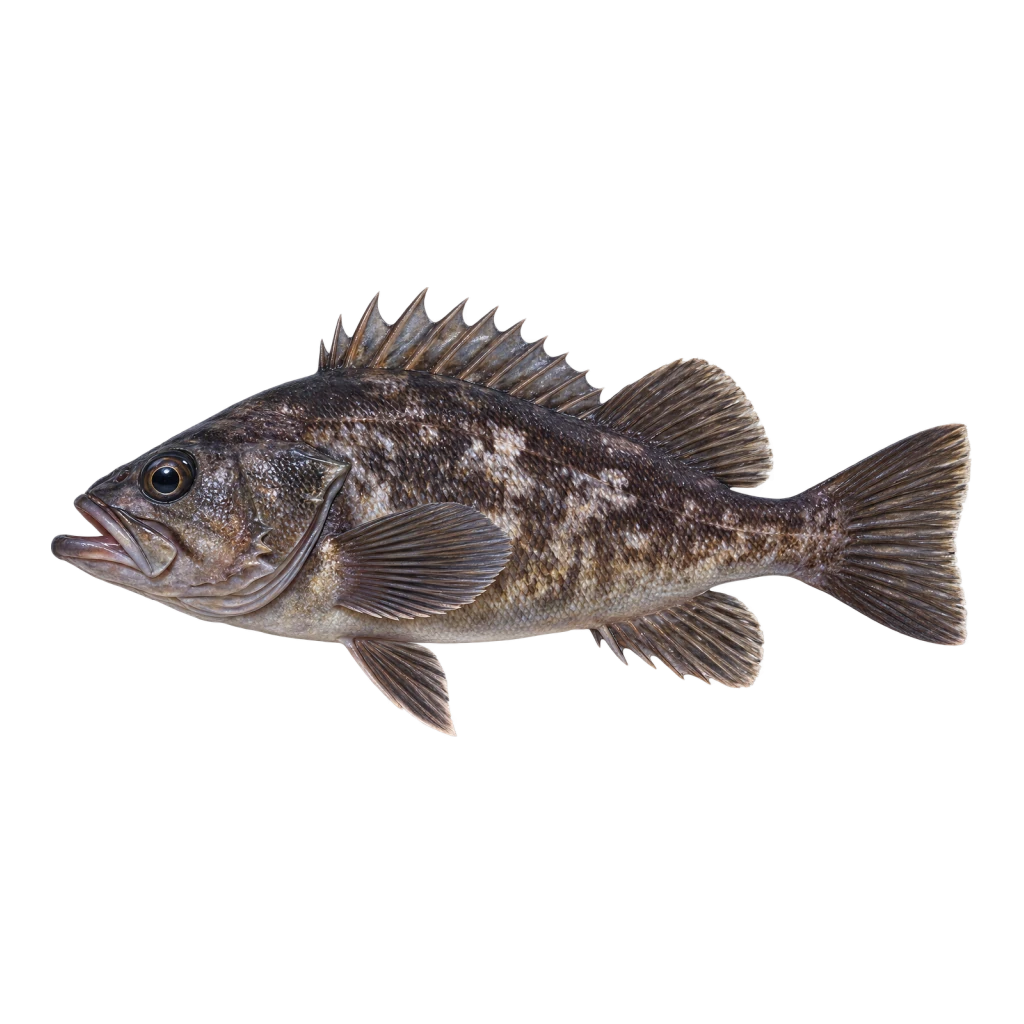
How to recognise it
The Black Rockfish, or Sebastes melanops, is a distinctive species. It has a robust body and a large head. The coloration is typically dark brown to black, with lighter mottling. The fins are spiny, and the mouth is large with sharp teeth. This species is often confused with the Blue Rockfish. The key detail that separates them is the Black Rockfish's darker coloration and the absence of blue hues.
Where it lives
The Black Rockfish is found along the Pacific Coast of the United States. Its range extends from northern California to Alaska. It prefers saltwater environments, typically inhabiting rocky substrates and kelp forests. The depth range for this species is usually between 30 to 300 feet. In summer, they may move shallower to feed, while in winter, they often go deeper to avoid colder temperatures.
When it bites
Black Rockfish are most active from late spring through early fall. They bite best when water temperatures are between 50 to 65 degrees F. Early morning and late afternoon are prime times for fishing. Weather changes, such as a passing front or increased wind, can trigger feeding activity. A full moon may also enhance their bite, as it increases visibility for hunting.
How to catch it
Effective rigs for Black Rockfish include the drop shot rig and the Carolina rig. Use baits like herring, squid, or anchovies, typically in sizes ranging from 4 to 6 inches. Lures such as jigs in bright colors like chartreuse or orange can also be effective. A 15 to 30-pound test line is recommended, with hooks sized 2/0 to 4/0. Cast near rocky structures or kelp beds, and work the bait with a slow, steady retrieve, allowing it to bounce off the bottom.
Size, age and the table
Anglers typically encounter Black Rockfish in the range of 1 to 5 pounds, with lengths from 12 to 20 inches. A trophy Black Rockfish is usually considered to be over 10 pounds. They grow rapidly, reaching maturity at about 3 to 4 years. The lifespan of this species can extend up to 20 years. Black Rockfish are known for their good eating quality, with firm, white flesh. When handling, use wet hands to minimize slime loss, and release them carefully to ensure their survival.


