
How to recognise it
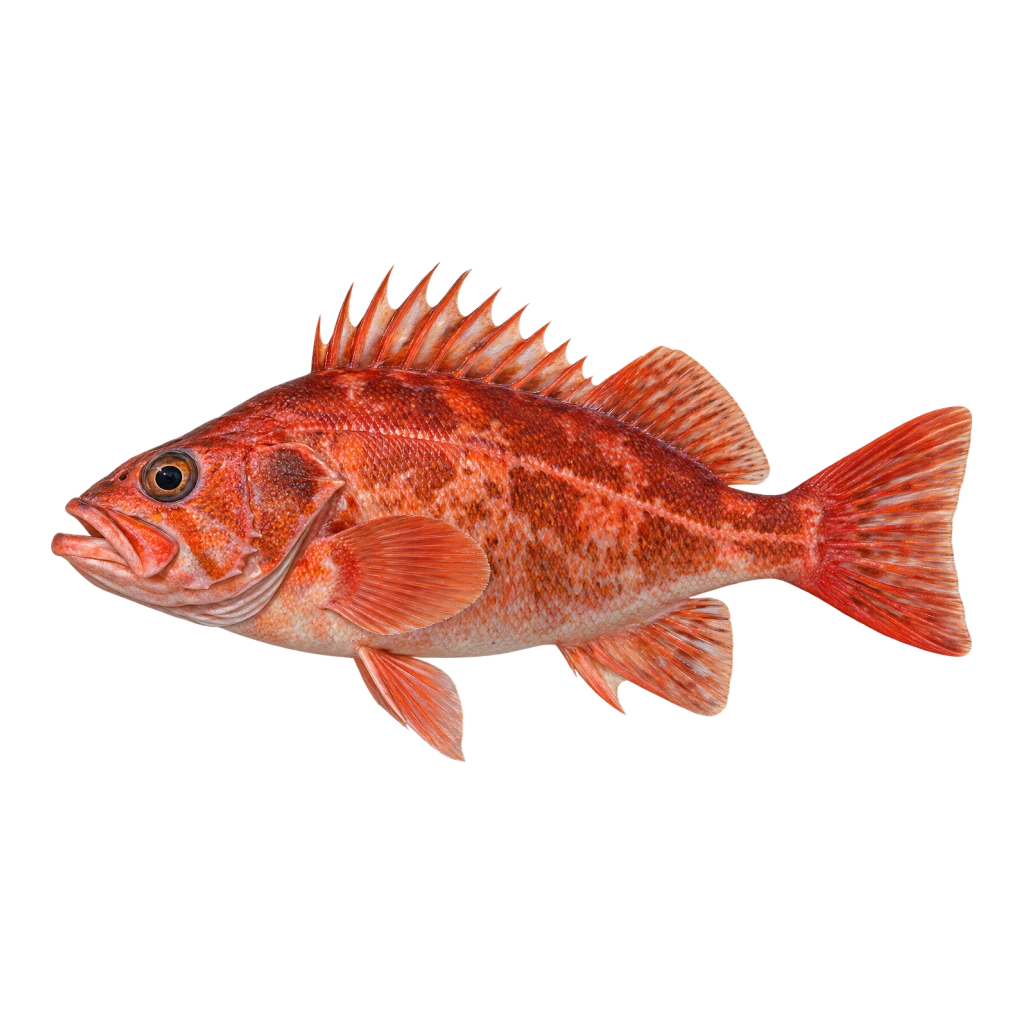
The Pacific Ocean Perch, or Sebastes alutus, is a medium-sized rockfish. It has a streamlined body with a slightly pointed snout. The coloration is typically reddish to brownish with lighter spots. The dorsal fin is long and spiny, while the anal fin is shorter and softer. The mouth is relatively large, and the lower jaw protrudes slightly. This species is often confused with the Widow Rockfish (Sebastes entomelas). The key detail that separates them is the number of dorsal fin spines; the Pacific Ocean Perch has 13 to 15 spines, while the Widow Rockfish has 11 to 13.
Where it lives
The Pacific Ocean Perch is primarily found along the Pacific Coast of the United States, from Southern California to the Aleutian Islands in Alaska. It inhabits saltwater environments, primarily in rocky substrates and near the continental shelf. The depth range is typically between 200 to 1,200 feet. During the summer months, they may move shallower to spawn, while in winter, they tend to go deeper to avoid colder temperatures. They often seek cover among rocks, reefs, and ledges, which provides protection from predators.
When it bites
The best months for catching Pacific Ocean Perch are from May to October. They are most active when water temperatures range from 50 to 65 degrees F. Early morning and late afternoon are prime times for fishing, as they tend to feed more aggressively during these hours. Weather changes, such as a passing front or strong winds, can trigger feeding activity. A full moon may also increase their activity, making them more likely to bite.
How to catch it
To catch Pacific Ocean Perch, anglers often use jigs, drop shot rigs, or baited hooks. A popular jig size is 1 to 3 ounces, with colors like pink, white, or chartreuse proving effective. When using bait, squid or herring are good choices, typically on a 2/0 to 4/0 hook. Cast near rocky structures or reefs and let the rig sink to the bottom. Slowly retrieve with a steady motion or a series of jerks to mimic prey. Pay attention to the bottom structure, as they often hold close to it.
Size, age and the table
Anglers typically encounter Pacific Ocean Perch ranging from 12 to 20 inches in length. A trophy fish is generally considered to be over 24 inches. They grow at a rate of about 1 inch per year and can live up to 25 years. The flesh is firm and white, making it a popular choice for eating. When handling, use wet hands to minimize slime loss, and if releasing, do so quickly to increase survival chances. Always check local regulations for specific guidelines on size and bag limits.


