
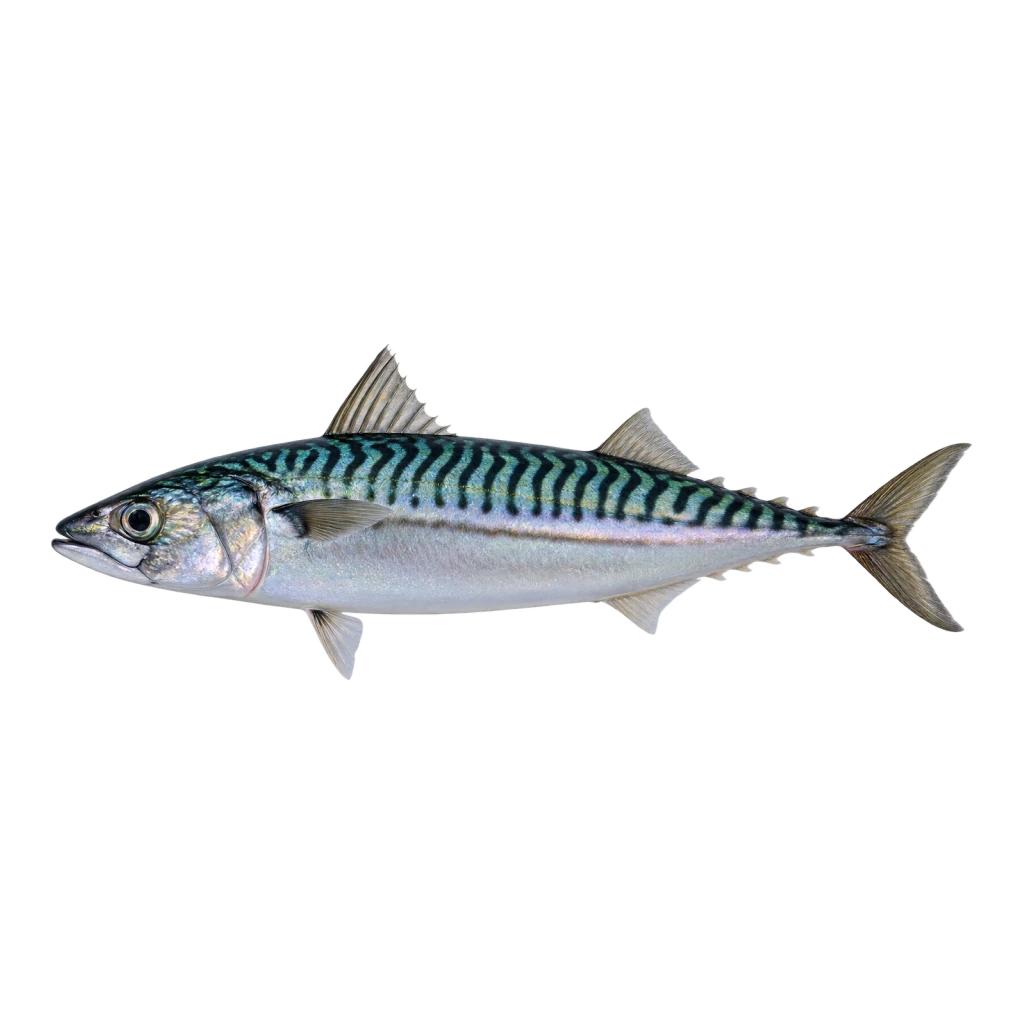
How to recognise it
The Atlantic Mackerel (Scomber scombrus) is a streamlined fish with a distinctive appearance. It has a dark blue-green back with vertical black stripes and a silver belly. The body is torpedo-shaped, which helps it swim quickly. The first dorsal fin is tall and triangular, while the second dorsal fin is smaller and located further back. Its mouth is large, with sharp teeth. The Atlantic Mackerel is often confused with the Spanish Mackerel (Scomberomorus maculatus). The key detail that separates them is the presence of a distinct lateral line in the Atlantic Mackerel, which is absent in the Spanish Mackerel.
Where it lives
The Atlantic Mackerel is found along the eastern coast of the United States. Its range extends from Maine to North Carolina. This species prefers saltwater environments, typically inhabiting the open ocean. It is commonly found at depths ranging from 30 to 200 feet. During the warmer months, Atlantic Mackerel move closer to shore, while in colder months, they migrate to deeper waters. They often seek out areas with schools of smaller fish and can be found near structures like reefs and wrecks.
When it bites
Atlantic Mackerel are most active from late spring through early fall, particularly from May to October. They prefer water temperatures between 60 and 75 degrees F. The best times to fish for them are early morning and late afternoon. Weather changes, such as a passing front or increased wind, can trigger feeding activity. A full moon can also enhance their bite, making them more aggressive in search of food.
How to catch it
To catch Atlantic Mackerel, anglers often use a variety of rigs and techniques. A common setup is a high-low rig with two hooks, typically size 1 to 2. Baits such as small strips of mackerel, squid, or cut bait work well. Lures like spoons or jigs in bright colors (such as silver, blue, or green) are effective, especially in sizes ranging from 1 to 3 ounces. Cast near schools of baitfish or around structures, and retrieve quickly to mimic the movement of prey. Trolling with lures at speeds of 5 to 7 knots can also yield good results.
Size, age and the table
Anglers typically encounter Atlantic Mackerel that are 18 to 24 inches long and weigh between 1 to 3 pounds. A trophy Atlantic Mackerel is considered to be over 30 inches. These fish grow quickly, reaching maturity in about 2 to 3 years, and can live up to 7 years. The flesh of Atlantic Mackerel is oily and flavorful, making it a popular choice for grilling or smoking. When handling, be careful to minimize stress and injury to the fish. If releasing, use wet hands and avoid touching the gills to ensure a better chance of survival.


