How to recognise it
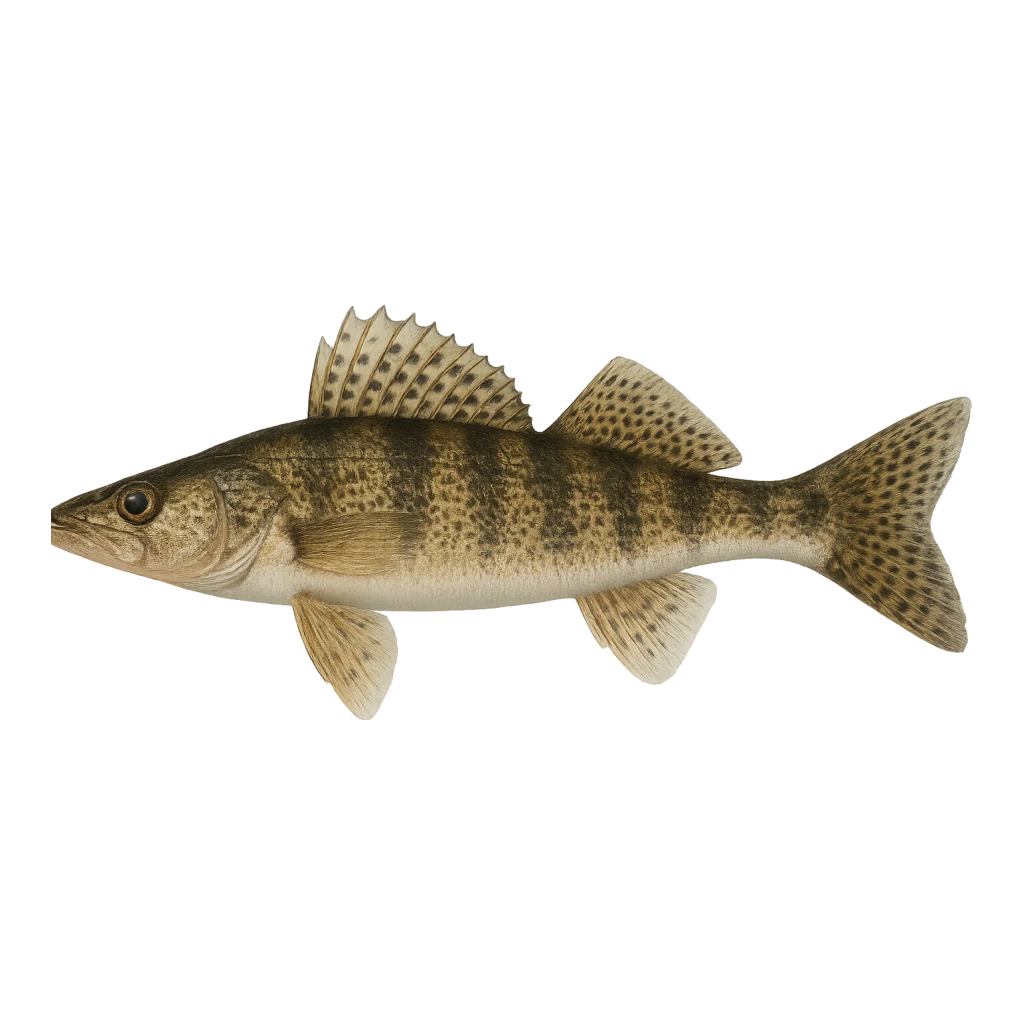
Sauger (Sander canadensis) are a member of the perch family. They have a streamlined body, elongated shape, and a pointed snout. The coloration is typically a mix of light brown to olive on the back, with a lighter, silvery belly. They have distinct dark spots along their sides. The dorsal fin has a unique pattern of dark spots, and the pectoral fins are transparent with a slight yellow tint.
Sauger are often confused with walleye (Sander vitreus). The main detail that separates them is the presence of dark spots on the dorsal fin of the sauger, which walleye lack.
Where it lives
Sauger are primarily found in the Mississippi River Basin, Great Lakes, and parts of the Ohio River. They inhabit a range of water types, including rivers, lakes, and reservoirs. They prefer areas with moderate current and structure, such as rocky bottoms, submerged logs, and vegetation.
In terms of depth, sauger are typically found in waters ranging from 5 to 30 feet deep. During the warmer months, they may move into shallower waters, while in colder months, they tend to retreat to deeper areas. Seasonal changes in temperature and food availability influence their location.
When it bites
Sauger are most active from late fall through early spring. They bite best when water temperatures range from 45 to 65 degrees F. Early morning and late evening are prime times for fishing, as sauger are more likely to feed during these hours.
Weather conditions can impact their feeding behavior. A passing cold front can trigger increased activity, while stable weather may lead to slower bites. Windy conditions can also enhance feeding, as it stirs up the water and increases food availability. A full moon can lead to increased nocturnal activity, making night fishing more productive.
How to catch it
Effective rigs for catching sauger include jigging with a 1/8 to 1/2 ounce jig head tipped with live bait such as minnows or nightcrawlers. Soft plastic grubs in colors like chartreuse, white, or orange can also be effective. Use a medium-action spinning rod with a 6 to 10-pound test line and a size 2 to 4 hook.
Cast near structures, such as rocks or submerged logs, and retrieve slowly. A steady retrieve or a hopping motion can entice strikes. In rivers, focus on current breaks and eddies. In lakes, target drop-offs and areas with vegetation.
Size, age and the table
Anglers typically encounter sauger that are 12 to 20 inches long, with weights ranging from 1 to 5 pounds. A trophy sauger is generally considered to be over 22 inches. Sauger grow at a moderate rate, reaching sexual maturity by age 2 to 3, and can live up to 10 years.
They are known for their good eating quality, with firm, white flesh. Proper handling is essential to ensure their survival after catch and release. Use wet hands or a wet cloth to handle them, and minimize their time out of the water. If keeping for consumption, ensure they are cleaned and stored properly to maintain quality.