
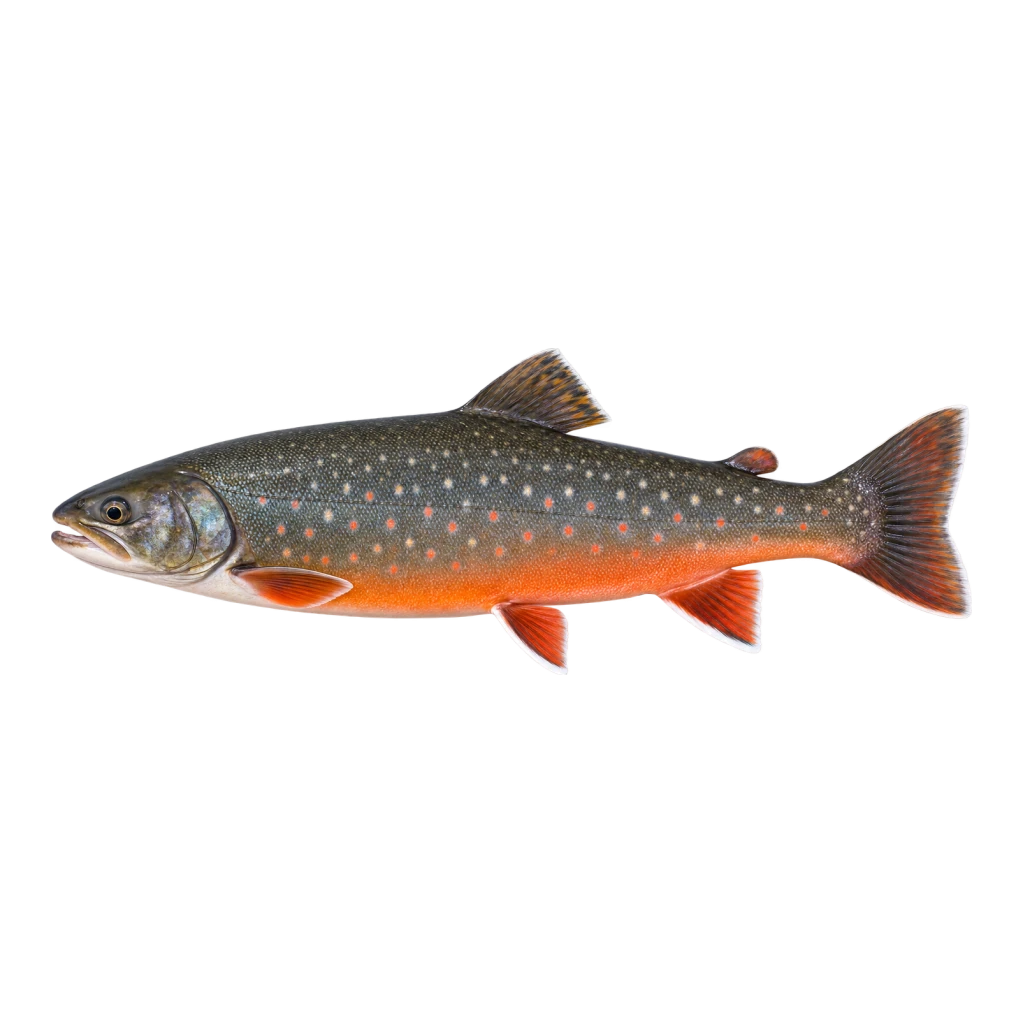
How to recognise it
The Arctic Char (Salvelinus alpinus) is a distinctive fish. It has a streamlined body with a slightly forked tail. The coloration varies, but it typically features a greenish or bluish back with pale spots. The sides can range from silvery to a vibrant red or orange, especially during spawning. The belly is usually white or cream-colored.
Its fins are often marked with white edges, and the dorsal fin is long and pointed. The mouth is relatively small with sharp teeth. Arctic Char is often confused with the Brook Trout (Salvelinus fontinalis). The key detail that separates them is the absence of the characteristic worm-like markings on the Arctic Char's back.
Where it lives
Arctic Char is primarily found in the northern regions of the United States, particularly in Alaska and parts of the northeastern states. They inhabit cold, freshwater lakes, rivers, and streams. These fish prefer clear waters with temperatures ranging from 32 to 60 degrees F.
In terms of depth, Arctic Char are often found at depths of 10 to 100 feet, depending on the season and water temperature. During warmer months, they may move to deeper waters to escape heat. In colder months, they tend to stay near the surface or in shallower areas, especially during spawning.
When it bites
Arctic Char are most active from late spring through early fall. The prime months for fishing are May to September. They tend to bite when water temperatures are between 45 and 60 degrees F. Early mornings and late evenings are the best times to fish for them.
Weather changes can impact their feeding behavior. A passing front can trigger increased activity, while strong winds may make them less likely to bite. A full moon can also enhance their feeding, as it provides more light during the night.
How to catch it
To catch Arctic Char, use light to medium tackle. Recommended line sizes are 6 to 10-pound test. Hooks should be in the range of size 8 to 12. Effective rigs include spinning gear with a slip sinker or a float rig.
Baits such as worms, minnows, or small pieces of shrimp work well. Lures in sizes 1 to 3 inches, such as spoons or spinners in bright colors like orange, yellow, or silver, can be effective. Cast near rocky structures, drop-offs, or areas with submerged vegetation. Retrieve lures with a steady, moderate speed to mimic natural prey.
Size, age and the table
Anglers typically encounter Arctic Char ranging from 12 to 24 inches in length. A trophy Arctic Char is generally considered to be over 28 inches. They grow at a rate of about 1 inch per year in colder waters, with a lifespan that can exceed 10 years.
Arctic Char are known for their excellent eating quality. The flesh is firm and has a mild flavor. When handling, it is important to keep them in water as much as possible to reduce stress. For catch and release, use wet hands or a landing net to minimize damage to their skin and scales.


