
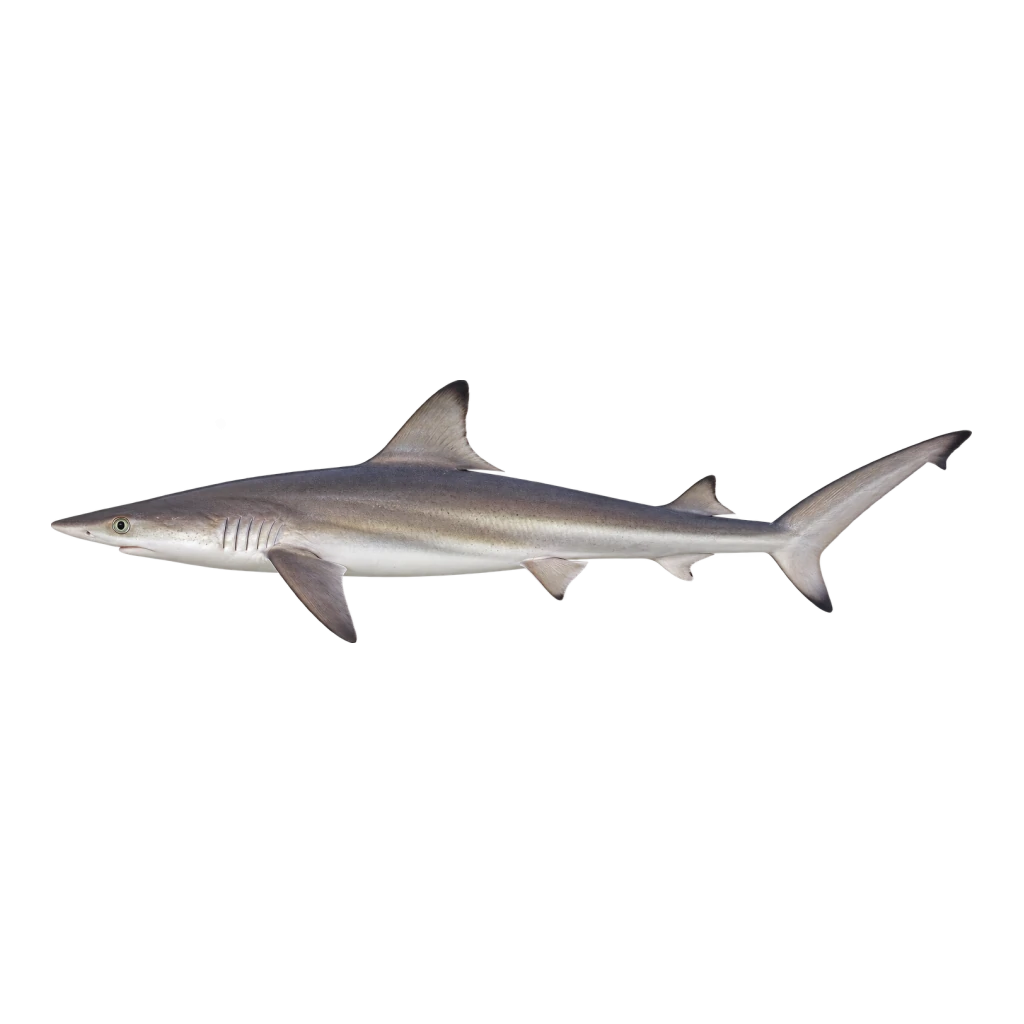
How to recognise it
The Atlantic Sharpnose Shark (Rhizoprionodon terraenovae) is a small shark known for its slender body and pointed snout. It typically measures between 3 to 4 feet in length. The coloration is grayish-brown on the top with a lighter underside. It has distinctive white spots on its body, especially on the sides. The dorsal fins are relatively small and have a slight curvature. The first dorsal fin is located behind the pectoral fins, and the second dorsal fin is smaller and positioned closer to the tail.
This species is often confused with the Blacktip Shark (Carcharhinus limbatus). The key detail that separates them is the presence of a distinct black tip on the dorsal fins of the Blacktip Shark, which is absent in the Atlantic Sharpnose Shark.
Where it lives
The Atlantic Sharpnose Shark is primarily found along the eastern coast of the United States. Its range extends from Cape Cod, Massachusetts, down to Florida. This species inhabits coastal waters, including estuaries and bays. It prefers shallow waters, typically found at depths of 10 to 100 feet.
During the warmer months, Atlantic Sharpnose Sharks move closer to shore. In colder months, they may migrate to deeper waters. They often seek areas with sandy or muddy bottoms, where they can find prey and shelter.
When it bites
Atlantic Sharpnose Sharks are most active from late spring through early fall, particularly from May to October. They prefer water temperatures between 70 to 85 degrees F. Feeding activity tends to peak during the early morning and late afternoon, coinciding with the movement of baitfish.
Environmental factors can influence their behavior. A passing front may trigger increased feeding activity. Wind can affect water clarity, which may impact their hunting. A full moon can also enhance their feeding patterns, as it increases visibility for hunting.
How to catch it
To catch Atlantic Sharpnose Sharks, anglers can use a variety of rigs. A common setup is a bottom rig with a 4/0 to 6/0 circle hook. Use a 30 to 50-pound test line. Baits such as cut fish, squid, or live bait like menhaden work well. The preferred colors for lures are natural hues like silver or blue.
Cast near structures like piers, jetties, or sandbars where these sharks are likely to hunt. Work the bait by letting it sit on the bottom or slowly retrieving it to mimic injured prey. Be patient, as bites may come after a short wait.
Size, age and the table
Anglers typically encounter Atlantic Sharpnose Sharks that are 3 to 4 feet long. A trophy specimen is generally considered to be over 5 feet. They grow quickly, reaching sexual maturity around 3 to 4 years of age. The average lifespan is about 10 years.
While the meat is edible and considered good quality, proper handling is essential. Use wet hands or gloves to minimize slime loss when handling. For catch and release, minimize air exposure and return the shark to the water quickly to ensure its survival.


