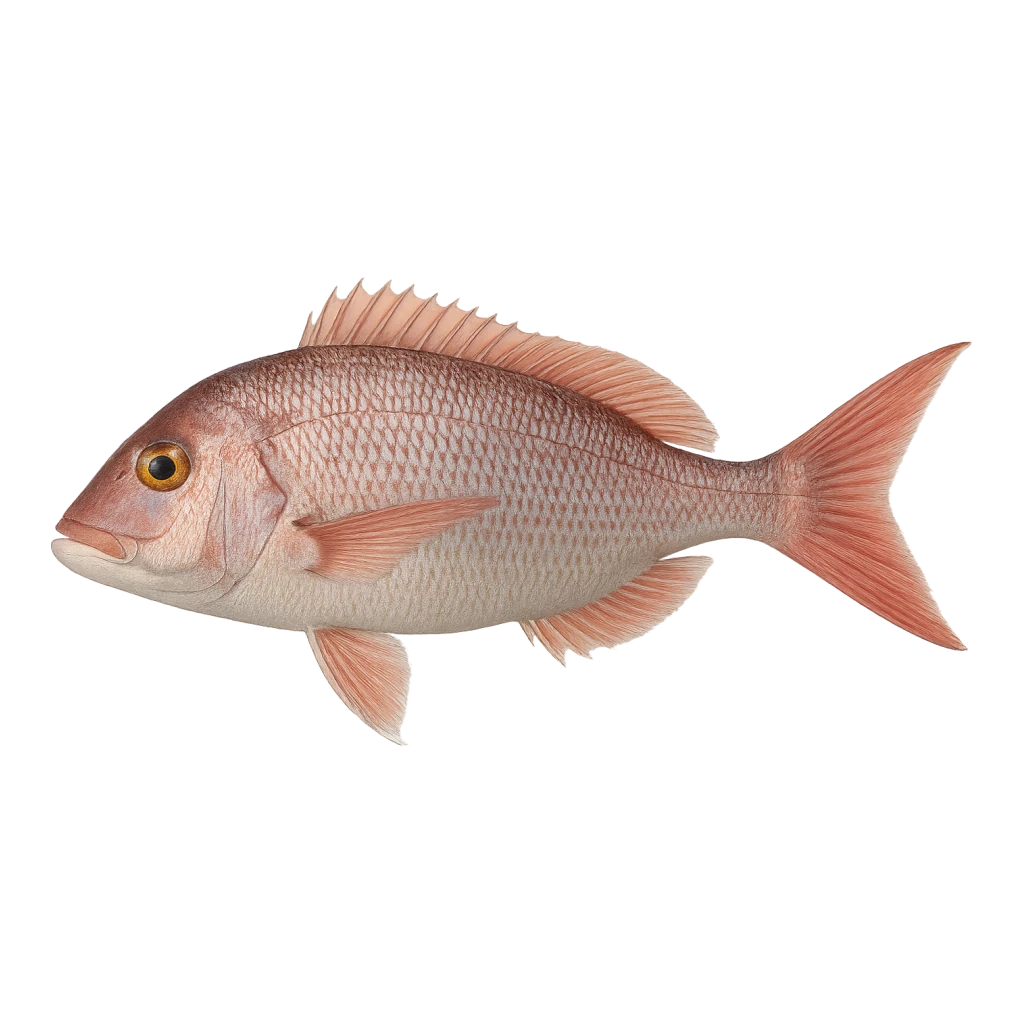
How to recognise it
The Red Porgy (Pagrus pagrus) is a robust fish with a distinctive appearance. It has a deep, oval body that is silver-pink in color. The dorsal fin is long and spiny, transitioning into a softer section. The anal fin is also long and has a similar structure. The mouth is moderately large, with sharp teeth. A key feature is the dark spot located above the pectoral fin. This species is often confused with the Scup (Stenotomus chrysops). The main detail that separates them is the Red Porgy's longer dorsal fin and the dark spot above the pectoral fin, which the Scup lacks.
Where it lives
The Red Porgy is primarily found along the Atlantic coast of the United States, from North Carolina to Florida. They inhabit both inshore and offshore waters, typically residing in depths ranging from 30 to 300 feet. They prefer rocky bottoms, reefs, and structures where they can find cover. In warmer months, they may move shallower, while in colder months, they tend to go deeper to find stable temperatures.
When it bites
Red Porgy are most active from late spring through early fall, particularly from May to October. They prefer water temperatures between 70 and 80 degrees F. The best times to fish for them are early morning and late afternoon. A passing front can trigger feeding activity, while strong winds may make them less active. A full moon can enhance their feeding patterns, making them more likely to bite.
How to catch it
To catch Red Porgy, use bottom fishing rigs such as a double dropper loop or a fish finder rig. Recommended baits include squid, shrimp, and cut fish, typically in sizes ranging from 4 to 6 inches. Lures such as jigs in bright colors like pink or chartreuse can also be effective. Use a 15 to 30-pound test line with a 1/0 to 3/0 hook size. Cast near rocky structures or reefs and work the bait slowly along the bottom, allowing it to sit briefly before reeling in.
Size, age and the table
Anglers typically encounter Red Porgy ranging from 12 to 18 inches in length. A trophy Red Porgy is generally considered to be over 20 inches. They have a growth rate of about 1 inch per year and can live up to 10 years. The flesh is white and firm, making it a popular choice for eating. When handling, be careful to minimize stress and use wet hands to avoid removing their protective slime layer. If releasing, do so gently to increase their chances of survival.