
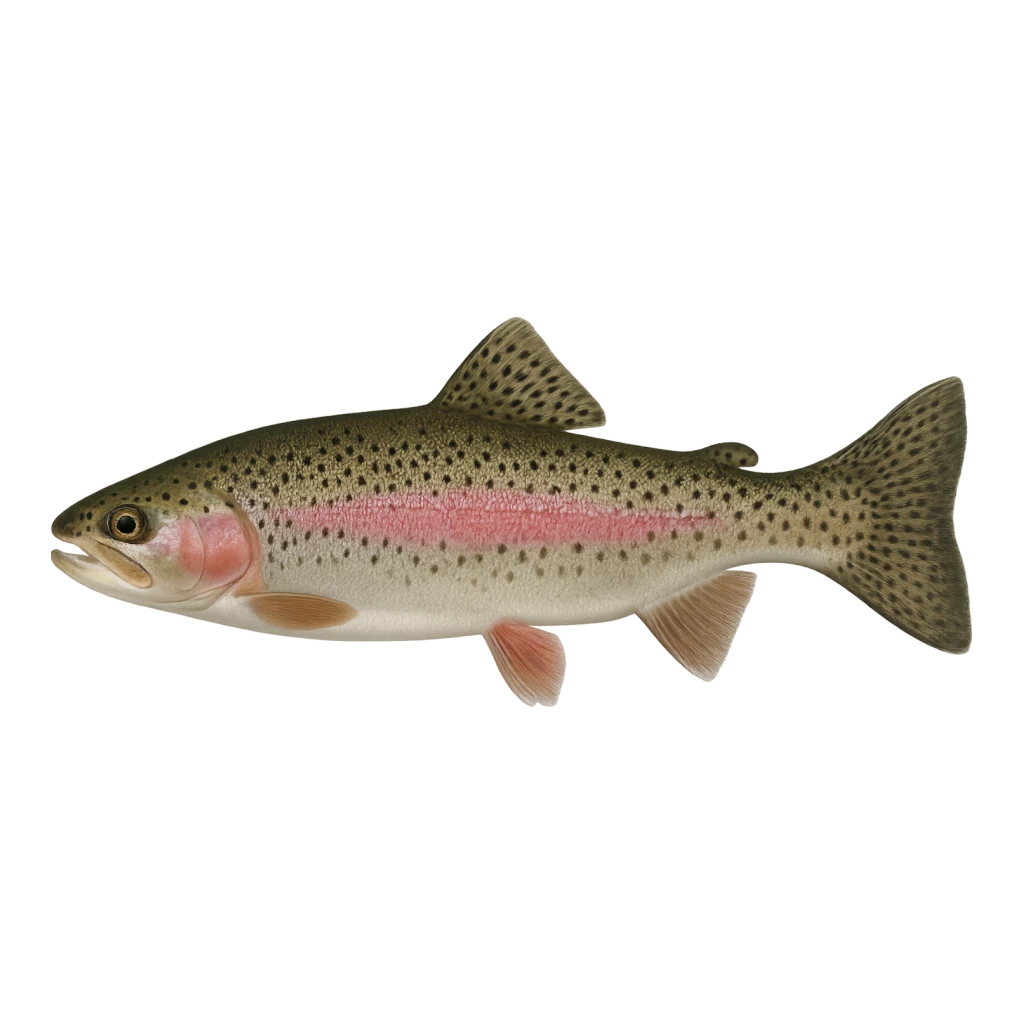
How to recognise it
The Rainbow Trout (Oncorhynchus mykiss) is known for its vibrant coloration. The body is typically silver with a pink stripe running along the side. The back is dark blue to green, often with black spots. The fins are generally clear with a hint of pink or red. The mouth is small and has a few small teeth. Rainbow Trout can be confused with the Cutthroat Trout, but the key difference is the presence of red or orange spots on the lower jaw of the Cutthroat Trout.
Where it lives
Rainbow Trout are found across the United States, primarily in the western regions. They inhabit cold, clear freshwater streams, rivers, and lakes. In the eastern U.S., they are often stocked in various water bodies. They prefer depths of 5 to 30 feet, but can be found deeper in warmer months. In spring, they tend to stay near the surface, while in summer, they may seek cooler, deeper waters. In fall, they move back to shallower areas as temperatures drop.
When it bites
Rainbow Trout are most active from March to October. They bite best when water temperatures range from 50 to 65 degrees F. Early mornings and late afternoons are prime times for fishing. A passing cold front can trigger feeding, while warm fronts may slow them down. Wind can stir up food sources, making them more active. A full moon often leads to increased activity during the night.
How to catch it
Effective rigs for catching Rainbow Trout include the slip bobber rig and the Carolina rig. Use live bait such as worms or minnows, typically in sizes 2 to 4 inches. Lures like spinners and spoons in sizes 1 to 3 are also effective, with colors like silver, gold, and bright patterns. Use a 4 to 8-pound test line with size 8 to 12 hooks. Cast near structures like rocks, fallen trees, or undercut banks. Retrieve lures slowly, allowing them to mimic natural prey.
Size, age and the table
Anglers typically encounter Rainbow Trout ranging from 10 to 20 inches in length. A trophy-sized Rainbow Trout is generally considered to be over 24 inches. Growth rates vary by habitat, but they can grow about 1 inch per year in optimal conditions. The lifespan of a Rainbow Trout can reach up to 7 years. They are known for their good eating quality, with firm, pink flesh. Handle them gently to ensure a successful release, minimizing stress and injury.


