
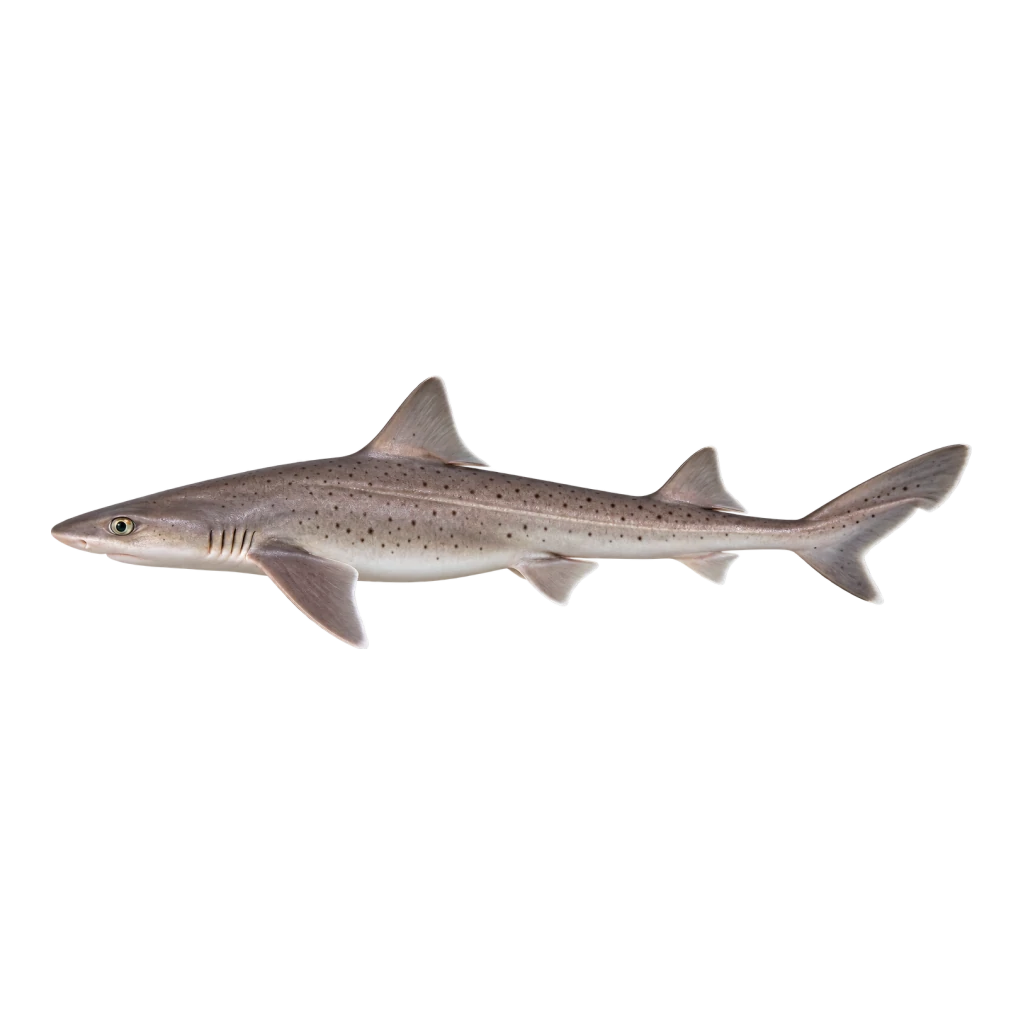
How to recognise it
The Smooth Dogfish (Mustelus canis) is a slender shark with a streamlined body. It has a smooth, grayish-brown skin that can appear lighter on the belly. The dorsal fins are relatively small and located far back on the body. The first dorsal fin is larger than the second and has a slight notch. The mouth is long and flat, with small, sharp teeth. This species is often confused with the Spiny Dogfish (Squalus acanthias). The key detail that separates them is the absence of spines in the Smooth Dogfish's dorsal fins.
Where it lives
The Smooth Dogfish is found along the Atlantic coast of the United States, from Maine to Florida. It prefers shallow coastal waters, typically inhabiting depths of 20 to 200 feet. During warmer months, it may move into shallower areas, while in colder months, it tends to migrate to deeper waters. This species often holds near sandy or muddy bottoms, where it can find cover and prey.
When it bites
Smooth Dogfish are most active from late spring through early fall, typically from May to October. They prefer water temperatures between 60 and 75 degrees F. Feeding activity often peaks during dawn and dusk. Weather changes, such as a passing front or increased wind, can trigger feeding. A full moon may also enhance their activity, making them more likely to bite.
How to catch it
To catch Smooth Dogfish, use a bottom rig with a 2/0 to 4/0 hook. Bait options include cut fish, squid, or shrimp, typically in 4 to 6-inch pieces. Bright colors like pink or chartreuse can attract them. Cast near the bottom in areas with structure, such as reefs or wrecks. Retrieve slowly, allowing the bait to sit on the bottom for a few minutes before reeling in. A 20 to 30-pound test line is recommended for durability.
Size, age and the table
Anglers typically encounter Smooth Dogfish measuring between 30 and 40 inches in length. A trophy specimen is generally considered to be over 50 inches. They grow at a rate of about 2 to 3 inches per year and can live up to 20 years. The meat is edible and considered to be of moderate quality. When handling, use care to avoid injury from their sharp teeth. If releasing, do so gently to ensure their survival.


