
How to recognise it
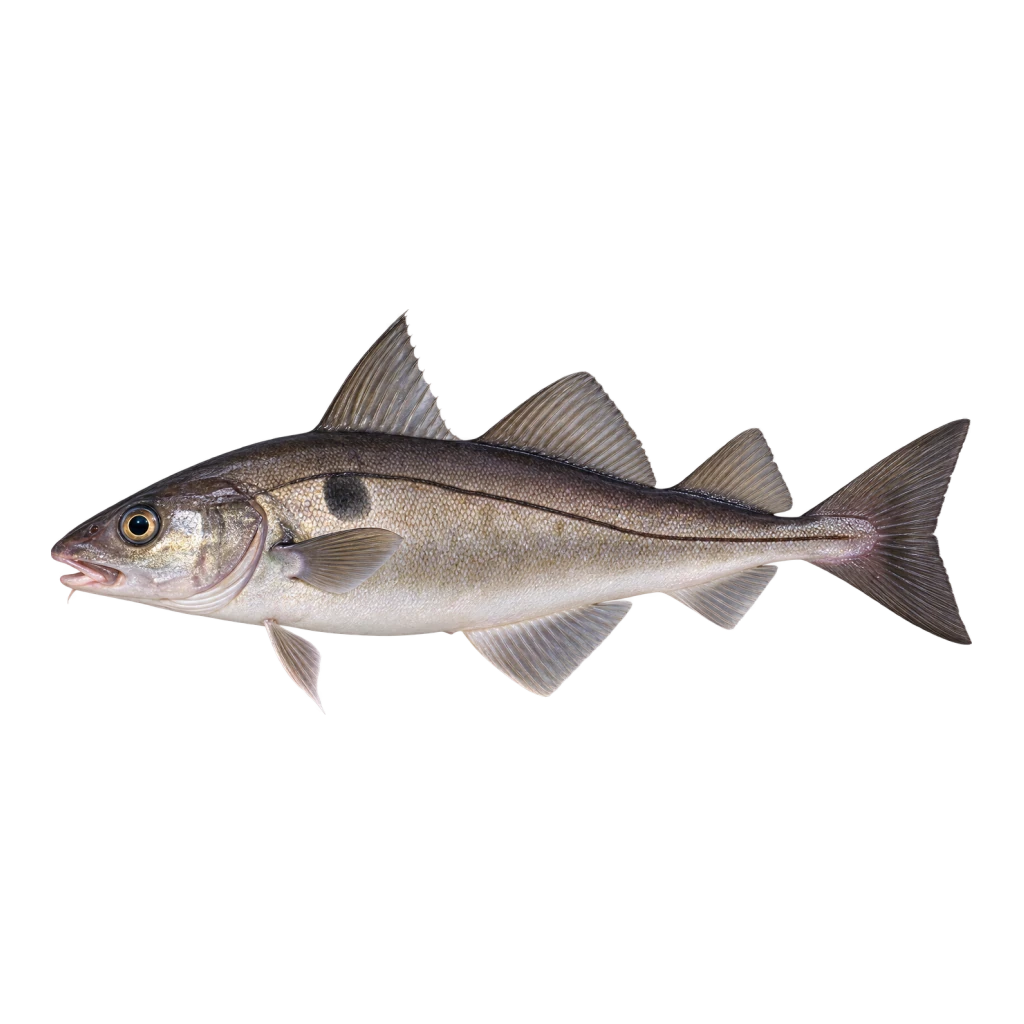
The haddock (Melanogrammus aeglefinus) is a distinctive fish. It has a streamlined body that can reach lengths of up to 30 inches and weights of around 20 pounds. The coloration is typically dark brown or gray on the back, fading to a lighter shade on the belly. A key feature is the black lateral line that runs along its side. Haddock also has a prominent black spot located above the pectoral fin.
This species is often confused with the pollock (Pollachius virens). The main detail that separates them is the presence of the black spot on the haddock, which the pollock lacks.
Where it lives
Haddock are primarily found in the Northwest Atlantic. In the United States, they inhabit the waters from Maine to New Jersey. They prefer cold, saltwater environments, typically found at depths ranging from 60 to 200 feet. Haddock often seek out areas with rocky or sandy bottoms, where they can find food and shelter.
Seasonal changes affect their habitat. In the spring and summer, haddock tend to move to shallower waters for spawning. In the fall and winter, they migrate to deeper waters as temperatures drop.
When it bites
Haddock are most active from late winter through early summer. They tend to bite best from March to June. The ideal water temperature for haddock fishing is between 45°F and 60°F. They are generally more active during the early morning and late afternoon.
Weather conditions can influence their feeding behavior. A passing front can trigger increased activity, while strong winds may make them less likely to bite. A full moon can also enhance their feeding patterns, making them more aggressive.
How to catch it
To effectively catch haddock, anglers often use jigs or baited hooks. Popular rigs include the high-low rig and the dropper loop rig. Use jigs weighing between 6 to 12 ounces, preferably in bright colors like chartreuse or pink. Bait options include clams, squid, or herring, typically cut into strips.
For line, a 30 to 50-pound test braided line is recommended, paired with a 3/0 to 5/0 hook. When fishing, cast near rocky structures or areas with significant bottom cover. Work the bait by bouncing it off the bottom to mimic the movement of prey.
Size, age and the table
Anglers commonly encounter haddock ranging from 18 to 24 inches. A trophy haddock is generally considered to be over 30 inches. Haddock grow relatively quickly, reaching maturity at around 3 to 4 years of age, and can live up to 12 years.
Haddock are known for their excellent eating quality. The flesh is white, flaky, and mild in flavor. When handling haddock, it is important to keep them cool and handle them gently to ensure a successful release if not kept. Always check local regulations for guidelines on size and bag limits.


