
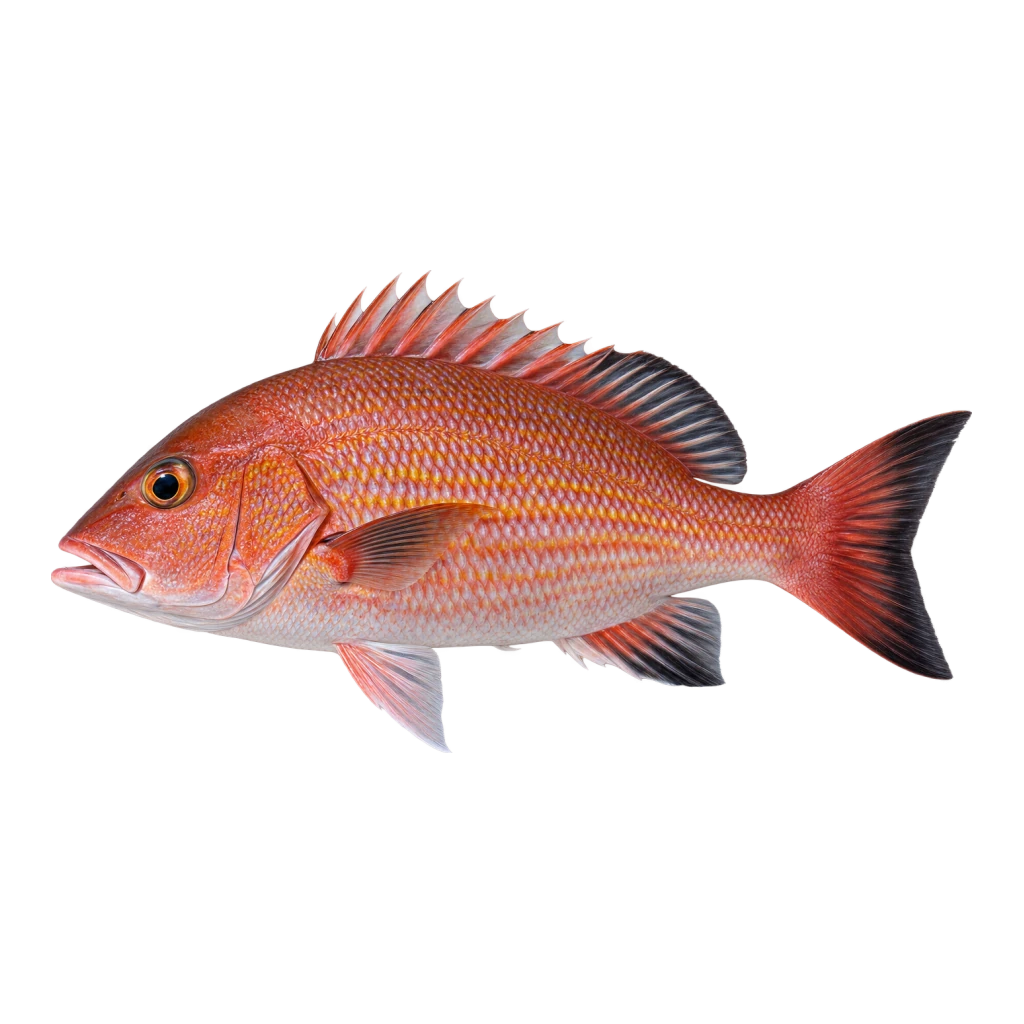
How to recognise it
The Blackfin Snapper, scientifically known as Lutjanus buccanella, is a distinctive fish. It has a streamlined body that can reach lengths of up to 30 inches. The coloration is generally a reddish-pink with a lighter underside. A notable feature is its dark, sharp-edged dorsal fin. The mouth is moderately large, with sharp teeth. It is often confused with the Mutton Snapper (Lutjanus analis), but the Blackfin Snapper has a more pronounced, darker stripe along its side that the Mutton Snapper lacks.
Where it lives
The Blackfin Snapper is primarily found in the western Atlantic Ocean. In the United States, its range extends from North Carolina to Florida and throughout the Gulf of Mexico. It prefers warm, saltwater environments, typically inhabiting depths of 30 to 300 feet. Blackfin Snapper often seeks shelter around reefs, wrecks, and rocky structures. During warmer months, they may move shallower, while in cooler months, they tend to go deeper for thermal comfort.
When it bites
Blackfin Snapper are most active from late spring through early fall, particularly from May to October. They prefer water temperatures between 75°F and 85°F. Early morning and late afternoon are prime times for fishing. Weather changes, such as a passing front or a strong wind, can trigger feeding activity. A full moon may also increase their activity, making them more likely to bite.
How to catch it
To catch Blackfin Snapper, use a variety of rigs. A standard bottom rig with a 2/0 to 4/0 hook works well. Live baits like pinfish, squid, and small mullet are effective. For lures, try jigs in bright colors like pink or chartreuse. Use a 20 to 30-pound test line. Cast near reefs or wrecks and let the bait sink to the bottom. Slowly retrieve it with a steady motion, or jig it to attract attention. Keep your line tight to feel for bites.
Size, age and the table
Anglers typically encounter Blackfin Snapper ranging from 12 to 20 inches. A trophy Blackfin Snapper is considered to be over 25 inches. They grow quickly, reaching sexual maturity around 2 years of age and can live up to 10 years. The flesh is white, firm, and has a mild flavor, making it a popular choice for eating. When handling, use wet hands to avoid damaging their slime coat, and release them carefully to ensure their survival.


