
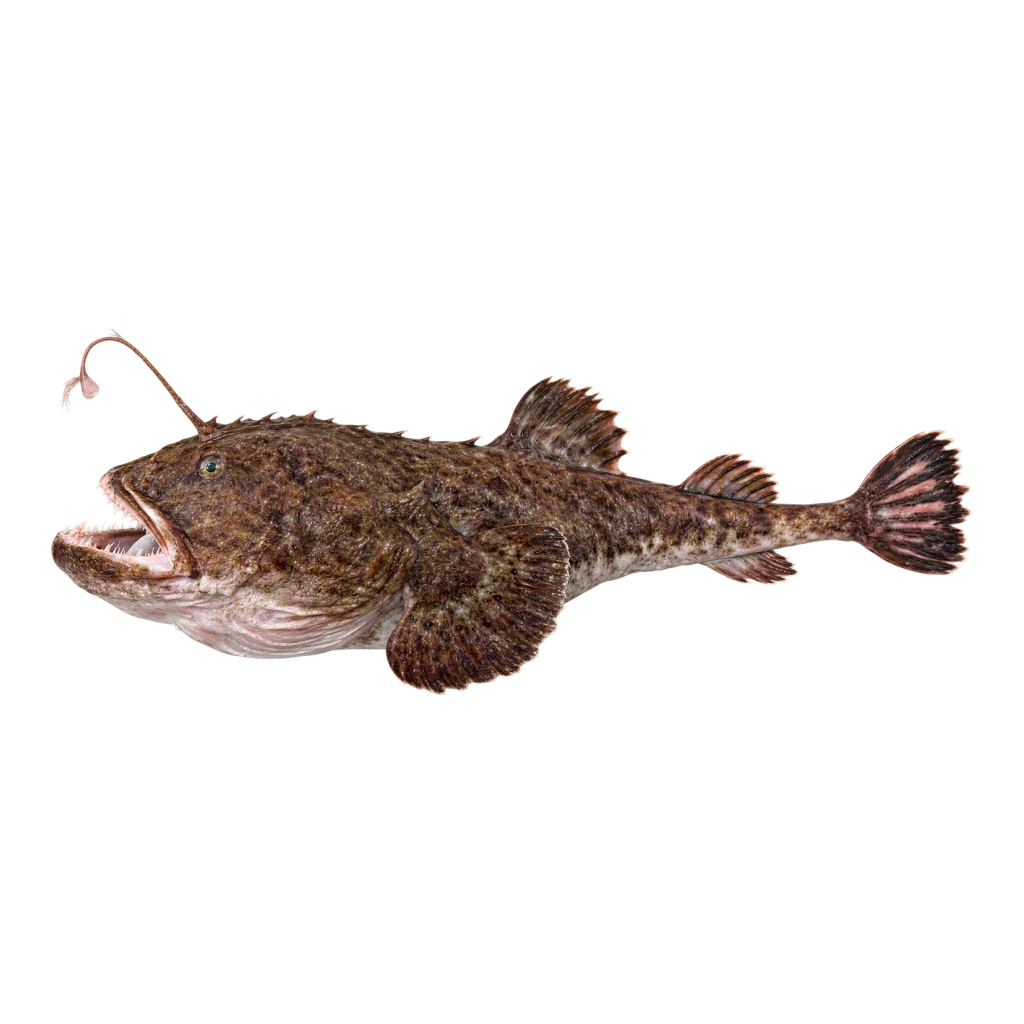
How to recognise it
The American anglerfish, or Lophius americanus, is a distinctive species. It has a flattened body and a large head. The coloration ranges from brown to mottled green, helping it blend into the ocean floor. Its most notable feature is the lure on its head, which resembles a fishing rod with a baited end. The mouth is large and filled with sharp teeth, allowing it to capture prey effectively.
This species is often confused with the European anglerfish (Lophius piscatorius). The key detail that separates them is the presence of a single dorsal fin on the American anglerfish, while the European species has a more pronounced fin structure.
Where it lives
The American anglerfish is primarily found along the Atlantic coast of the United States. Its range extends from the Gulf of Maine to North Carolina. This species inhabits saltwater environments, typically found on the ocean floor. It prefers depths ranging from 20 to 600 feet, often residing in sandy or muddy substrates.
Seasonally, the anglerfish tends to move to shallower waters during the warmer months. In winter, it may migrate to deeper areas to escape colder temperatures. This behavior can vary based on local conditions and food availability.
When it bites
The American anglerfish is most active from late spring to early fall. It prefers water temperatures between 50 and 70 degrees F. During this period, the fish is more likely to bite during the early morning and late evening hours.
Environmental factors can influence its feeding behavior. A passing front may trigger increased activity, while strong winds can make fishing more challenging. A full moon can also affect feeding patterns, often leading to more aggressive feeding in the days surrounding it.
How to catch it
To catch American anglerfish, use bottom rigs with heavy weights to keep your bait close to the ocean floor. Recommended baits include squid, mackerel, and other fish chunks, typically ranging from 6 to 12 inches in size. Bright colors like pink or chartreuse can be effective for lures.
Use a strong line, ideally 50 to 80-pound test, with hooks sized 7/0 to 10/0. Cast your rig near rocky structures or sandy bottoms where anglerfish are likely to ambush prey. Work your bait slowly along the bottom, pausing occasionally to mimic the movement of injured fish.
Size, age and the table
Anglers typically encounter American anglerfish ranging from 20 to 40 inches in length. A trophy specimen is generally considered to be over 50 inches. The growth rate is relatively slow, with these fish reaching maturity at about 3 to 4 years of age. They can live up to 20 years in the wild.
American anglerfish have firm, white flesh that is highly regarded for its eating quality. When handling, use care to avoid injury from their sharp teeth. If releasing, do so gently to ensure the fish has the best chance of survival.


