
How to recognise it
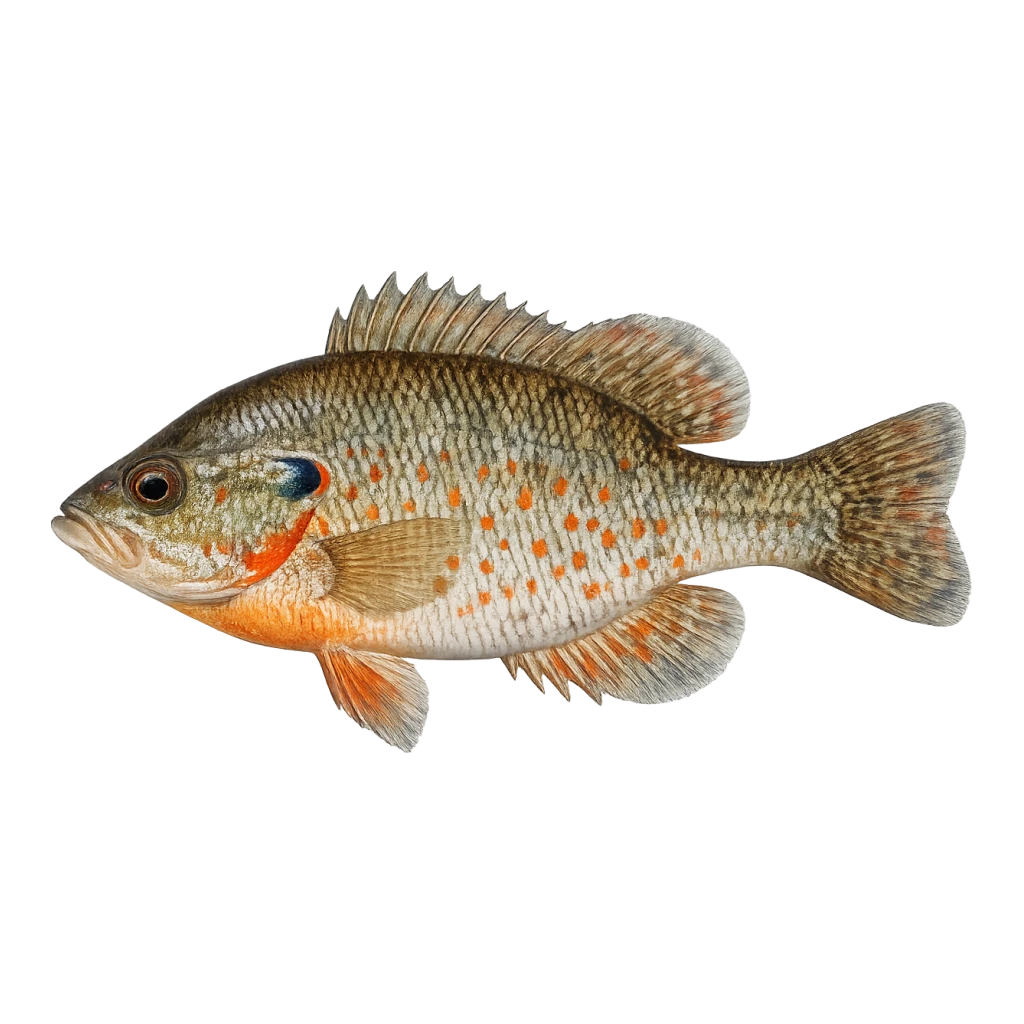
The Orangespotted Sunfish (Lepomis humilis) is a small freshwater fish. It typically grows to about 3 to 6 inches in length. The body is oval and laterally compressed. The coloration is generally olive to brown with vibrant orange or red spots scattered across the body and fins. The dorsal fin is long and continuous, with a slight notch. The mouth is small and slightly oblique.
This species is often confused with the Pumpkinseed Sunfish (Lepomis gibbosus). The key detail that separates them is the presence of orange spots on the Orangespotted Sunfish, while the Pumpkinseed has a more pronounced blue spot on the operculum (gill cover).
Where it lives
The Orangespotted Sunfish is found primarily in the eastern and central United States. Its range extends from the Great Lakes region down to the Gulf Coast, including states like Michigan, Ohio, and Louisiana. This species prefers warm, shallow waters such as ponds, lakes, and slow-moving rivers.
It typically inhabits depths of 1 to 10 feet. The Orangespotted Sunfish prefers areas with ample cover, such as submerged vegetation, fallen logs, and rocks. In the summer, it tends to stay near the surface. During colder months, it may move to deeper waters where temperatures are more stable.
When it bites
The best months for catching Orangespotted Sunfish are from late spring through early fall, specifically from May to September. They are most active when water temperatures range from 70 to 85 degrees F. Early morning and late afternoon are prime times for fishing, as they tend to be more aggressive during these hours.
Weather changes can affect their feeding behavior. A passing front may trigger increased activity, while windy conditions can make them less likely to bite. A full moon can enhance their feeding, leading to more successful catches during the night.
How to catch it
To catch Orangespotted Sunfish, use light tackle. A spinning rig with a 4 to 6-pound test line is recommended. Hooks should be size 8 to 12. Popular baits include worms, crickets, and small minnows. Lures such as small jigs or spinners in bright colors (yellow, orange, or chartreuse) can also be effective.
Cast near cover, such as vegetation or submerged structures. Retrieve slowly, allowing the bait to sink and then twitch it to mimic natural movement. Be patient, as they may take time to bite. If fishing in deeper water, try vertical jigging to entice them.
Size, age and the table
Anglers typically encounter Orangespotted Sunfish in the 3 to 6-inch range. A trophy specimen is usually considered to be over 7 inches. Growth rates can vary, but they generally reach maturity within 2 to 3 years. The lifespan of this species can extend up to 6 years.
Orangespotted Sunfish are considered good to eat, with a mild flavor and firm texture. When handling, use wet hands to prevent damage to their skin. If you plan to release them, do so gently to ensure their survival. Always check local regulations regarding size and bag limits before fishing.


