
How to recognise it
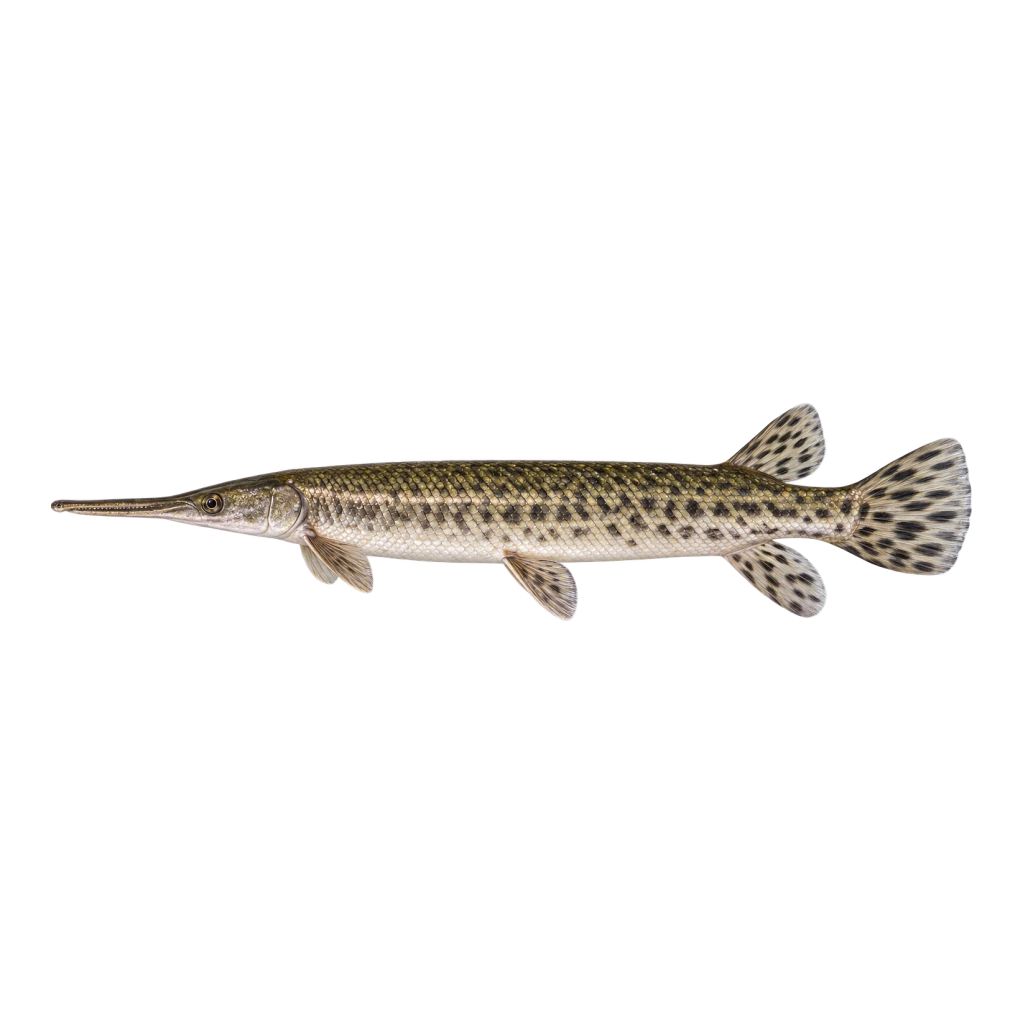
The Shortnose Gar (Lepisosteus platostomus) is a distinct freshwater fish. It has a long, slender body with a pointed snout. The coloration is typically olive to brown with lighter spots. Its fins are small and positioned towards the back of the body. The mouth is filled with sharp teeth, ideal for catching prey.
This species is often confused with the Longnose Gar (Lepisosteus osseus). The key detail that separates them is the length of the snout; the Shortnose Gar has a shorter, more rounded snout compared to the elongated snout of the Longnose Gar.
Where it lives
The Shortnose Gar is found primarily in the eastern United States. Its range includes the Great Lakes, the Mississippi River Basin, and parts of the Atlantic Slope. It prefers slow-moving waters such as lakes, rivers, and wetlands. Depths of 1 to 10 feet are common, especially near vegetation and submerged structures.
In spring and summer, Shortnose Gars are often found in shallow waters with abundant cover like weeds and logs. In fall and winter, they may move to deeper areas as water temperatures drop.
When it bites
Shortnose Gar are most active from late spring through early fall. They typically bite when water temperatures are between 65 and 80 degrees F. Early morning and late evening are the best times to fish for them.
Weather changes can affect their feeding behavior. A passing front may increase activity, while strong winds can make them less likely to bite. A full moon often leads to increased feeding, making it a prime time for anglers.
How to catch it
To catch Shortnose Gar, use a variety of rigs. A simple float rig with a 3/0 to 5/0 hook is effective. Baits such as live minnows or cut bait work well. For lures, try spinnerbaits or topwater plugs in sizes ranging from 3 to 5 inches. Colors like silver, chartreuse, and natural patterns are recommended.
Use a strong line, ideally 20 to 30-pound test, to handle their sharp teeth. Cast near vegetation or structures and retrieve slowly to mimic prey. A steady retrieve or occasional pauses can trigger strikes.
Size, age and the table
Anglers typically encounter Shortnose Gar ranging from 24 to 36 inches in length. A trophy specimen is generally considered to be over 36 inches. Growth rates can vary, but they can reach maturity in 3 to 5 years.
The lifespan of a Shortnose Gar can exceed 20 years in the wild. While they are not commonly sought after for eating, some anglers do enjoy their firm, white flesh. Proper handling is essential to ensure a successful release, as they are sensitive to stress. Use wet hands or a wet cloth when handling them to minimize damage to their skin.


