
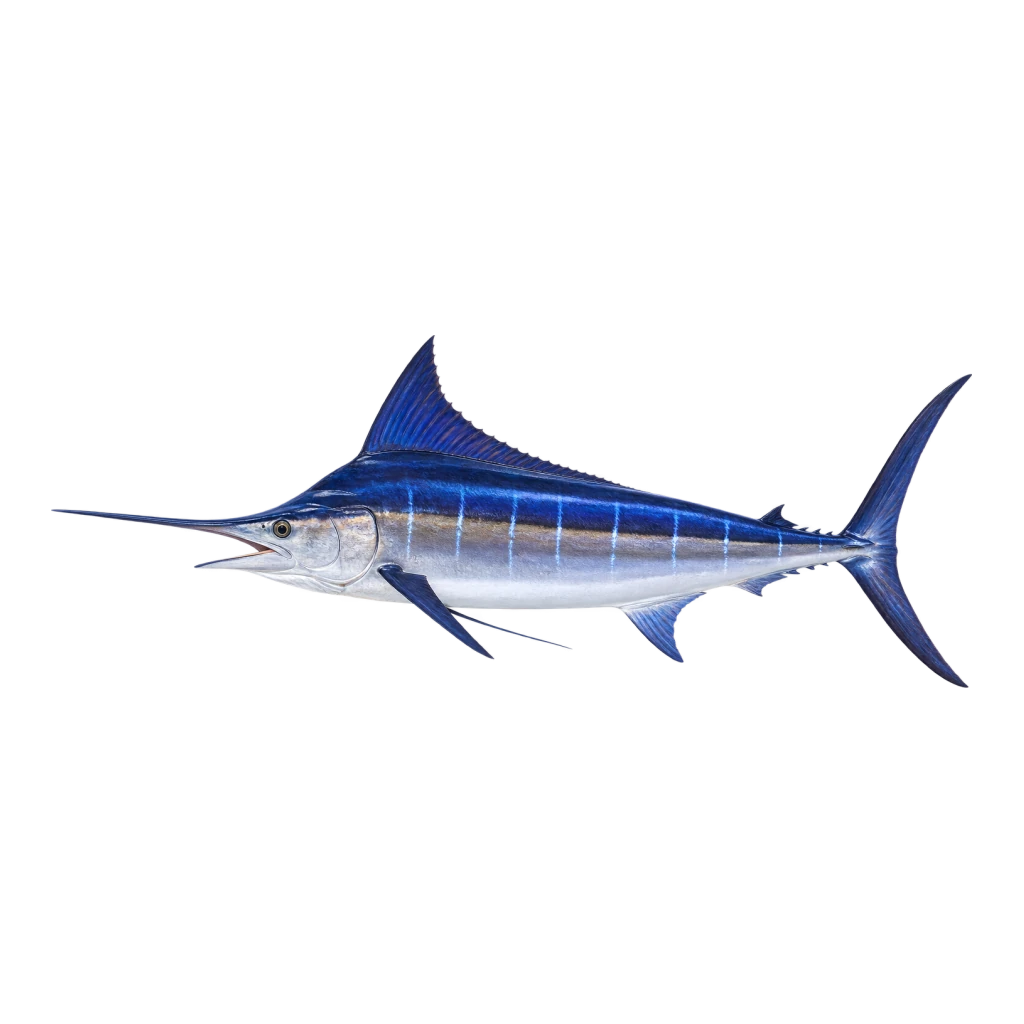
How to recognise it
The White Marlin (Kajikia albida) is a sleek and streamlined fish. It has a long, pointed bill and a slender body. The coloration is typically a bluish-green on the top and a silvery-white on the belly. The dorsal fin is tall and can be raised while swimming. The pectoral fins are long and narrow. The species it is most often confused with is the Blue Marlin. The key detail that separates them is the White Marlin's smaller size and the absence of a pronounced dorsal fin ridge.
Where it lives
The White Marlin is primarily found in the Atlantic Ocean. In the U.S., it ranges from the Gulf of Mexico to the Mid-Atlantic region. They prefer warm waters and are often found in the open ocean. Depths can vary, but they typically inhabit waters from 60 to 600 feet deep. During the summer months, they move closer to the surface, while in cooler months, they may go deeper. They often associate with floating debris, weed lines, and underwater structures.
When it bites
White Marlin are most active from May to October. They prefer water temperatures between 70 and 85 degrees F. Early morning and late afternoon are the best times to catch them. Weather changes, such as a passing front or increased wind, can trigger feeding activity. A full moon can also enhance their feeding behavior, making them more likely to bite.
How to catch it
To catch White Marlin, anglers often use trolling rigs. Popular setups include the "ballyhoo rig" with a 6 to 8-inch ballyhoo baited on a 7/0 to 9/0 circle hook. Lures in bright colors like blue, pink, or green are effective. Use a 30 to 50-pound test line for best results. Cast near weed lines or floating debris and troll at a speed of 6 to 8 knots. Work the lure by varying the speed and allowing it to dive and rise in the water column.
Size, age and the table
Anglers typically encounter White Marlin ranging from 40 to 70 inches in length and weighing between 60 to 120 pounds. A trophy White Marlin is generally considered to be over 100 pounds. They grow rapidly, reaching sexual maturity around 3 to 5 years of age, and can live up to 10 years. While they are not commonly eaten, their meat is considered good quality. Proper handling is crucial for release; use wet hands and avoid touching the gills. Release them quickly to ensure their survival.


