
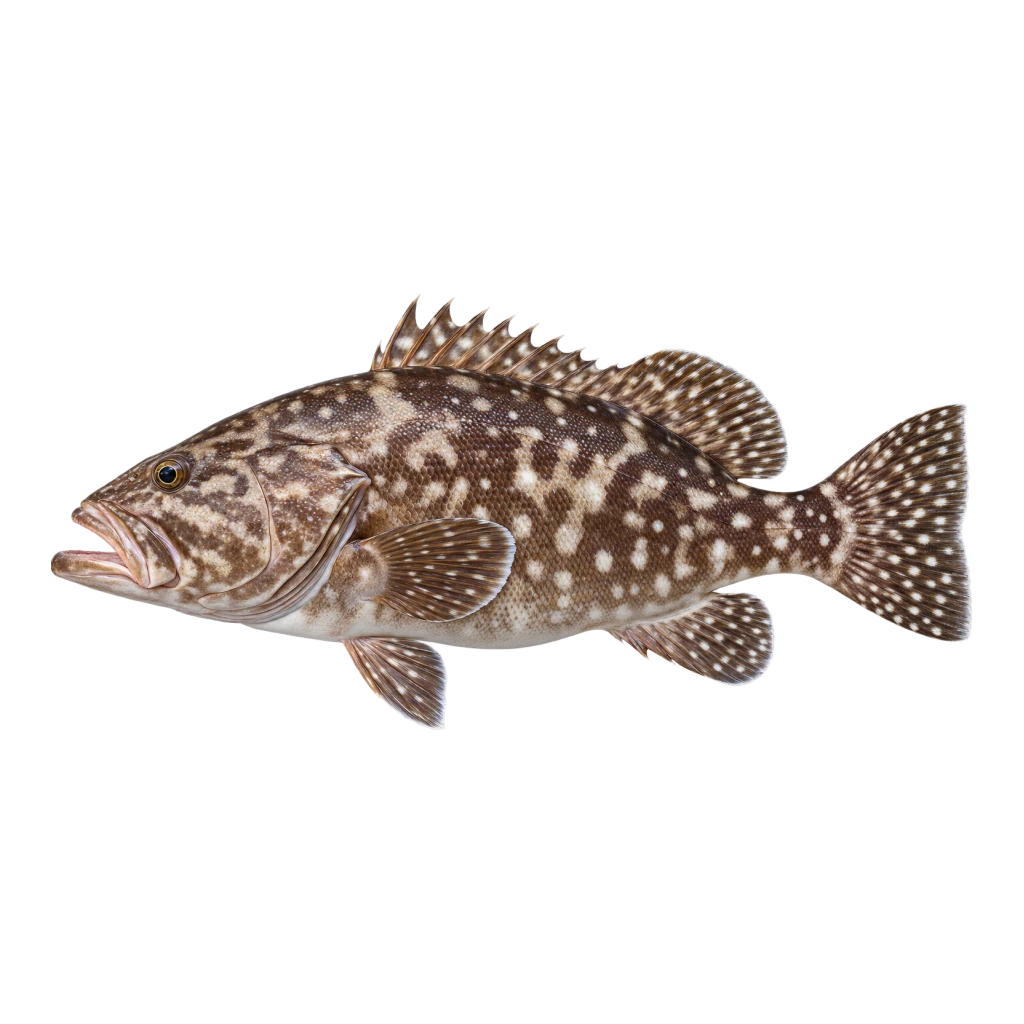
How to recognise it
The Snowy Grouper (Hyporthodus niveatus) is a robust fish with a stout body. It has a distinctive coloration, typically a dark brown or grayish hue with lighter spots. The fins are rounded, and the tail is slightly forked. The mouth is large, with sharp teeth. Snowy Groupers are often confused with the Red Grouper (Epinephelus morio). The key detail that separates them is the Snowy Grouper's more elongated body shape and the presence of a pronounced lateral line that is less visible in the Red Grouper.
Where it lives
Snowy Groupers are found in the southeastern United States, primarily along the Atlantic coast from North Carolina to Florida. They inhabit deep waters, typically between 200 and 1,200 feet. These fish prefer rocky bottoms, ledges, and coral reefs. In warmer months, they may move shallower, while in colder months, they tend to retreat to deeper waters for stability and temperature control.
When it bites
Snowy Groupers are most active from late spring through early fall, particularly from May to October. They prefer water temperatures between 70°F and 80°F. The best times to fish for them are during dawn and dusk. Weather changes, such as a passing front or strong winds, can trigger feeding activity. A full moon may also enhance their feeding patterns, making them more likely to bite.
How to catch it
To catch Snowy Grouper, use a bottom fishing rig with a heavy sinker, typically 8 to 16 ounces, depending on the depth and current. Baits such as live or cut squid, cigar minnows, and whole baits like mackerel work well. Use circle hooks in sizes 5/0 to 8/0. Cast near rocky structures or ledges and allow the bait to sit on the bottom. Slowly reel in to maintain contact with the bottom, as Snowy Groupers often strike when the bait is stationary.
Size, age and the table
Anglers typically encounter Snowy Groupers ranging from 10 to 30 pounds, with larger specimens considered trophies at 40 pounds or more. They grow at a rate of about 1 inch per year and can live up to 30 years. Snowy Grouper has excellent eating quality, with firm, white flesh. Handle them carefully to avoid damaging their delicate skin, and use proper techniques for release to ensure their survival if you choose to catch and release.


