
How to recognise it
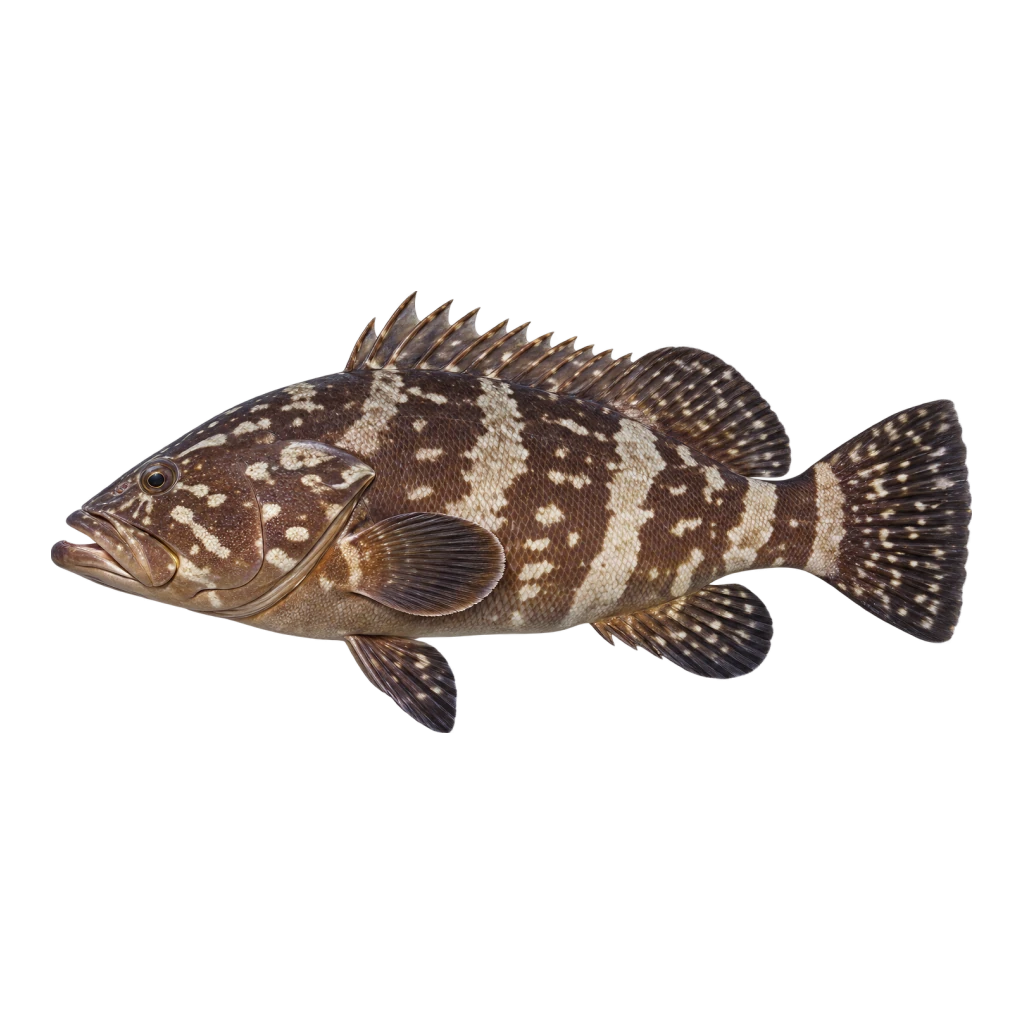
The Warsaw Grouper (Hyporthodus nigritus) is a large, robust fish. It has a broad, elongated body with a large head. The coloration is typically dark brown to gray, with lighter spots or blotches. The fins are rounded, and the tail is slightly forked. The mouth is large, equipped with sharp teeth. It is often confused with the Goliath Grouper, but the key detail that separates them is the presence of a distinct, small notch in the upper jaw of the Warsaw Grouper.
Where it lives
The Warsaw Grouper is found in the western Atlantic Ocean. Its range extends from North Carolina to Florida and throughout the Gulf of Mexico. This species prefers deep waters, typically residing at depths of 200 to 1,200 feet. They are often found near rocky bottoms, reefs, and ledges. During warmer months, they may move shallower, while in colder months, they tend to go deeper to seek stable temperatures.
When it bites
The Warsaw Grouper is most active from late spring to early fall. The ideal water temperature for fishing them is between 70°F and 85°F. They are known to bite best during the early morning and late afternoon. A passing front can trigger feeding activity, while strong winds may make them less active. A full moon can also enhance their feeding behavior, increasing the chances of a successful catch.
How to catch it
To catch a Warsaw Grouper, use heavy tackle. Recommended rigs include a conventional reel with a minimum of 50-pound test line. A 6/0 to 10/0 circle hook is advisable. Live baits such as pinfish or squid are effective, as well as larger jigs in bright colors like pink or chartreuse. Cast near rocky structures or ledges and let the bait sink to the bottom. Slowly retrieve the bait with a steady motion, allowing it to bounce off the structure to attract the fish.
Size, age and the table
The typical size of a Warsaw Grouper caught by anglers ranges from 30 to 50 inches in length. A trophy specimen is considered to be over 50 inches. They grow slowly, reaching sexual maturity around 4 to 6 years of age and can live up to 30 years. The flesh is firm and white, making it a desirable catch for eating. Handle them carefully to avoid injury, and if releasing, do so quickly to minimize stress on the fish.


