
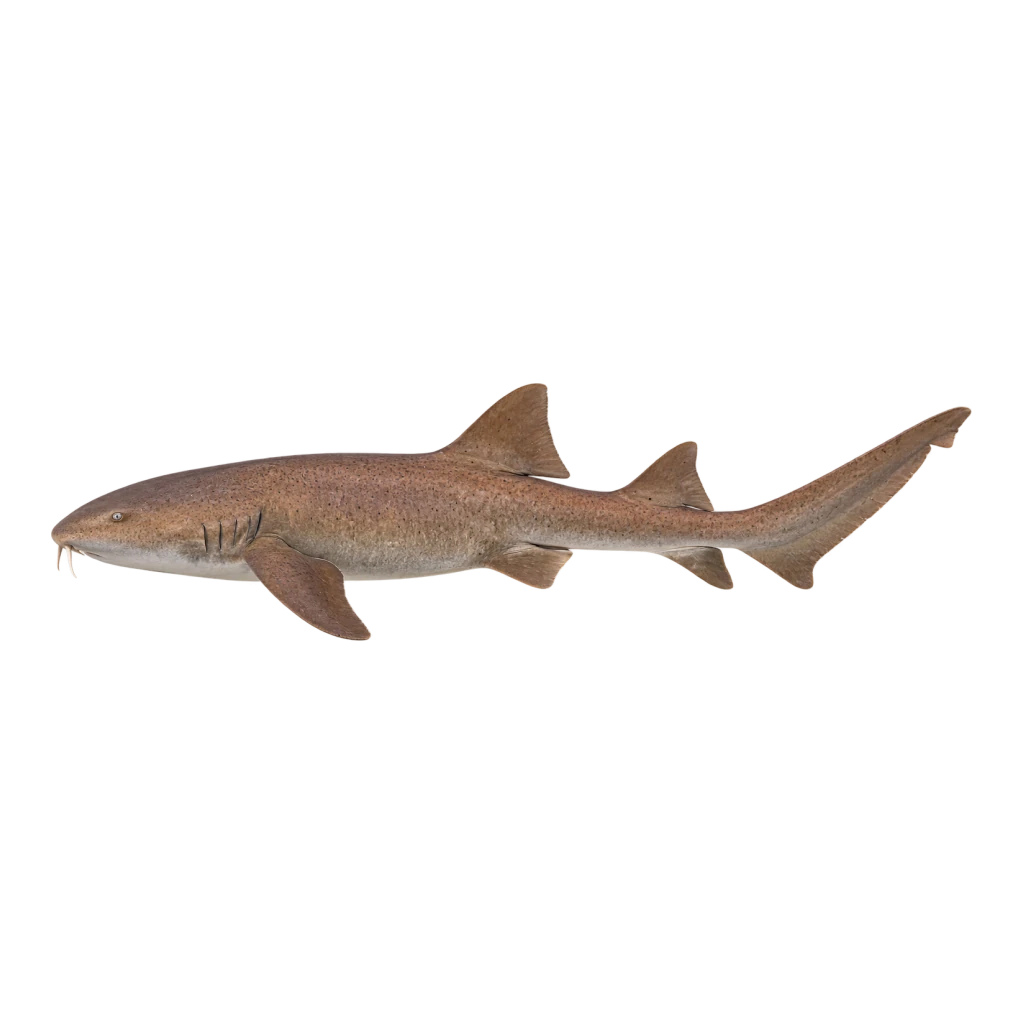
How to recognise it
The Nurse Shark (Ginglymostoma cirratum) is a distinctive species. It has a stout body, a broad head, and a flattened snout. The coloration is generally a yellow-brown to grayish-brown, with lighter spots and blotches. Its dorsal fins are low and rounded, with the first dorsal fin positioned far back on the body. The mouth is located on the underside of the head and has a unique feature: it contains numerous small, comb-like teeth used for crushing prey.
This species is often confused with the Bull Shark (Carcharhinus leucas). The key detail that separates them is the Nurse Shark's distinctive, flattened snout compared to the more pointed snout of the Bull Shark.
Where it lives
Nurse Sharks are primarily found in the warm coastal waters of the western Atlantic Ocean. In the United States, their range extends from Florida to the Gulf of Mexico and down to the Caribbean. They prefer shallow waters, typically inhabiting depths of 10 to 50 feet, but can be found as deep as 100 feet.
These sharks are often found resting on the ocean floor, particularly in areas with rocky outcrops, coral reefs, or sandy bottoms. They tend to seek shelter in caves and crevices during the day. Seasonal changes can affect their behavior; during warmer months, they may move to shallower waters, while in cooler months, they may retreat to deeper areas.
When it bites
Nurse Sharks are generally not aggressive, but they can bite if provoked. They are most active from late spring to early fall, particularly during the warmer months of May through October. The ideal water temperature for activity is between 75°F and 85°F.
They are primarily nocturnal feeders, with increased activity during the evening and nighttime hours. Environmental factors such as a passing front, strong winds, or a full moon can influence their feeding patterns, often making them more active during these times.
How to catch it
To target Nurse Sharks, anglers can use a variety of rigs. A simple bottom rig with a 5/0 to 8/0 circle hook is effective. Use a leader line of 80 to 100-pound test to withstand their strong bites. Baits such as cut fish, squid, or crustaceans work well. For lures, large jigs or heavy spoons in bright colors can attract their attention.
Cast near rocky areas, reefs, or sandy bottoms where Nurse Sharks are likely to rest. Allow the bait to settle on the bottom and retrieve it slowly, mimicking the movement of natural prey. Be patient, as Nurse Sharks may take time to investigate the bait.
Size, age and the table
Nurse Sharks typically range from 5 to 8 feet in length, with larger individuals occasionally reaching up to 10 feet. A trophy Nurse Shark is generally considered to be over 8 feet. They grow at a rate of about 1 foot per year and can live for 25 years or more in the wild.
While Nurse Sharks are edible, their meat is often considered tough and not highly sought after. If you choose to keep one, handle it carefully to avoid injury, as they can be strong and difficult to manage. For catch and release, ensure the shark is returned to the water gently to increase its chances of survival.


