
How to recognise it
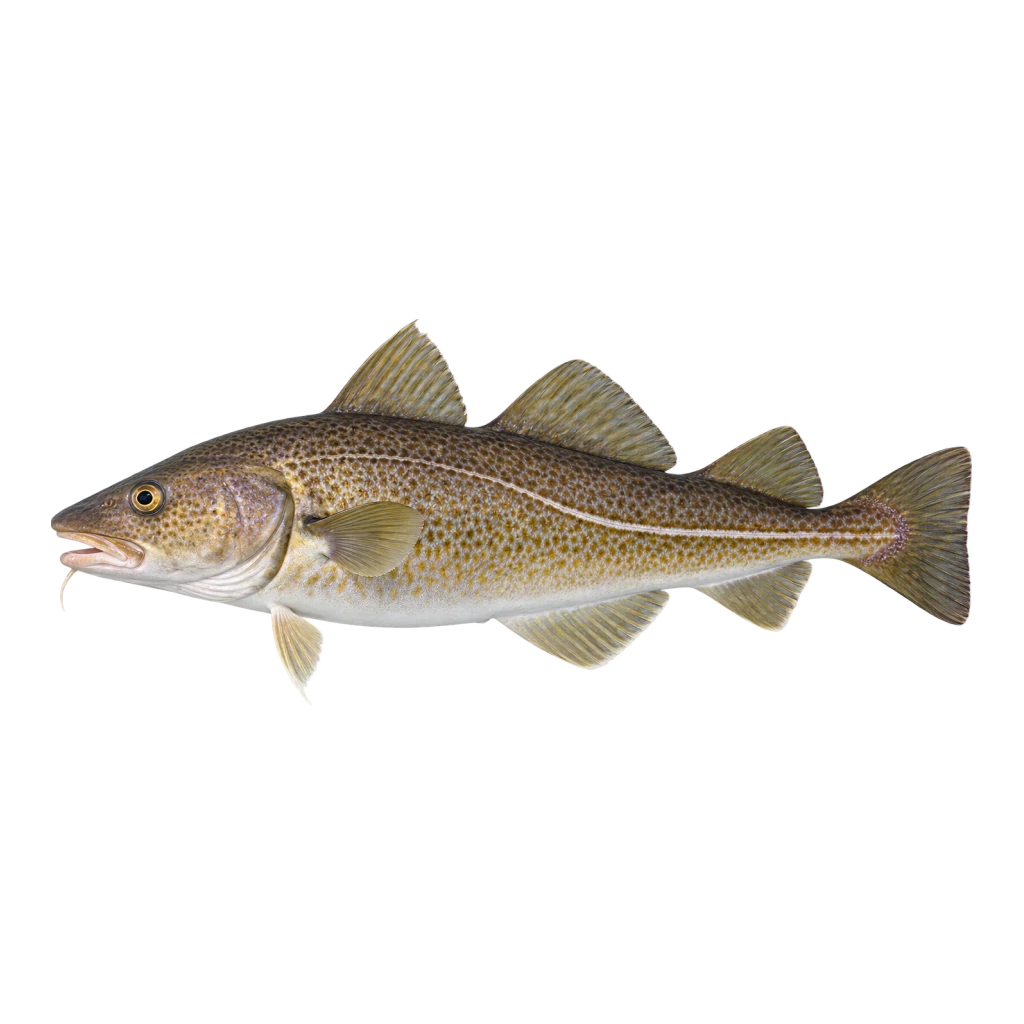
The Atlantic Cod (Gadus morhua) is a robust fish with a distinctive appearance. It has a streamlined body, a broad head, and a prominent barbel on its chin. The coloration varies from greenish-brown to dark gray, often with lighter spots. The belly is typically pale or white. The first dorsal fin is long and has a slight curve, while the second dorsal fin is shorter. The mouth is large, extending past the eyes, with a slightly protruding lower jaw.
Atlantic Cod is often confused with the Pacific Cod (Gadus macrocephalus). The key detail that separates them is the presence of a pronounced barbel on the chin of the Atlantic Cod, which is absent in the Pacific Cod.
Where it lives
Atlantic Cod are primarily found along the northeastern coast of the United States, from Maine to North Carolina. They inhabit saltwater environments, typically in the continental shelf region. Cod prefer depths ranging from 30 to 600 feet, often found near the ocean floor. They tend to seek out rocky substrates, wrecks, and other structures that provide cover.
Seasonally, Atlantic Cod behavior changes. In the winter months, they move to deeper waters for spawning. In spring and summer, they migrate closer to shore, often found in shallower waters where they feed more actively.
When it bites
Atlantic Cod are most active from late fall through early spring. They bite best when water temperatures range from 40 to 55 degrees F. Early morning and late afternoon are prime times for fishing, as cod are more likely to feed during these hours.
Weather conditions can influence their feeding patterns. A passing front can trigger increased activity, while strong winds may make them less likely to bite. A full moon can enhance feeding behavior, leading to more successful catches.
How to catch it
To catch Atlantic Cod, use bottom fishing rigs such as a fish finder rig or a dropper loop rig. Baits like herring, mackerel, and squid are effective, typically in sizes ranging from 6 to 12 inches. Lures such as jigs in bright colors like chartreuse or orange can also attract cod.
Use a strong line, typically 40 to 80-pound test, with hooks sized 5/0 to 8/0. Cast near rocky structures or wrecks where cod are likely to hide. Work the bait by bouncing it off the bottom or slowly retrieving it to mimic injured prey.
Size, age and the table
Anglers typically encounter Atlantic Cod ranging from 20 to 30 inches in length, weighing between 5 to 15 pounds. A trophy cod is generally considered to be over 40 inches long or weighing more than 30 pounds. Cod grow rapidly, reaching maturity in about 3 to 5 years, with a lifespan of up to 25 years.
Atlantic Cod are known for their excellent eating quality, with firm, white flesh. When handling cod, use wet hands or a wet cloth to prevent damage to their skin. If releasing, minimize air exposure and handle gently to ensure their survival.


