
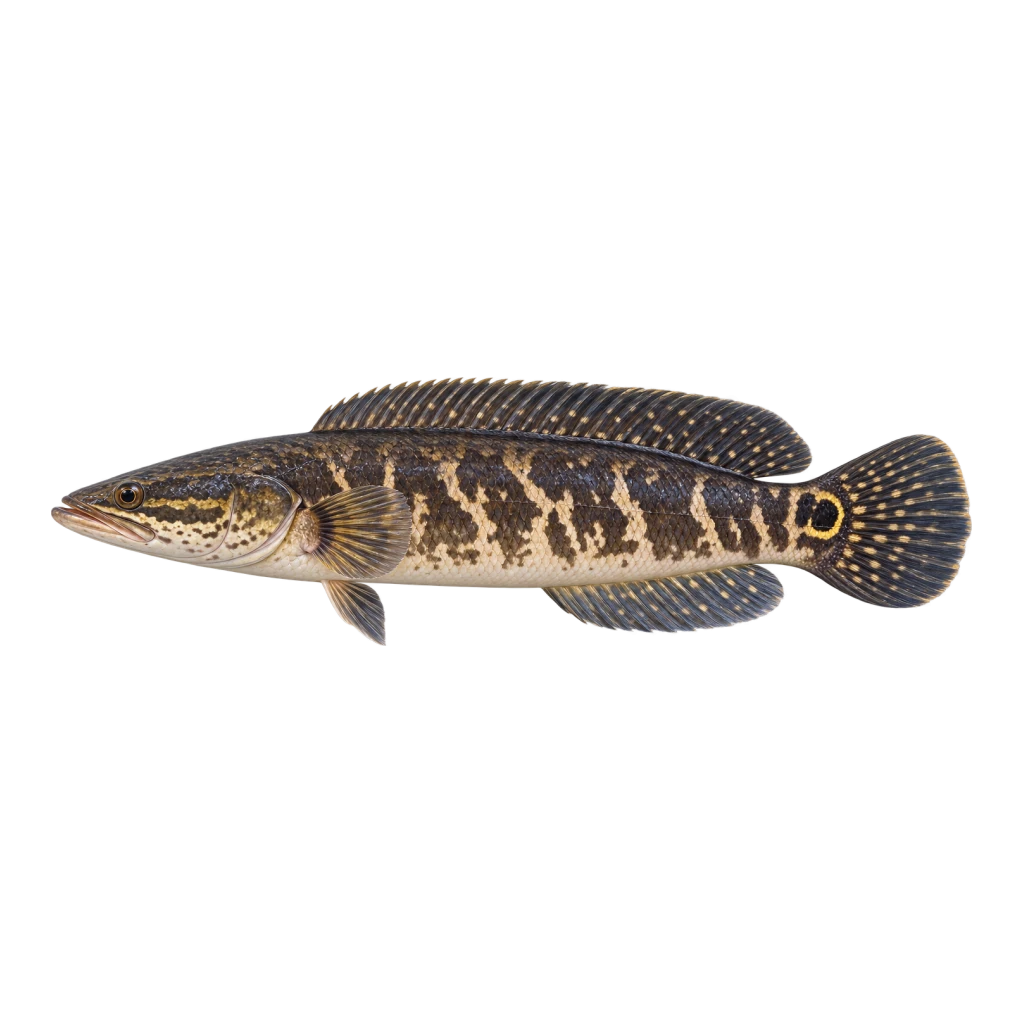
How to recognise it
The Bullseye Snakehead (Channa marulius) is a distinctive freshwater fish. It has an elongated body with a flattened head. The coloration is typically a mix of olive green and brown, featuring dark, round spots that resemble bullseyes along its sides. The dorsal fin is long and continuous, extending from the back of the head to the tail. The anal fin is also elongated and runs parallel to the body. The mouth is large, filled with sharp teeth, and extends back to the eyes. This species is often confused with the Northern Snakehead (Channa argus). The key detail that separates them is the Bullseye Snakehead's unique pattern of round spots, while the Northern Snakehead has more elongated markings.
Where it lives
The Bullseye Snakehead is primarily found in the southeastern United States. Its range includes parts of Florida, Maryland, and Virginia. This species prefers freshwater habitats such as lakes, ponds, and slow-moving rivers. It thrives in shallow waters, typically at depths of 1 to 6 feet. The Bullseye Snakehead favors areas with dense vegetation, such as lily pads and submerged logs. In warmer months, it may move into shallower areas to spawn, while in cooler months, it tends to retreat to deeper waters for shelter.
When it bites
The Bullseye Snakehead is most active from late spring through early fall. It bites best when water temperatures range from 70 to 85 degrees F. Early morning and late evening are prime times for fishing, as the fish are more likely to be feeding. Weather changes can affect their behavior; a passing front may trigger increased activity, while windy conditions can make them less likely to bite. A full moon can also enhance feeding activity, making night fishing more productive.
How to catch it
To catch Bullseye Snakehead, use a variety of rigs. A popular choice is the Texas rig with a 3/0 to 5/0 hook, paired with soft plastic lures in colors like green pumpkin or watermelon. Another effective option is a topwater frog lure, which should be around 4 to 6 inches long. Use a braided line of 30 to 50-pound test for better control. Cast near vegetation and work the lure with a slow, steady retrieve, allowing it to pause occasionally to entice strikes. Focus on areas with heavy cover, as this is where the fish often hide.
Size, age and the table
Anglers typically encounter Bullseye Snakeheads ranging from 18 to 30 inches in length. A trophy specimen is generally considered to be over 30 inches. Growth rates can vary, but they can reach about 1 inch per month during optimal conditions. The lifespan of a Bullseye Snakehead can exceed 10 years. The eating quality is considered good, with firm, white flesh. When handling this species, use caution due to its sharp teeth. If releasing, do so gently to minimize stress and injury to the fish.


