
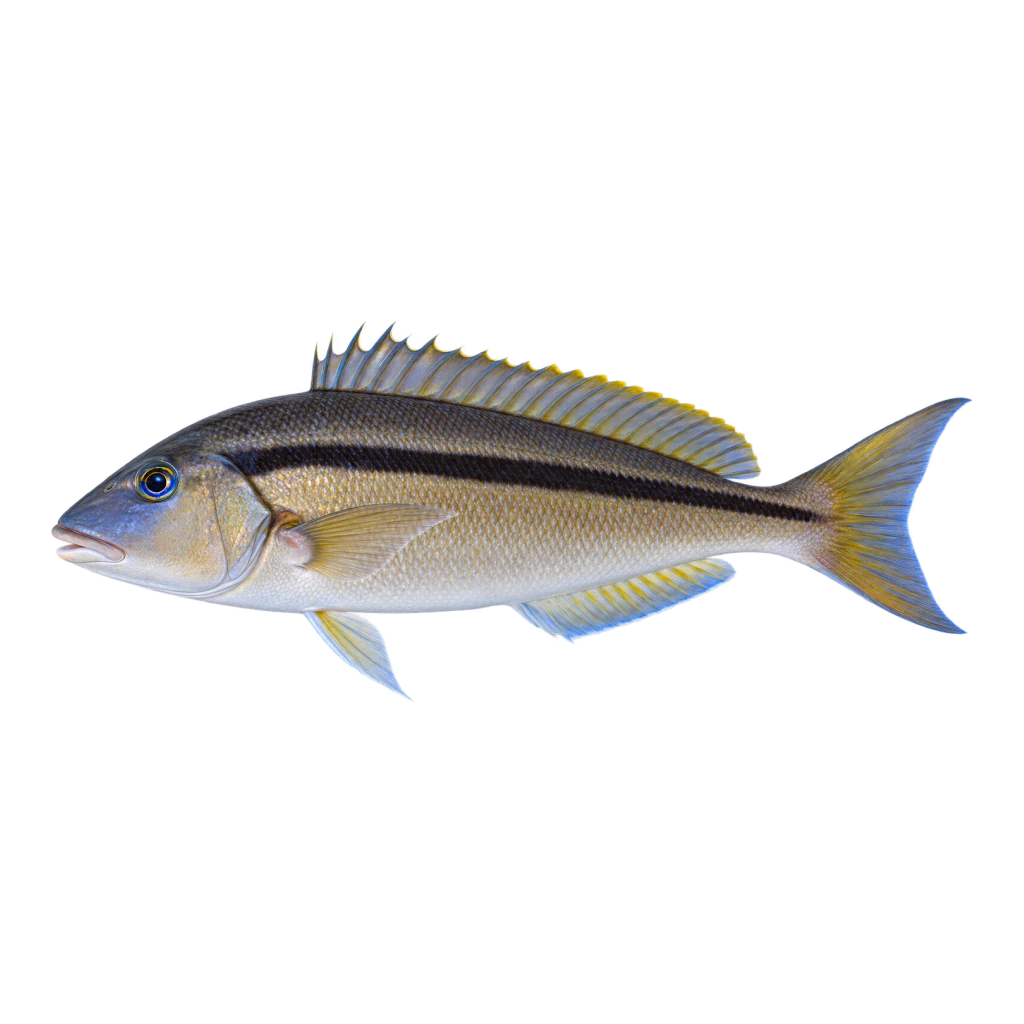
How to recognise it
The Blackline Tilefish (Caulolatilus cyanops) is a distinctive species. It has a long, slender body with a prominent black stripe running along its side. The coloration is generally a bluish-green on the back, fading to a lighter shade on the belly. Its fins are elongated, with a notable dorsal fin that extends along the back. The mouth is large and slightly protruding, equipped with sharp teeth.
This species is often confused with the Golden Tilefish (Lopholatilus chamaeleonticeps). The key detail that separates them is the black line along the body of the Blackline Tilefish, which is absent in the Golden Tilefish.
Where it lives
The Blackline Tilefish is primarily found in the western Atlantic Ocean. In the United States, its range extends from North Carolina to Florida and into the Gulf of Mexico. This species inhabits deep waters, typically between 200 and 1,200 feet. They prefer rocky or sandy bottoms and often take shelter in crevices or around structures like reefs.
Seasonally, their behavior changes. In warmer months, they may move shallower, while in colder months, they tend to inhabit deeper waters.
When it bites
The Blackline Tilefish is most active from late spring to early fall, particularly from May to October. The optimal water temperature for catching them is between 70°F and 80°F. They are known to bite more actively during the early morning and late afternoon.
Environmental factors can influence their feeding behavior. A passing front may trigger increased activity, while strong winds can make them less likely to bite. A full moon can also affect their feeding patterns, often leading to more nocturnal activity.
How to catch it
To catch Blackline Tilefish, anglers often use bottom fishing rigs. A common setup includes a two-hook rig with 4/0 to 6/0 circle hooks. Use a 50 to 80-pound test line for strength. Baits such as squid, cut fish, or live bait like cigar minnows work well. The bait should be around 6 to 12 inches in length.
When fishing, drop your rig to the bottom and allow it to sit for a moment. Slowly reel in with a steady motion, pausing occasionally to mimic the movement of prey. Target areas with rocky structures or ledges where these fish are likely to be hiding.
Size, age and the table
Anglers typically encounter Blackline Tilefish ranging from 10 to 30 inches in length. A trophy specimen is generally considered to be over 30 inches. The growth rate is relatively slow, with these fish reaching maturity at around 4 to 5 years of age. Their lifespan can extend up to 10 years.
Blackline Tilefish are known for their excellent eating quality, with firm, white flesh. When handling, use care to avoid damaging their delicate skin. If releasing, do so gently to ensure their survival. Always check local regulations for guidelines on size and bag limits before fishing.


