
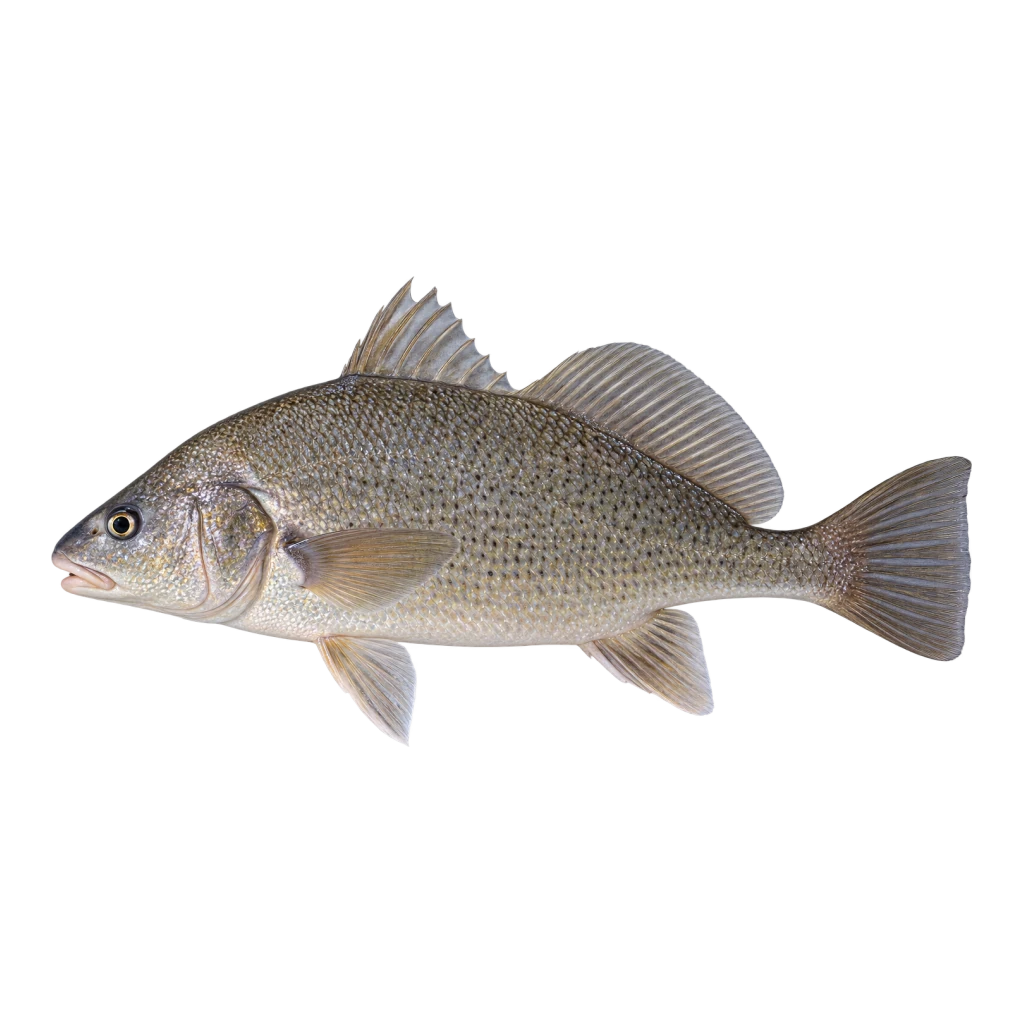
How to recognise it
The Freshwater Drum, scientifically known as Aplodinotus grunniens, has a distinctive appearance. It features a robust, elongated body with a slightly flattened head. The coloration is typically a grayish or bronze hue, with a lighter belly. The dorsal fin is long and continuous, with a slightly notched tail fin. Its mouth is located at the bottom of the head and is equipped with small, sharp teeth.
This species is often confused with the Redear Sunfish (Lepomis microlophus). The key detail that separates them is the shape of the mouth; the Freshwater Drum has a more pronounced, downward-facing mouth compared to the sunfish.
Where it lives
The Freshwater Drum is widely distributed across the United States. It can be found in the Great Lakes, Mississippi River basin, and many other rivers and lakes. This species prefers large, slow-moving rivers and lakes with a soft substrate. They typically inhabit depths ranging from 10 to 30 feet, but can be found in shallower waters during spawning.
In spring and summer, Freshwater Drum often seek cover near rocky structures, submerged logs, and vegetation. In fall and winter, they tend to move to deeper waters, where they remain near the bottom.
When it bites
The Freshwater Drum is most active from late spring to early fall. They bite best when water temperatures range from 65 to 80 degrees F. Early morning and late evening are prime times for fishing, as they are more likely to feed during these hours.
Weather conditions can affect their feeding behavior. A passing front may trigger increased activity, while strong winds can make them less likely to bite. A full moon often leads to more consistent feeding patterns, as they tend to be more active during the night.
How to catch it
To catch Freshwater Drum, anglers often use bottom rigs or slip sinker rigs. A common setup includes a 1/2 to 1-ounce egg sinker, a swivel, and a 1 to 2-foot leader with a size 1 to 2 hook. Baits such as nightcrawlers, minnows, or cut bait work well. When using lures, try jigging spoons or soft plastics in natural colors like brown or green.
Cast near structures or drop-offs where they are likely to be hiding. Work the bait slowly along the bottom, allowing it to stay in the strike zone. Be patient, as bites can be subtle.
Size, age and the table
The typical size for a Freshwater Drum caught by anglers ranges from 12 to 20 inches in length, weighing between 2 to 8 pounds. A trophy-sized Freshwater Drum is generally considered to be over 25 inches long.
Growth rates vary, but they can reach maturity in 3 to 5 years. The lifespan of a Freshwater Drum can extend up to 20 years. They are known for their good eating quality, with a mild flavor and firm texture. When handling, be gentle to avoid damaging their delicate skin. If releasing, do so carefully to ensure their survival.


