
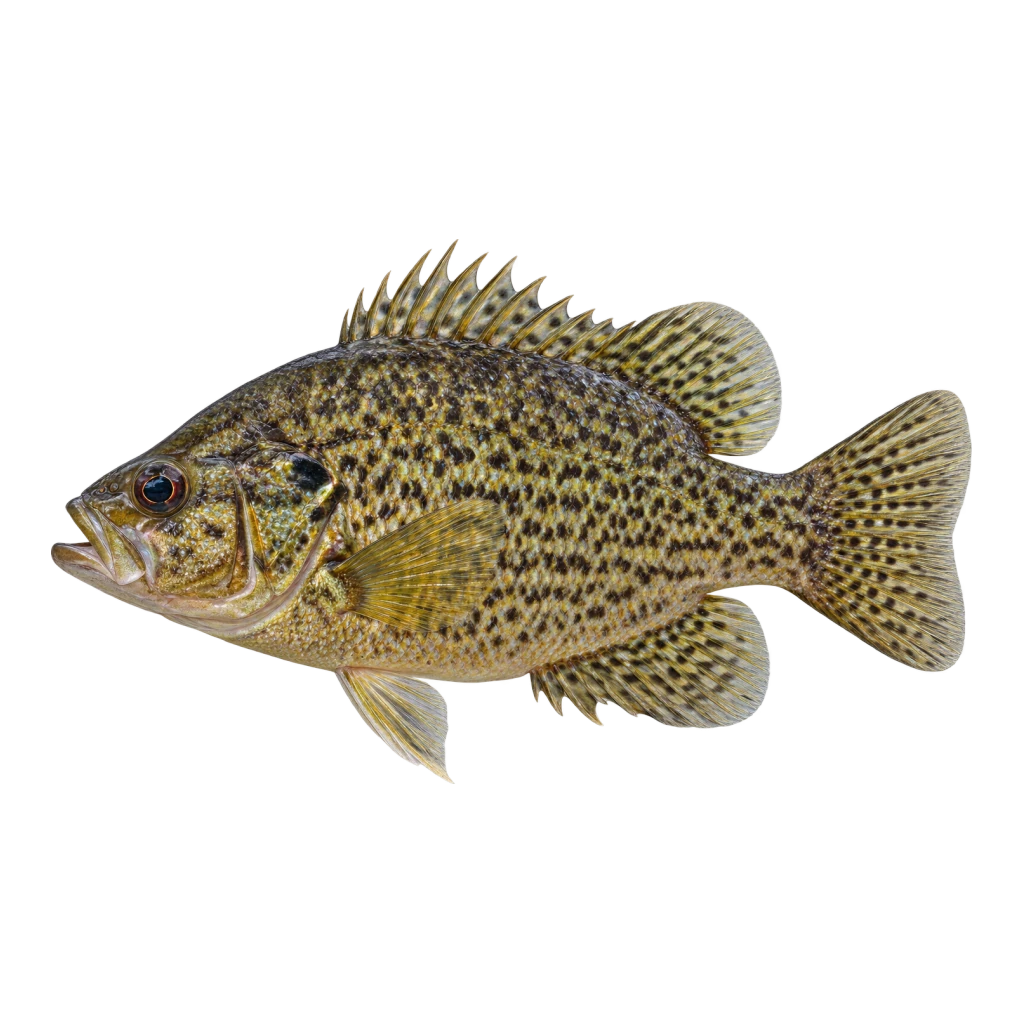
How to recognise it
The Rock Bass (Ambloplites rupestris) is a distinctive freshwater fish. It has a robust body with a large mouth and a slightly flattened head. The coloration varies from olive to brown, often with dark spots or blotches. The dorsal fin is long and spiny, while the anal fin is shorter and rounded. The eyes are relatively large, and the fish has a noticeable lateral line.
Rock Bass are often confused with the Redear Sunfish (Lepomis microlophus). The key detail that separates them is the presence of a more pronounced lateral line on the Rock Bass, which is less defined in the Redear Sunfish.
Where it lives
Rock Bass are found throughout the eastern United States and parts of Canada. They inhabit a variety of freshwater environments, including lakes, rivers, and streams. They prefer areas with rocky or submerged structures, such as fallen trees, boulders, and vegetation.
Typically, Rock Bass can be found at depths ranging from 2 to 20 feet. In warmer months, they tend to move into shallower waters, while in colder months, they may retreat to deeper areas. Seasonal changes affect their behavior; during spring, they spawn in shallow areas, while in summer, they seek cooler, deeper waters.
When it bites
Rock Bass are most active from late spring through early fall. They bite best when water temperatures range from 65 to 80 degrees F. The best times of day for fishing are early morning and late afternoon. Weather conditions can influence their feeding behavior; a passing front or overcast skies can increase activity, while bright sunny days may reduce it. A full moon often leads to increased feeding activity during the night.
How to catch it
To catch Rock Bass, anglers can use various rigs. A simple slip bobber rig with a live bait, such as a nightcrawler or small minnows, works well. Use a hook size ranging from 6 to 10. For lures, try small jigs (1/16 to 1/4 ounce) in bright colors like chartreuse or orange. Crankbaits and spinners can also be effective.
Cast near rocky structures, submerged logs, or vegetation. Retrieve lures with a steady, moderate speed, allowing them to bounce off structures. When using live bait, let it drift naturally near the bottom or around cover.
Size, age and the table
Rock Bass typically range from 8 to 12 inches in length, with larger specimens reaching up to 15 inches. A trophy Rock Bass is generally considered to be over 12 inches. They grow at a moderate rate, reaching sexual maturity by age 2 or 3. The lifespan of a Rock Bass can exceed 5 years.
Rock Bass are considered good table fare. They have a mild flavor and firm texture. When handling Rock Bass, use wet hands to avoid damaging their slime coat. For catch and release, minimize handling time and return them to the water quickly to ensure their survival.


