
How to recognise it
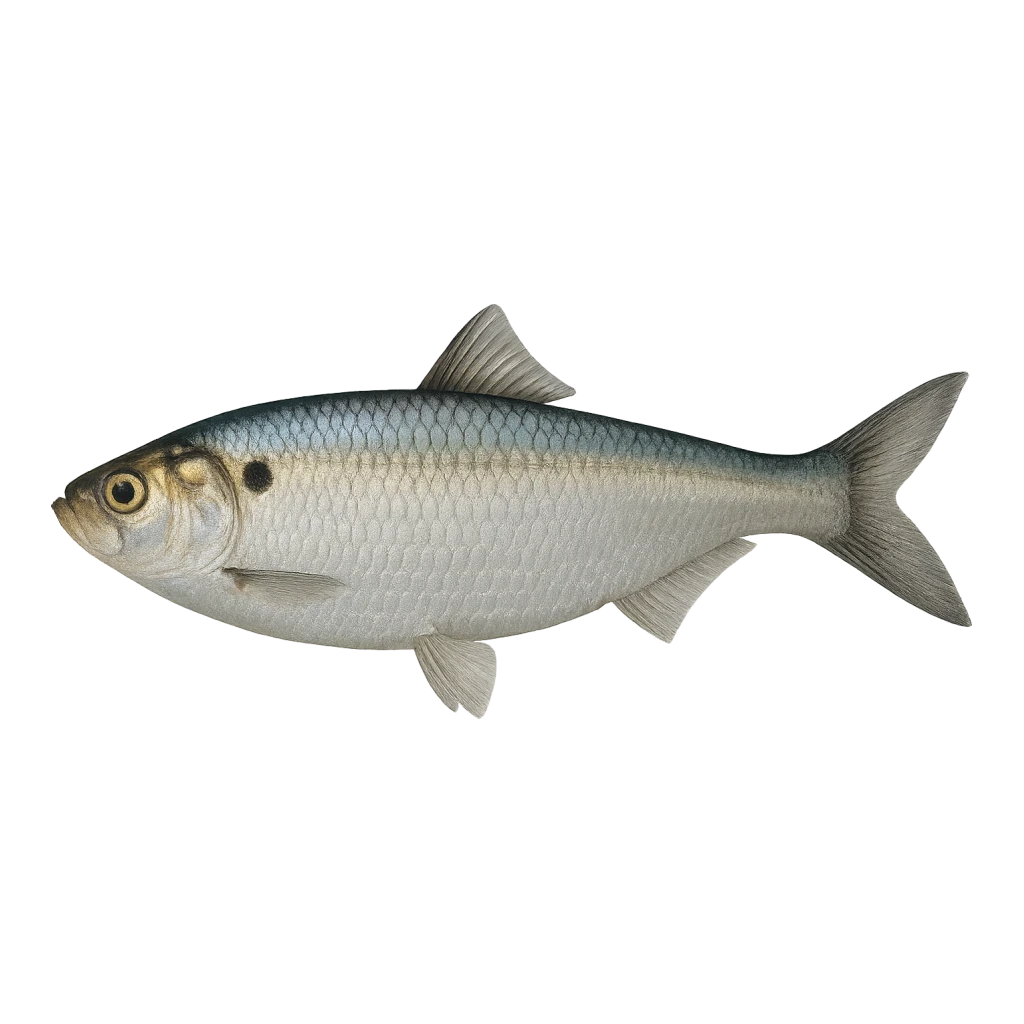
The Alewife (Alosa pseudoharengus) is a small, silvery fish with a streamlined body. It has a forked tail and a single dorsal fin located near the tail. The back is a bluish-green, while the sides are silver with a dark stripe running along the lateral line. The Alewife has a slightly protruding lower jaw and a small mouth with a row of small teeth. It is often confused with the Blueback Herring (Alosa aestivalis). The key detail that separates them is the number of gill rakers; the Alewife typically has 50 to 60 gill rakers, while the Blueback Herring has fewer.
Where it lives
The Alewife is primarily found in the northeastern United States. Its range extends from the Gulf of Maine to the Great Lakes. They inhabit freshwater lakes, rivers, and estuaries. Alewives prefer water depths of 10 to 30 feet but can be found in deeper waters during the summer months. In spring, they move into shallow waters to spawn, often seeking cover near vegetation and submerged structures. As temperatures rise in summer, they may retreat to deeper, cooler waters.
When it bites
Alewives are most active from April to September. They prefer water temperatures between 55°F and 75°F. Early morning and late evening are the best times to catch them. Weather changes, such as a passing front or strong winds, can increase their feeding activity. A full moon can also trigger more aggressive feeding behavior, making them easier to catch during this time.
How to catch it
To catch Alewives, use small jigs or spoons in sizes ranging from 1/8 to 1/4 ounce. Silver, blue, and green colors work well. A light spinning rod with a 6 to 10-pound test line is recommended. Use a size 8 to 10 hook for bait fishing. Effective baits include small minnows, worms, or artificial lures that mimic their natural prey. Cast near structures or along the edges of schools, and retrieve your lure with a steady, moderate speed to entice bites.
Size, age and the table
Alewives typically range from 8 to 12 inches in length, with larger individuals reaching up to 15 inches. A trophy Alewife is generally considered to be over 12 inches. They grow quickly, reaching maturity in about 2 to 3 years. Their lifespan can extend up to 6 years in the wild. Alewives are edible and have a mild flavor, but they are often bony. Proper handling is essential to ensure their survival if released. Use wet hands when handling and minimize air exposure to increase their chances of survival.


